
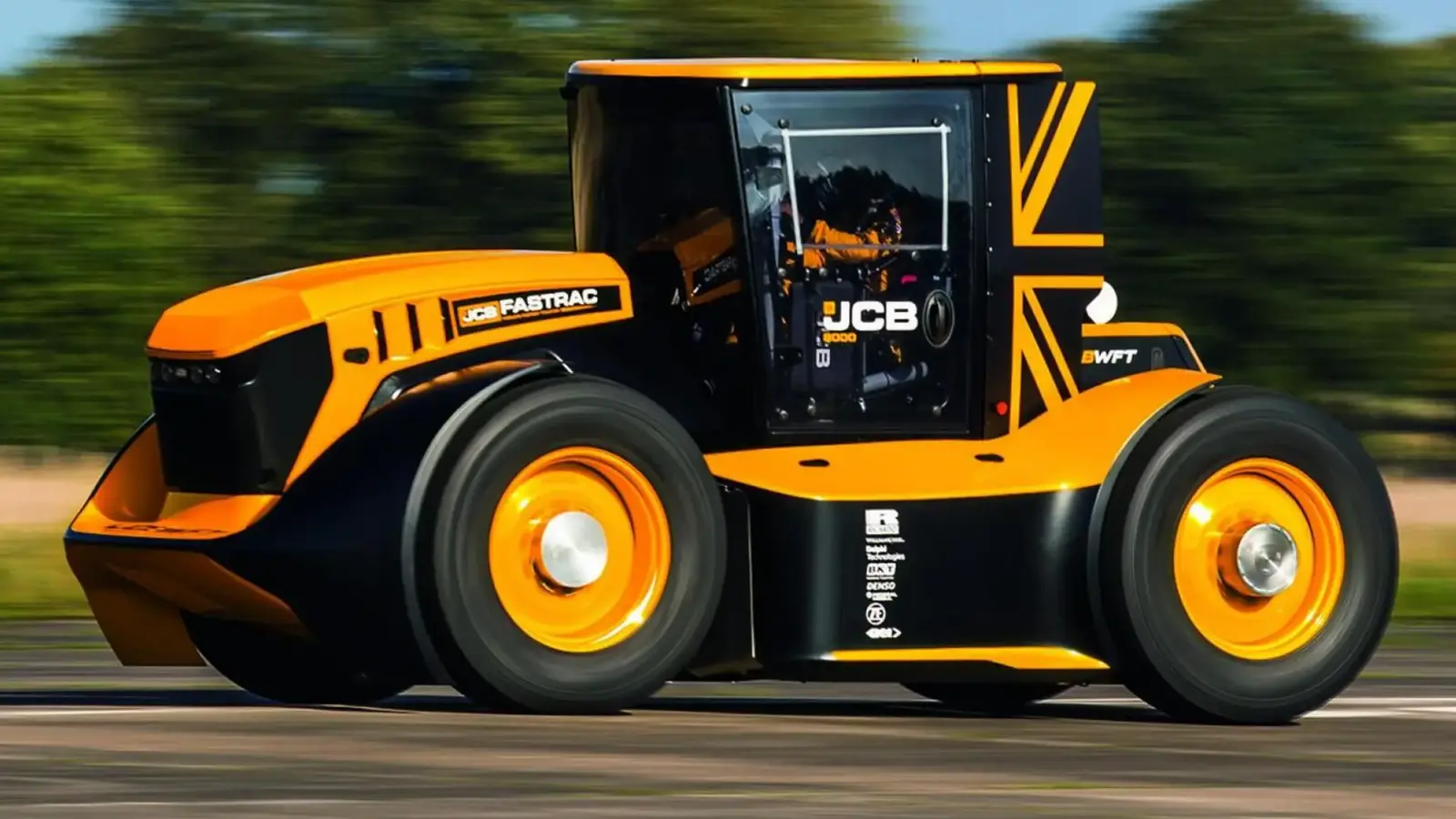
When someone says "tractor," most minds picture slow, lumbering machinery plodding across a field. Now imagine that same machine closing in on 250 kilometres per hour. Wild? Yes. Real? Definitely.
Turning a farm workhorse into a land-speed contender
JCB wanted to prove a point: agricultural machines can surprise you. The result was Fastrac Two, a radically reworked version of the commercial Fastrac 8000 that attacked the idea of what a tractor can be. In October 2019, at Elvington Airfield near York, the project clocked a peak of about 247.5 km/h on a straight run. Because Guinness World Records insists on removing environmental advantages, the vehicle made two runs in opposite directions. The official average was 217.6 km/h—still astonishing for a machine born to tow and till.

Guy Martin, the British motorcycle racer and television presenter, took the wheel. He never opened the parachute that engineers bolted to the rear, but the safety systems were there for a reason: stopping a five-ton vehicle from those speeds is a different kind of challenge.
Fastrac Two began life as an 8000-series Fastrac, which in stock form tops out around 69 km/h. JCB did not simply strap on power and hope for the best. They rebuilt nearly everything.
Weight was brutally important. A production Fastrac weighs over 8.5 tonnes; engineers stripped the record machine down to roughly five tonnes by replacing steel with aluminium and carbon fibre where they could. That trade-off kept structural strength but dropped mass dramatically, improving acceleration and control.

Under the bonnet sat a JCB Dieselmax family engine: a 7.2-litre, six-cylinder diesel that was extensively tuned. The finished package produced in excess of 1,000 horsepower—an output more at home in drag-strip specials than in farmyards.
Aerodynamics mattered as much as brute force. Tractors are boxy by design, which makes them terrible at slicing through air. JCB turned to Williams Advanced Engineering and brought former Williams engineer Rob Smedley into the project. Their work trimmed the aerodynamic drag by about 10 percent compared with the standard machine. That may sound modest, but for a vehicle of this size the reduction was decisive.

This was not showmanship: it was engineering applied to a stubborn problem, with safety front and centre.
Elvington’s long runway—about 3.1 kilometres—was ideal. The record attempt required space to accelerate and, even more critically, to slow down. JCB upgraded brakes with new discs and pads, kept standard calipers, and added the emergency parachute as an extra layer of security. The roll cage was custom-designed and then reviewed with FIA officials to secure approval for the record attempt. It didn’t match an off-the-shelf motorsport spec, so JCB and the FIA cooperated until everyone was satisfied.
This was JCB’s second recorded attempt that year. A June run reached 166.8 km/h, a respectable start that helped shape the November effort. The October outing did the job and gave the world a new headline: the fastest modified tractor on record.
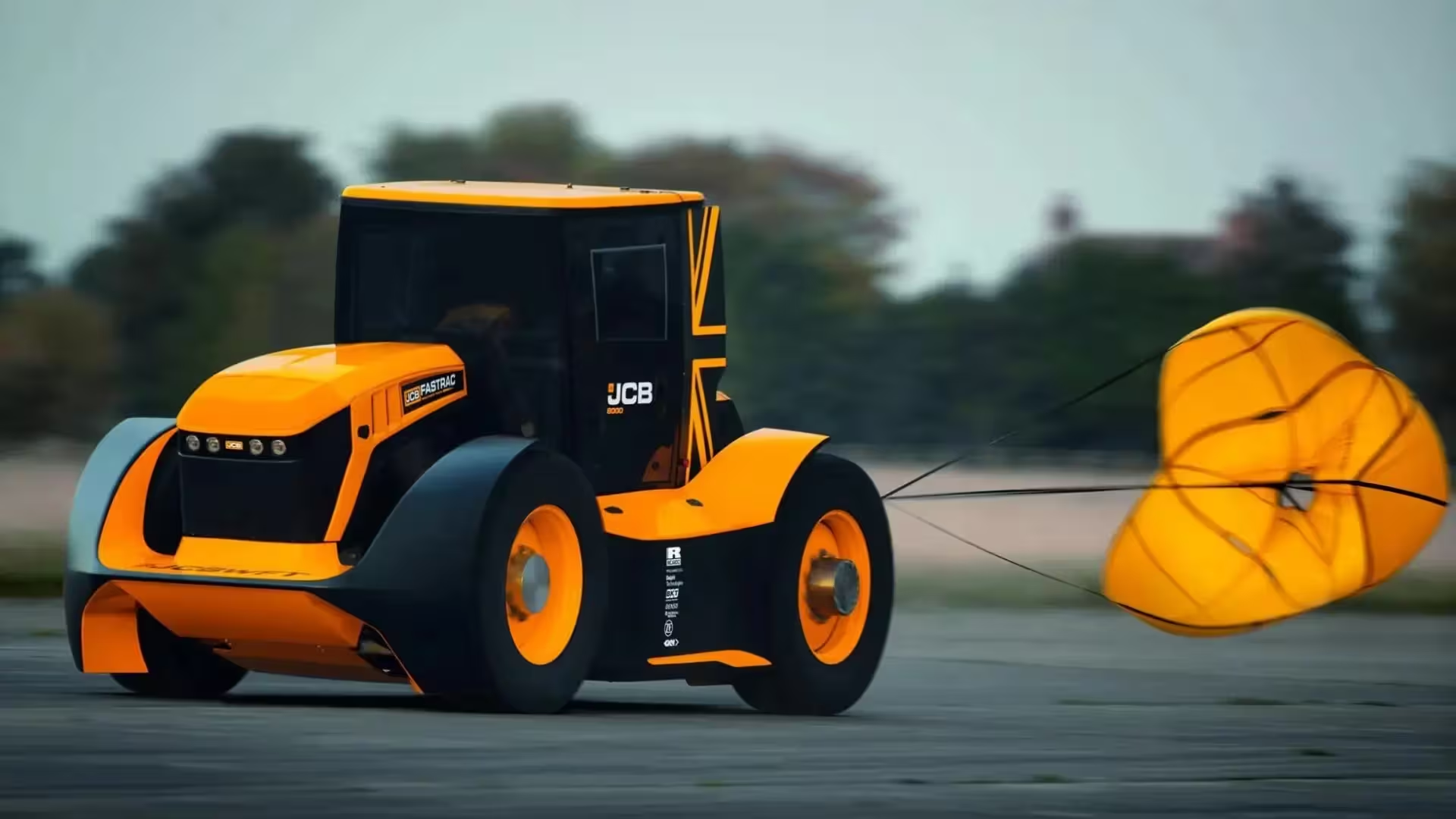
Beyond the numbers, what sticks is the mismatch between expectation and reality. Here is a company known for yellow diggers and practical machines, collaborating with motorsport engineers to chase velocity. The payoff wasn’t just a Guinness entry—it was a demonstration of cross-discipline problem-solving that blurred the line between industrial equipment and high-performance engineering.
So next time you pass a tractor, spare a thought. Underneath that familiar silhouette may lie potential that no one expected to fit the farmer’s shed.

“Cars are evolving faster than ever. I cover electric vehicles, smart mobility, and the future of transportation worldwide.”

Discussion
Leave a Comment
Comments (2)
217.6 km/h average ok, but were both runs really identical? feels like a PR stunt, also why was parachute never used... stopping 5 tons, yikes
holy moly, a tractor at 247 km/h? never pictured that. engineering mad skills, brakes give me chills. audacious