
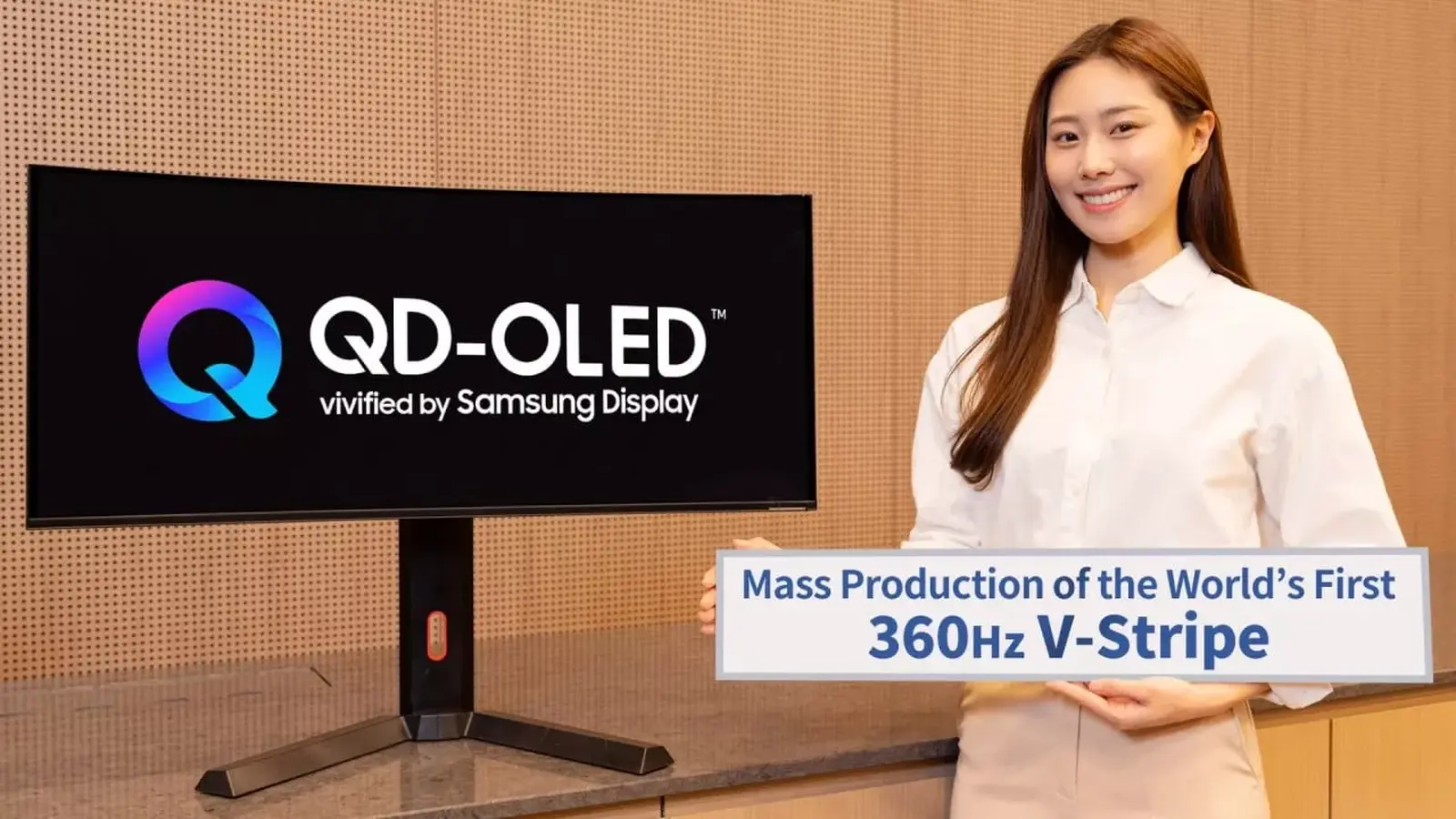
Samsung Display has unveiled a new generation of QD-OLED panels designed for high-end monitors, promising brighter images, sharper text, and longer lifespan than its predecessors. The upgrade centers on a new subpixel layout that aims to fix one of OLED’s long-standing weaknesses for desktop work: text clarity.
V-Stripe: a simple change with big results
Instead of the triangular, shared subpixel arrangement used in earlier QD-OLED monitors, Samsung’s latest design stacks each pixel’s red, green and blue subpixels vertically in a V-Stripe layout. That reorientation reduces the visual fuzziness that made OLED text look slightly soft compared with LCD, so characters appear crisper and more stable at typical viewing distances.
Why does that matter? If you spend hours editing documents, coding, or reading, even small improvements in rendering can reduce eye strain and improve productivity. Samsung is positioning this panel as a strong option for professionals and power users who need both OLED contrast and LCD-like text fidelity. It’s also a direct response to a new OLED monitor panel from LG that adopted a similar approach.

Specs that push the envelope
The new panel delivers up to 1,300 nits of peak brightness and uses a 21:9 aspect ratio tailored to ultrawide monitors. Samsung also lists a variable refresh rate capability up to 360 Hz, making the panel attractive to both creators and gamers who demand fluid motion. The company credits higher organic material efficiency and design optimizations for reaching these numbers.
Mass production reportedly began in December 2025, and Samsung says the panels will appear in monitors from seven brands, including ASUS, Gigabyte and MSI. The company plans to demo the new QD-OLED panels in a private booth at CES 2026, giving attendees a chance to compare text rendering and brightness in person.
In short, Samsung’s V-Stripe QD-OLED is an important step toward making OLED monitors more versatile for everyday desktop use—keeping the deep blacks and vivid colors users expect while closing the gap on text clarity that once favored LCDs.

“I love exploring gadgets, apps, and trends that redefine how we connect, work, and play in a digital world.”

Discussion
Leave a Comment
Comments
No comments yet. Be the first.