
3 Minutes
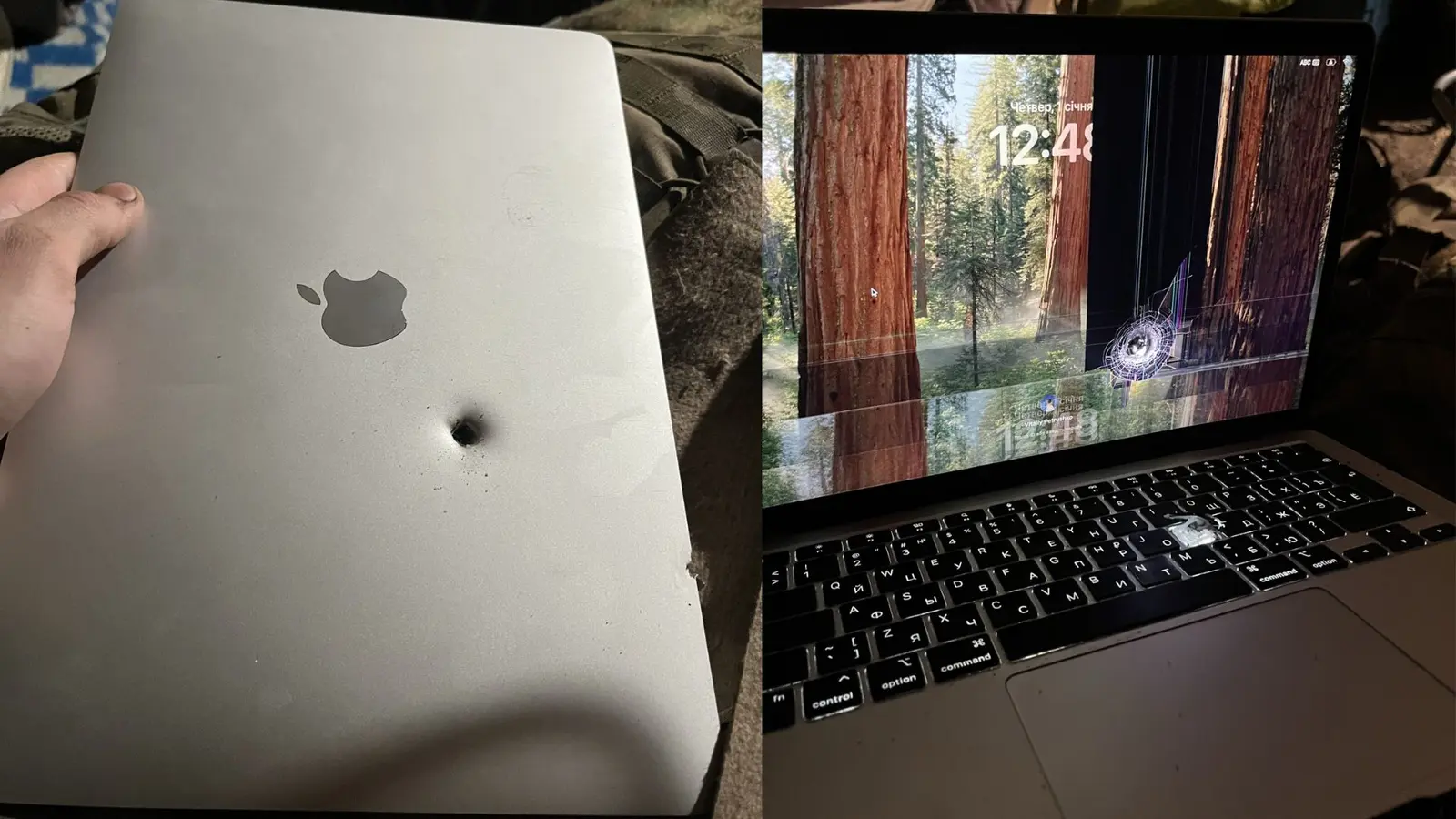
A Ukrainian soldier posted photos and a short video showing a 2020 M1 MacBook Air that was struck by artillery shrapnel — and still powered on. The images, shared on X by a member of Ukraine's Azov brigade, reveal a dramatic hole through the laptop's aluminum body and a display that remained at least partially responsive.
When consumer hardware meets the battlefield
The post, by X user @lanevychs, offers no full account of where the laptop was positioned when it was hit, but the damage is unmistakable: a clear puncture in the unibody chassis consistent with a high-speed fragment impact. Despite that, the device boots and shows some screen activity in the accompanying clip. The soldier quipped about the laptop's "ballistic protection level," then noted that repairing it would likely cost almost as much as buying a replacement.
Apple's MacBook Air uses a single-piece recycled aluminum body designed for lightness and structural rigidity, not as armor. This case is a reminder that even sleek, consumer-focused designs can sometimes resist extreme forces—albeit accidentally and rarely. Apple does not claim any ballistic protection for its devices.

Incidents like this aren't entirely new. In 2017 a MacBook Pro was widely reported to have stopped a bullet during an airport shooting, and both that story and this latest example have circulated online as surprising testaments to electronic durability under extraordinary circumstances.
What this episode really highlights is how ordinary tech can be pushed far beyond its intended use. A punctured MacBook Air that still boots is remarkable, but it also underscores the randomness of damage in conflict zones and the practical limits of consumer repair: in many cases, replacement is the more realistic option than repair.
- Device: 2020 M1 MacBook Air
- Damage: Aluminum chassis punctured by shrapnel
- Status: Powers on; partial display response
- Context: Shared by Azov brigade member on X
For readers curious about device resilience, this is an anecdotal example rather than a scientific test. Still, it adds to a small collection of stories showing that everyday electronics sometimes survive far more than we might expect—especially in unpredictable environments.
Source: gizmochina



Leave a Comment