
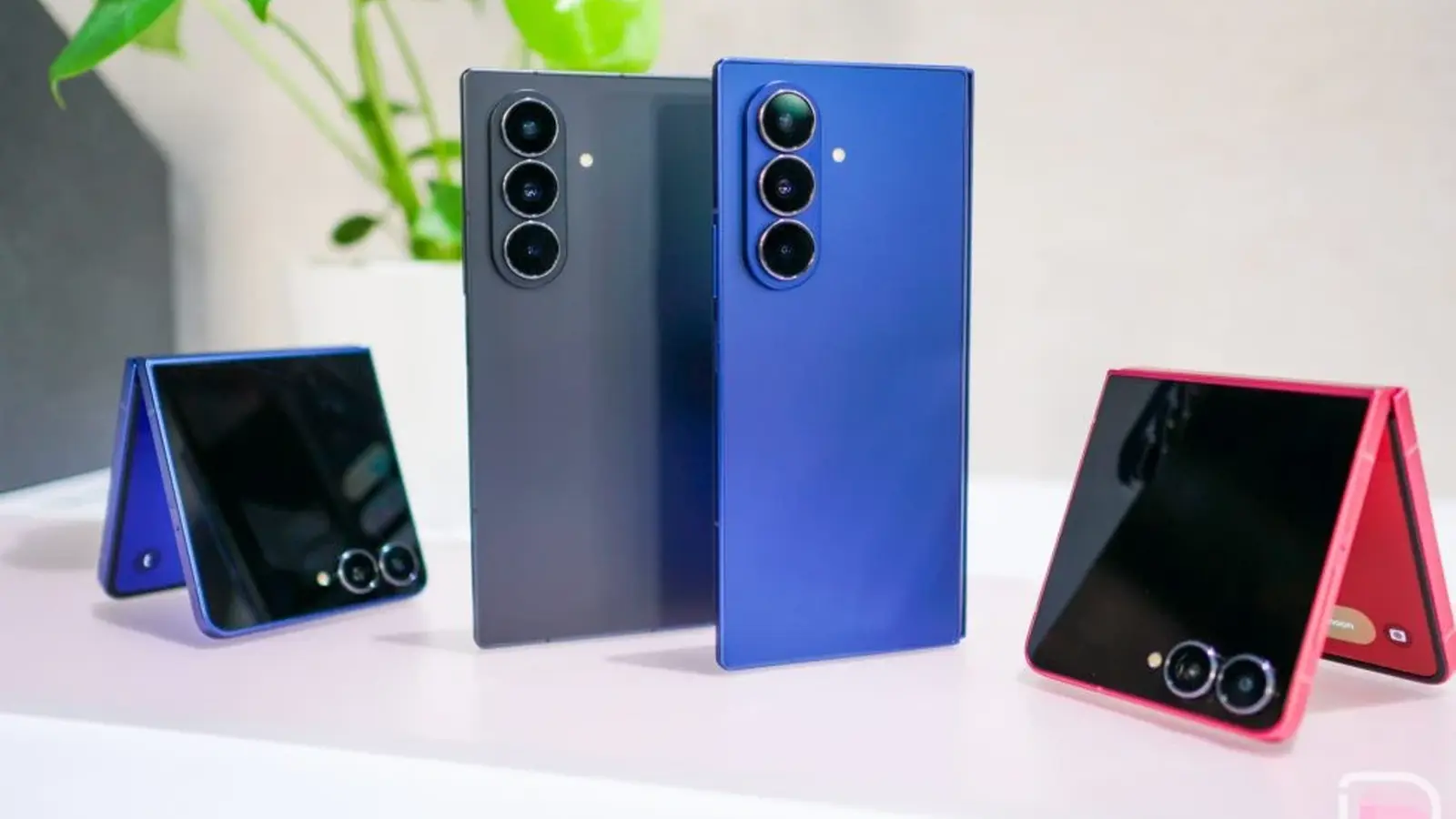
Imagine queues outside an Apple Store, but this time people are lining up for a phone that bends. Strange? Not anymore. 2026 looks set to be the year foldable phones stop being a curiosity and start behaving like mainstream hardware.
Samsung has spent the better part of a decade turning folding glass and flexible hinges into a repeatable craft. The Galaxy Z Fold 7 is widely regarded as one of the most refined foldable devices available, and Samsung points to that deep well of experience as a real advantage when rivals line up.
Experience is the argument Samsung is making
Bloomberg notes that foldables still account for less than 3 percent of global smartphone shipments. So why does Samsung sound so calm about Apple's rumored iPhone Ultra arriving in September? Because leadership in a niche is not the same as winning a mass market. Samsung says its focus is simple: build for what users actually need, not for headlines.

Wan-Joon Choi, head of Samsung's mobile division, put it plainly in a recent interview. He argued that healthy competition sparks innovation and benefits buyers. He welcomed newcomers to the category Samsung helped create in 2019, and framed Apple’s move as fuel for the whole industry rather than a direct threat.
That is not empty rhetoric. Competitors like Honor with its Magic V3 and Oppo with the Find N5 forced Samsung to lift quality and polish across the lineup. Expect the Z Fold 8 to be another step in that ongoing refinement. Smaller players push the benchmarks. Big players then raise them again.
There is also a business angle. Counterpoint Research forecasts as much as a 20 percent jump in foldable shipments in 2026 if Apple enters the space. Much of that growth would come from existing iPhone users migrating to the new form factor, not from Android owners switching brands. In short: the category grows, not just the market share of any single maker.
So what happens next? A few scenarios are plausible. Apple could attract a huge number of curious buyers and accelerate mainstream adoption. Or early pricing and design choices might limit its reach, keeping foldables a premium segment. Samsung seems ready for either outcome, betting its depth of engineering and iterative updates will keep it competitive.
One thing feels certain: 2026 will be less about a single winner and more about whether foldables finally earn a permanent place in users’ pockets. For consumers, that prospect is the real victory.

“I cover emerging technologies, digital innovation, and the intersection of tech and everyday life. My goal is to make complex trends accessible and inspiring.”

Discussion
Leave a Comment
Comments
No comments yet. Be the first.