
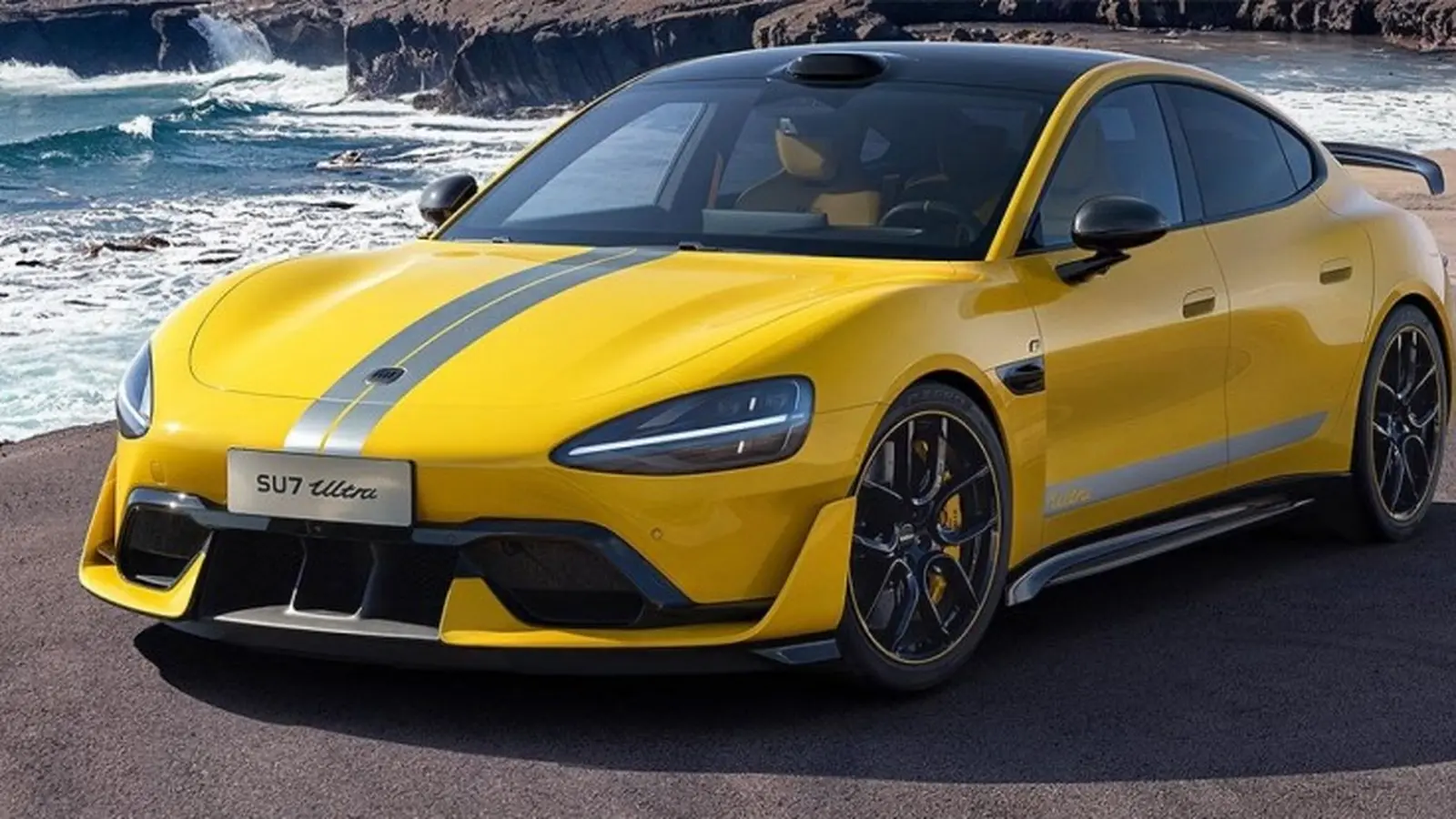
Xiaomi sets sights on 550,000 EV deliveries in 2026
It took just a few years for Xiaomi to move from smartphone maker to a serious contender in the electric vehicle market. In a recent livestream, CEO Lei Jun announced a bold production and delivery target: 550,000 electric vehicles (EVs) for 2026. That target represents roughly a 34% increase over Xiaomi's end-of-year deliveries in 2025 and signals an aggressive expansion strategy for the brand's automotive division.
From phones to profitable EVs
Not long ago Xiaomi was primarily synonymous with phones and budget wearables. The company formally entered carmaking in March 2021, and skeptics expected a long, loss-making ramp-up. Instead, Xiaomi’s EV unit surprised many by reaching scale quickly and turning a profit sooner than typical new automakers. In Q3 of 2025 the division reported its first quarterly profit after delivering 108,796 vehicles that quarter alone.

Why the confidence to aim for 550,000 deliveries? It's worth looking at Xiaomi’s recent trajectory. The company initially targeted 350,000 deliveries for 2025 and hit that goal far earlier than anticipated. By year-end they reported over 410,000 units delivered, with December setting a single-month record of more than 50,000 cars. That momentum underpins the 2026 ambition.
What models are driving growth?
Xiaomi’s current lineup centers on two pillars: the SU7 electric sedan and the larger YU7 SUV. These models have been the sales workhorses, combining competitive pricing, modern design, and solid tech integration. But Xiaomi knows product breadth matters in a crowded EV market, so its 2026 roadmap introduces several new variants to widen appeal and target different buyer segments.
Key launches planned for 2026 include:
- A facelifted SU7 sedan
- An SU7 Executive/long-wheelbase luxury variant
- A five-seat extended-range SUV
- A seven-seat extended-range SUV
These additions aim to capture both tech-minded customers (who like the SU7) and family buyers seeking space and range flexibility (who gravitate toward the YU7 derivatives).

Extended-range vehicles: a tactical shift
One of the most notable moves in Xiaomi’s plan is a push into extended-range EVs (EREVs). Unlike pure battery-electric vehicles, extended-range models pair an electric drivetrain with a small gasoline engine that acts as a range extender — charging the battery on the move to reduce range anxiety and dependency on public charging infrastructure.
Advantages Xiaomi is banking on:
- Longer effective driving range for long trips
- Easier market access in regions where public charging is limited
- Broader appeal to customers nervous about BEV-only ownership
This strategy complements pure electrics and makes sense for buyers who value flexibility over an all-electric powertrain.
Timing and market positioning
Xiaomi plans to roll out the facelifted SU7 and the seven-seat extended-range SUV in the first half of 2026. The executive SU7 and the smaller five-seat extended-range SUV are slated for the second half of the year. Staggered launches help the company maintain media attention and steady sales momentum across the year.
If Xiaomi delivers on the 550,000 target, it will join the ranks of major global EV players and further blur the line between legacy automakers and consumer-tech giants building cars.
"We want to make cars as well as we make phones," Lei Jun has said repeatedly — and the numbers suggest Xiaomi is turning that ambition into reality.

Market impact and what to watch
For the global EV market, Xiaomi’s rapid expansion matters because it adds supply and competition. Price-competitive, tech-forward EVs from a household name can accelerate adoption, especially in China and potentially in export markets. Watch for:
- Official CPCA (China Passenger Car Association) delivery figures to confirm monthly and quarterly performance
- Real-world reviews of extended-range models for fuel economy and drive feel
- Pricing strategy for the SU7 Executive to see how Xiaomi positions a more premium trim alongside value-focused models
In short, Xiaomi is no longer just a phone company experimenting with cars. It’s a fast-growing automaker with clear targets, expanding the product range with both pure electric and extended-range SUVs and sedans. Whether it hits 550,000 deliveries in 2026 will depend on production scale-up, supply-chain resilience, and consumer appetite — but the trajectory so far has been undeniably impressive.
Quick highlights
- 2025 deliveries: over 410,000 units
- 2026 target: 550,000 EVs (≈34% growth year-over-year)
- 2026 roadmap: facelifted SU7, SU7 Executive, 5-seat & 7-seat extended-range SUVs
- Strategy: Combine battery-electric models with extended-range options to broaden market appeal
For car enthusiasts and industry watchers, Xiaomi’s next moves will be a case study in how a tech brand scales into automotive manufacturing while leveraging software, supply chains, and brand recognition to challenge established players.

“I cover automotive innovation, electric vehicles, and the future of mobility — where technology meets sustainability.”

Discussion
Leave a Comment