
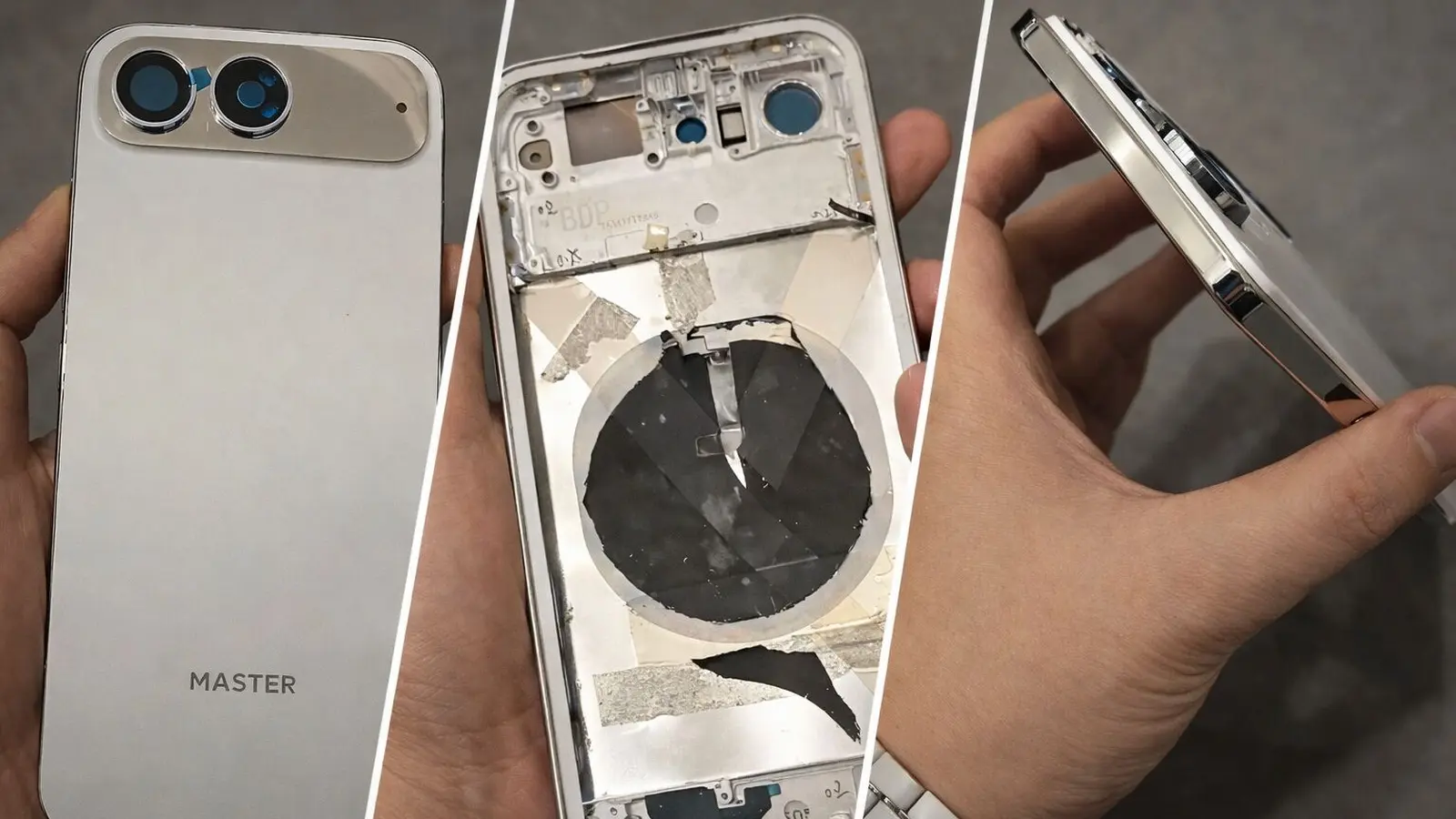
Xiaomi quietly explored a daring path during the development of its Xiaomi 17 series: an experimental ultra-thin prototype dubbed the Xiaomi 17 Air. Intended as a statement in design and portability, the 17 Air aimed to deliver a modern flagship experience while shaving down every millimeter — a bold move that ultimately never reached mass production.
Design intent and prototype highlights
The 17 Air was conceived with a clear priority: minimize thickness without sacrificing a premium feel. Engineers targeted a roughly 6.59-inch display — consistent with current flagship sizes — wrapped in a chassis an astonishing 5.5 millimeters thick. To reach that goal, Xiaomi simplified some areas: the rear camera array was reduced to a dual-camera setup instead of the multi-sensor modules common in top-tier phones. The aesthetic language favored clean lines, minimalism, and a lightweight profile designed to appeal to users who value form as much as function.
This prototype reads like a design exercise as much as a product roadmap. In practice, it would have appealed to a niche of consumers who choose their phone as a fashion statement or for the sheer pleasure of carrying something feather-light and elegant.
Technical hurdles: batteries, cooling, and durability
Building an ultra-thin smartphone is a high-wire act of compromises. The most immediate trade-off is internal volume: less space inside the chassis means a smaller battery, and battery capacity remains one of the single biggest factors for daily user satisfaction.
Other challenges include:
- Thermal management: thinner bodies have less room for heat dissipation, which can throttle performance under sustained load.
- Structural rigidity: maintaining frame strength and drop resistance in a 5.5 mm body is costly and technically demanding.
- Component integration: antennae, vibration motors, sensors, and connectors must be redesigned or miniaturized, increasing complexity and cost.
During testing, Xiaomi likely encountered the same practical drawbacks seen in earlier ultra-slim attempts by the industry: acceptable peak performance but compromised endurance, and higher manufacturing difficulty that can drive up costs and reduce margins.
"An elegant prototype can still be a bad mass-market product if it fails the daily-use test," a product strategist might say. Xiaomi’s decision seems rooted in that pragmatic view.
Why not push through? Beyond engineering headaches, the commercial calculus matters. Ultra-thin phones tend to attract a limited audience: buyers who prioritize style over battery life or camera versatility. Historical examples show that while ultra-slim models make headlines, they often underperform in sales compared with balanced, feature-rich phones that emphasize battery, cameras, and overall value.
For a company like Xiaomi, which carefully weighs production costs against market potential, launching a complex and expensive-to-manufacture device for a narrow niche poses a real business risk. The 17 Air likely failed to meet internal targets for battery endurance, thermals, or manufacturability — any of which could justify shelving the project.
Industry context and lessons The 17 Air episode illustrates broader trends in smartphone design: dramatic slimness is impressive, but consumers increasingly reward balanced performance, battery life, and camera versatility. Makers who chase extremes must also accept trade-offs in usability and profitability.
That said, design experiments are valuable. Prototypes like the 17 Air inform future decisions: better materials, more compact components, and smarter thermal layouts. Elements of the experiment could resurface in other models — perhaps in thinner mid-cycle updates or as a design language rather than a full product.
- Key takeaway: innovation often requires dead ends. Prototypes teach more than they sell.

“Blockchain and fintech are reshaping finance. I break down market trends, regulations, and innovations for a global audience.”

Discussion
Leave a Comment
Comments (2)
Is this even true? 5.5mm and decent thermals sounds impossible. if thats real then... show me the battery life numbers, otherwise looks like a headline chase
wow didnt expect xiaomi to try a 5.5mm phone… cool design but battery? no way. feels like a fashion piece, neat but impractical