
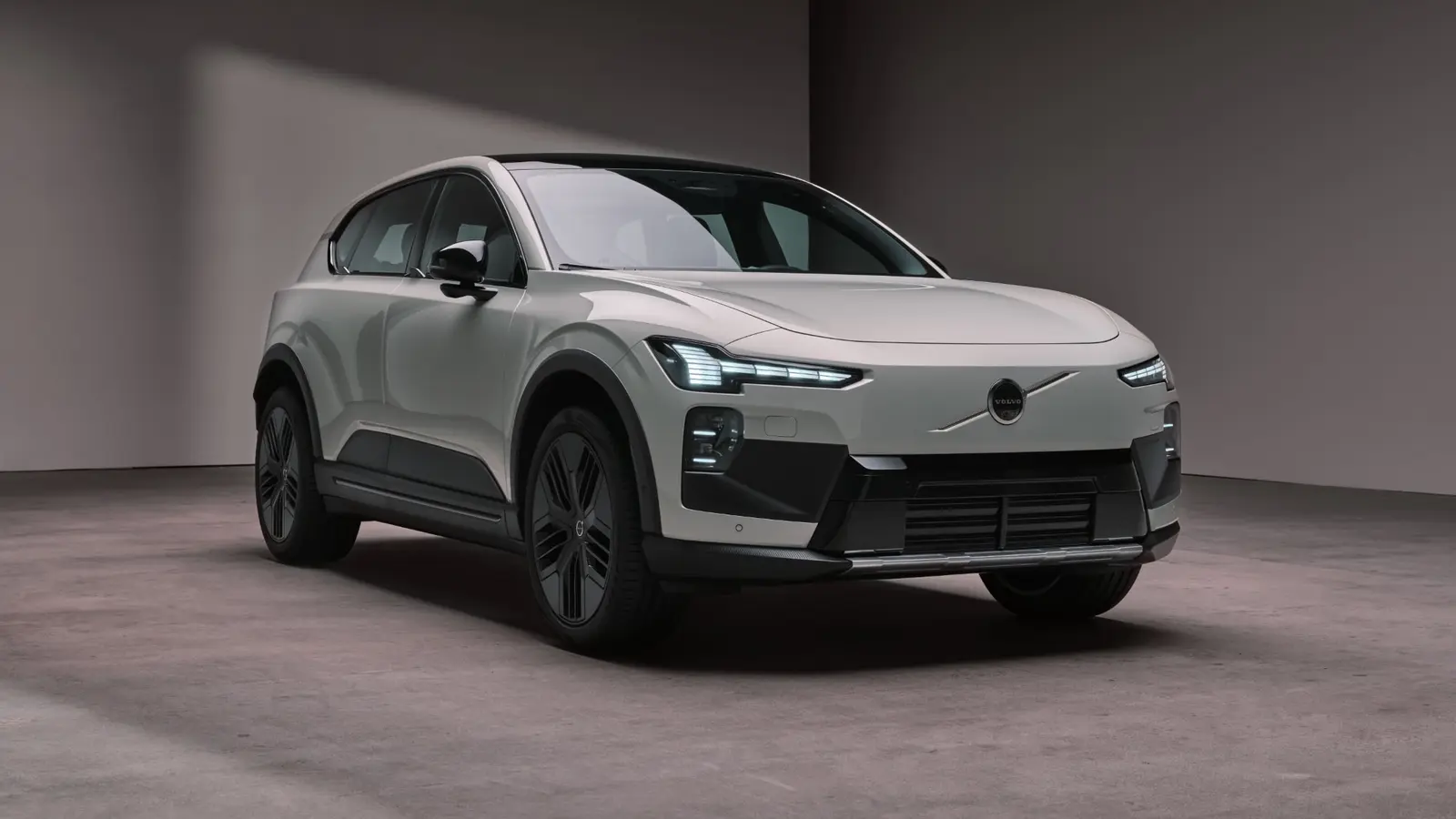
Volvo's new EX60 arrives at a pivotal moment
Volvo Cars has pulled the cover off the EX60, a compact electric crossover meant to carry the legacy of the best-selling XC60 into the EV era. The timing matters: Volvo reported softer global sales last year and fully electric deliveries slipped internationally, so the EX60 isn't just another model. It is the brand's strategic attempt to reclaim momentum in the family EV segment while offering buyers a middle ground between the pint-sized EX30 and the flagship EX90.
Why the EX60 matters
The original XC60 has been a cornerstone for Volvo since 2008, with more than 2.7 million units sold across multiple generations. Replacing or complementing that success with a compelling electric alternative is crucial. The EX60 will be built in Torslanda, Sweden, on Volvo's new SPA3 platform, a modular EV architecture that also underpins the upcoming Polestar 7. SPA3 embraces manufacturing efficiencies such as megacasting and cell-to-body battery integration, which should help lower production costs and improve structural rigidity.

Market context
Volvo's global sales dipped to roughly 710,000 units last year, pressured by falls across combustion, hybrid, and fully electric segments. In the U.S. specifically, electrified model deliveries fell more sharply after incentives changed, underscoring how sensitive EV demand remains to policy and incentives. Against that backdrop, Volvo is betting the EX60's broad packaging and variant lineup can win back buyers and fend off competition from German premium rivals and mainstream EVs.
Powertrains, range and charging
The EX60 arrives with three core powertrain families and seven total variants, giving buyers a wide spread of performance and range choices. Highlights include:
- P6: Rear-wheel drive, entry-level option, up to 310 miles of EPA-equivalent range
- P10: All-wheel drive intermediate option, around 320 miles of range
- P12: Top AWD performance variant, up to an impressive 400 miles on a single charge
Rapid charging capability is rated up to 400 kW. Volvo claims an ideal-condition number of roughly 173 miles added in ten minutes when using top-tier DC fast chargers. For the U.S. market this is the brand's first model with a standard NACS port, granting native access to Tesla's Supercharger network of over 25,000 DC stations without an adapter. That convenience will likely be a selling point, although growing adoption of NACS could increase Supercharger congestion over time.

Design: restrained Scandinavian with a few modern quirks
The EX60 reflects Volvo's understated Scandinavian aesthetic: clean surfaces, subtle character lines, and a calm presence. It's less showy than some rivals, favoring a composed look that aims for long-term appeal rather than trend-chasing. Still, there are contentious elements. The flush door handle solution has given way to small, protruding finger nubs — a polarizing detail that many will find less elegant than traditional handles. Split headlight arrangements remain in vogue and are present here, too, which may feel familiar rather than fresh in 2026.
The Cross Country variant pushes the rugged angle with stainless steel skid plates, beefed-up wheel arches, extra body cladding, and a modest suspension lift of about 20 mm. Visually and functionally it targets buyers who want a more adventurous look without moving into larger SUV territory.

Interior, tech and usability
Volvo has balanced minimalist cabin cues with practical touches. The EX60 offers a dedicated small instrument display paired with a large central touchscreen, moving away from a purely Tesla-like, single-screen layout. There is extra stowage too — including about three cubic feet of additional frunk space — which improves everyday usability for families and active buyers.
Software remains a headline risk for Volvo, given past issues in high-end EV models. The company says it has refined its platform with the latest HuginCore iteration and integrated technologies from Google, NVIDIA, and Qualcomm. The EX60 debuts with Google Gemini assistant baked into the infotainment experience for advanced voice and AI features, but the real test will be long-term software reliability and update cadence.
Safety first
True to Volvo tradition, safety is central to the story. Volvo will introduce its multi-adaptive safety belt system in the EX60 — an innovation the company calls a world first — that aims to tailor restraint behavior in the front row for smarter, more personalized protection during a crash scenario.

Performance and driving impressions
Range-topping P12 output stretches into high-performance territory, with Volvo indicating outputs that could compete with EV muscle cars on the market. The brand hasn't positioned the EX60 as a raw sports car, but rather a versatile performance-capable crossover that can be tuned for comfort, efficiency, or brisk acceleration depending on the trim.
On-road character is expected to mirror Volvo's recent chassis tuning philosophy: composed ride, precise but non-aggressive steering, and a focus on real-world comfort. Cross Country adds a touch of off-road composure but keeps the EX60 rooted as a road-first family EV.
Competition and positioning
Volvo is pitching the EX60 squarely against premium and mainstream rivals. Key competitors include:
- BMW iX3 — for buyers seeking a German-tinged compact EV
- Mercedes-Benz GLC with EQ Technology — another premium alternative in the segment
- Tesla Model Y — the volume benchmark and charging network leader
Where the EX60 could win is in its middle-ground positioning: more substantial than the EX30, more affordable and compact than the EX90, and backed by Volvo's safety reputation and a thoughtful feature mix.
Availability, production and outlook
Production begins in Sweden this spring. Volvo expects P6 and P10 variants to ship first in summer, with the range-topping P12 following shortly after. U.S. ordering will open in late spring after European availability. Pricing details are forthcoming, and much of the EX60's success will hinge on those numbers plus the reliability of the software and charging ecosystem it promises.

Quick take: the good and the bad at first glance
- Pros: Strong range figures on top trims, flexible variant lineup, native NACS charging in the U.S., solid safety tech, everyday practicality with extra frunk space.
- Cons: Styling is conservative and occasionally derivative, door hardware feels less premium, software reputation needs rebuilding, and Supercharger convenience may worsen as NACS adoption grows.
The EX60 looks like a sensible, carefully packaged electric crossover that could indeed become the sweet spot for buyers who want a premium-feeling family EV without stepping up to a large flagship. Its success will depend on pricing competitiveness, software polish, and how effectively Volvo converts the XC60's loyal audience into EX60 buyers. For many, this will be a 'yay' if Volvo nails the execution — and a 'meh' if the software or perceived value misses the mark.
Whether you lean toward luxury German alternatives, the mass-market Tesla Model Y, or Volvo's safety-led proposition, the EX60 will be one of the more consequential launches in the 2027 compact EV crossover field. Expect to see it on roads and dealer lots later this year, where buyers and critics alike will get the final say.

“I cover automotive innovation, electric vehicles, and the future of mobility — where technology meets sustainability.”

Discussion
Leave a Comment