
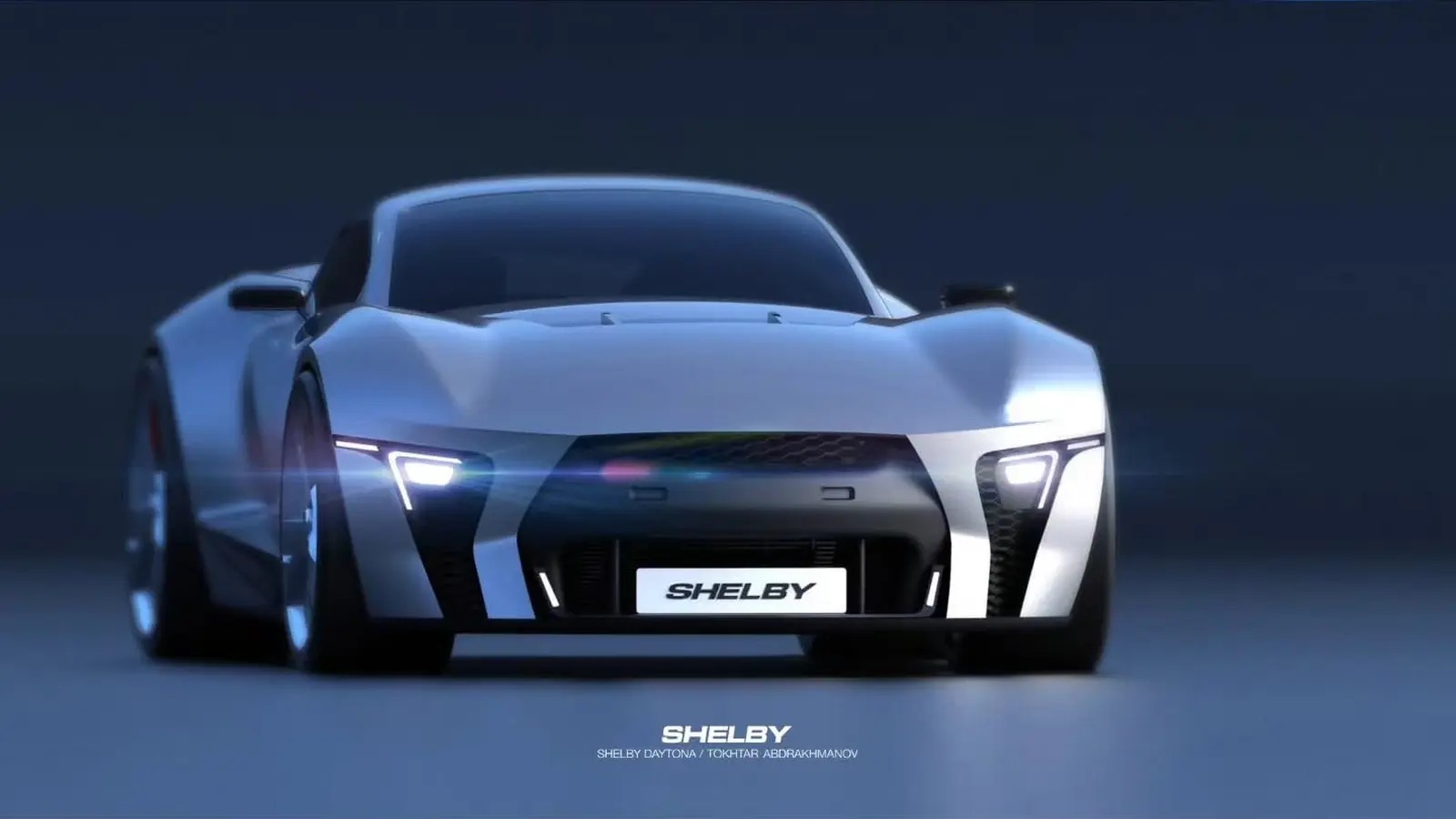
Classic Shelby DNA, Rebuilt for the 2030s
Carroll Shelby's lightweight creations — most famously the Shelby Cobra — are cornerstones of sports-car lore. Less celebrated but equally significant is the Shelby Daytona, a closed coupe derived from the AC Cobra chassis and purpose-built for GT racing. Now a digital revival envisions that coupe reborn as a new-age internal-combustion sports car tailored for the 2030s.
From Pencil Sketch to Photoreal CGI
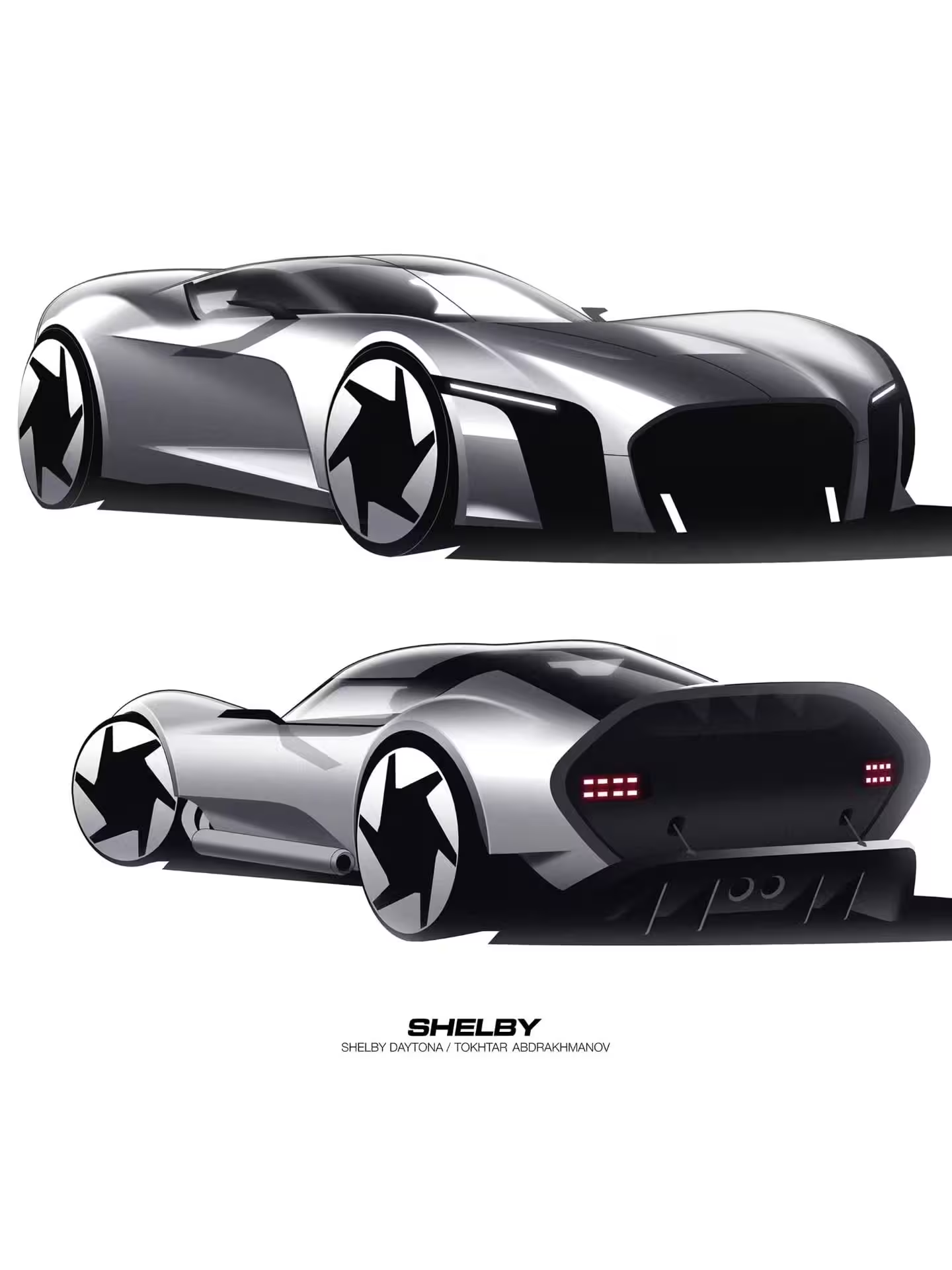
The concept owes its visibility to designer Tokhtar Abdrakhmanov, who has taken the Daytona-from-memory through a prolonged creative arc: pencil studies, monochrome ideation, color explorations, and finally fully rendered 3D scenes. Abdrakhmanov — an exterior designer with experience at Icona Design in Shanghai and a past internship at GAC — has shifted focus from Eastern studios to an unofficial, Western-facing design exercise: a Shelby Daytona reinterpretation built around an internal combustion ethos rather than electrification.

His work shows the stages many modern concept ideas travel through, and the renders move beyond nostalgia into a plausible vision for how a 1960s race coupe might be updated for today’s performance and safety standards while keeping that raw, aerodynamic silhouette.
Why the Daytona Still Matters
Originally engineered to challenge the Ferrari 250 GTO in FIA GT racing, the Daytona represents an era when form followed function with ruthless efficiency. Shelby’s 1965 International Championship for GT Manufacturers — the first time an American marque won that title — cemented the Daytona’s place in racing history. The Shelby Cobra itself later gained national recognition in the U.S. as a protected automotive treasure, and the Daytona’s legacy continues to inspire designers and enthusiasts alike.
Design Highlights and Visual Direction
Abdrakhmanov’s renders emphasize:
- A long, low nose and fastback coupe profile that mirrors the original Daytona’s aerodynamic priority.
- Modern lighting and aero elements integrated subtly so the car reads classic at a glance but contemporary up close.
- Lightweight proportions that preserve the dynamic poise associated with AC Cars and Shelby’s roadsters.
These visual choices reflect a broader trend among car designers who mix heritage cues with modern packaging to appeal to collectors and performance purists.
Performance, Packaging and Market Position (Speculative)
This is an unofficial project, so technical specs aren’t confirmed. Still, the concept implies a performance package consistent with Shelby tradition: a compact, lightweight chassis paired with a potent internal-combustion powerplant — likely a modern V8 or high-revving small-block — tuned for torque and responsiveness rather than outright electrified thrust.
Possible characteristics:
- Lightweight construction and concentrated mass for agile handling.
- Rear-wheel drive layout to honor the driving dynamics of the original Daytona and Cobra.
- A performance-focused manual or modern dual-clutch transmission for driver engagement.
Such positioning would target buyers who want a visceral, analogue driving experience in an age where many high-performance cars are hybrid or fully electric.

CGI as a Design Laboratory
Digital rendering platforms let designers iterate quickly and simulate real-world lighting, materials, and settings. Abdrakhmanov’s progression from studio renders to racetrack CGI and finally outdoor street scenes demonstrates how virtual concepts can explore how a car would look and feel across contexts — an important step for any revival project that hopes to bridge the past and the future.
"A Shelby Daytona for the 2030s" isn’t a production announcement; it’s a creative statement about what a new internal-combustion coupe might be in the coming decade. For enthusiasts who still crave the sound, weight, and tactile feedback of ICE performance cars, that idea holds strong emotional appeal.
Final Thoughts
The virtual Shelby Daytona underlines two things: heritage continues to drive automotive imagination, and CGI is an increasingly powerful tool for contemporary designers. Whether manufacturers will meet the demand for niche, ICE-focused sports coupes in the 2030s remains to be seen — but projects like this keep the conversation alive among collectors, engineers, and fans of pure driving experience.
Highlights:
- A digital revival of the Shelby Daytona aims to marry classic form with modern detailing.
- The project is unofficial and speculative, but it resonates with enthusiasts looking for analogue performance in a largely electrified market.
- CGI renderings show the value of visualization in modern automotive design.

“I cover automotive innovation, electric vehicles, and the future of mobility — where technology meets sustainability.”

Discussion
Leave a Comment