

Luxeed R7 breaks aerodynamic barriers with Cd 0.217
Supported by Huawei, the Luxeed R7 electric SUV has set a new world record for the lowest drag coefficient among mass-produced SUVs. The China Automotive Engineering Research Institute (CAERI) has officially verified the result: a Cd of 0.217. For an SUV — a vehicle type traditionally challenged by higher frontal area and turbulent airflow — this is a notable engineering milestone.
What makes the R7 so slippery?
The achievement comes from more than 20 dedicated aerodynamic measures. Design touches include a coupe-like fastback roofline, an active grille shutter (AGS), refined underbody panels, flush exterior fittings and optimized wheel and mirror shapes. These elements work together to reduce drag, improve energy efficiency and subtly enhance driving stability.
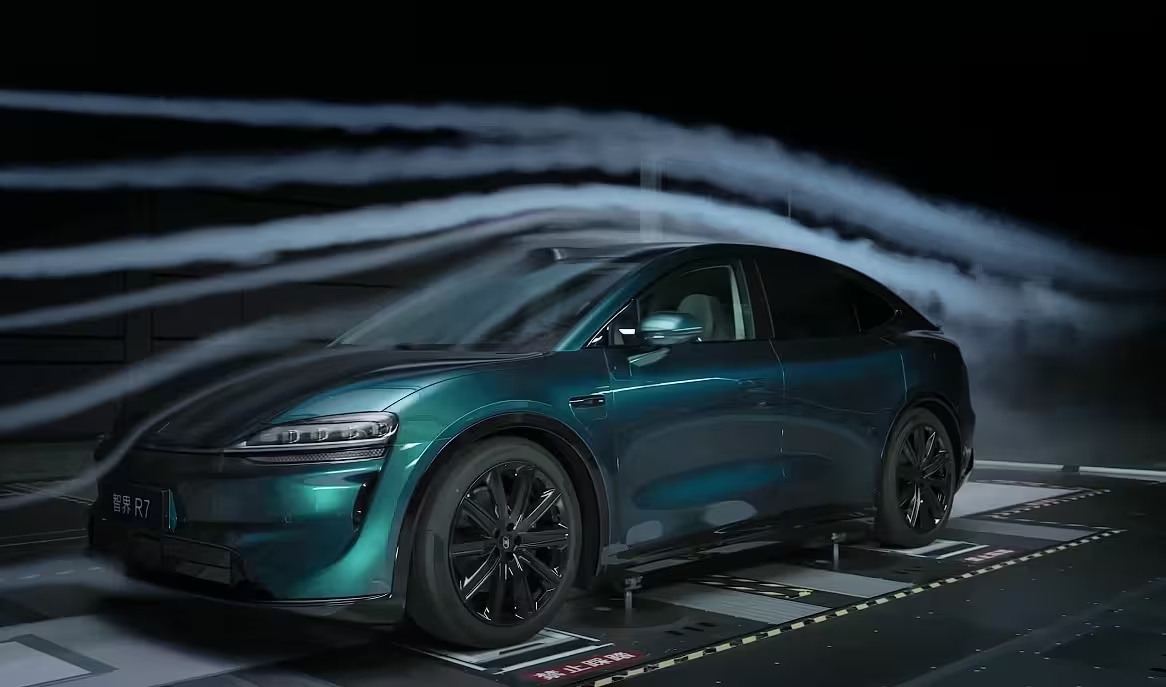
Highlights:
- Cd: 0.217 (CAERI confirmed)
- Over 20 aerodynamic features
- Luxeed R7 Pure Electric consumes 3.44% less energy than the industry average
Real-world significance and rivals
Lower drag directly improves electric driving range and reduces energy consumption at highway speeds. The R7’s 0.217 beats several recent competitors: Xiaomi YU7 at Cd 0.245, Tesla Model Y Juniper at Cd 0.220 and Onvo L60 at Cd 0.229. While small numerically, each tenth of a point in Cd translates into meaningful range and efficiency gains for EV buyers.

This record also highlights how automotive and tech partnerships — here between Luxeed and Huawei — are accelerating aerodynamic and system-level innovation. Expect this development to pressure rivals to prioritize aero in next-generation EV SUVs.
"Aerodynamics matters more than ever for electric SUVs," says an industry analyst. "The Luxeed R7 proves that production SUVs can approach sedan-like efficiency with the right design focus."
For car enthusiasts and buyers, the R7 is a signpost: aerodynamic engineering is now a front-line battleground in the EV market.


“Cars are evolving faster than ever. I cover electric vehicles, smart mobility, and the future of transportation worldwide.”

Discussion
Leave a Comment
Comments
No comments yet. Be the first.