
Spy Shots Reveal a Quieter-Faced 911
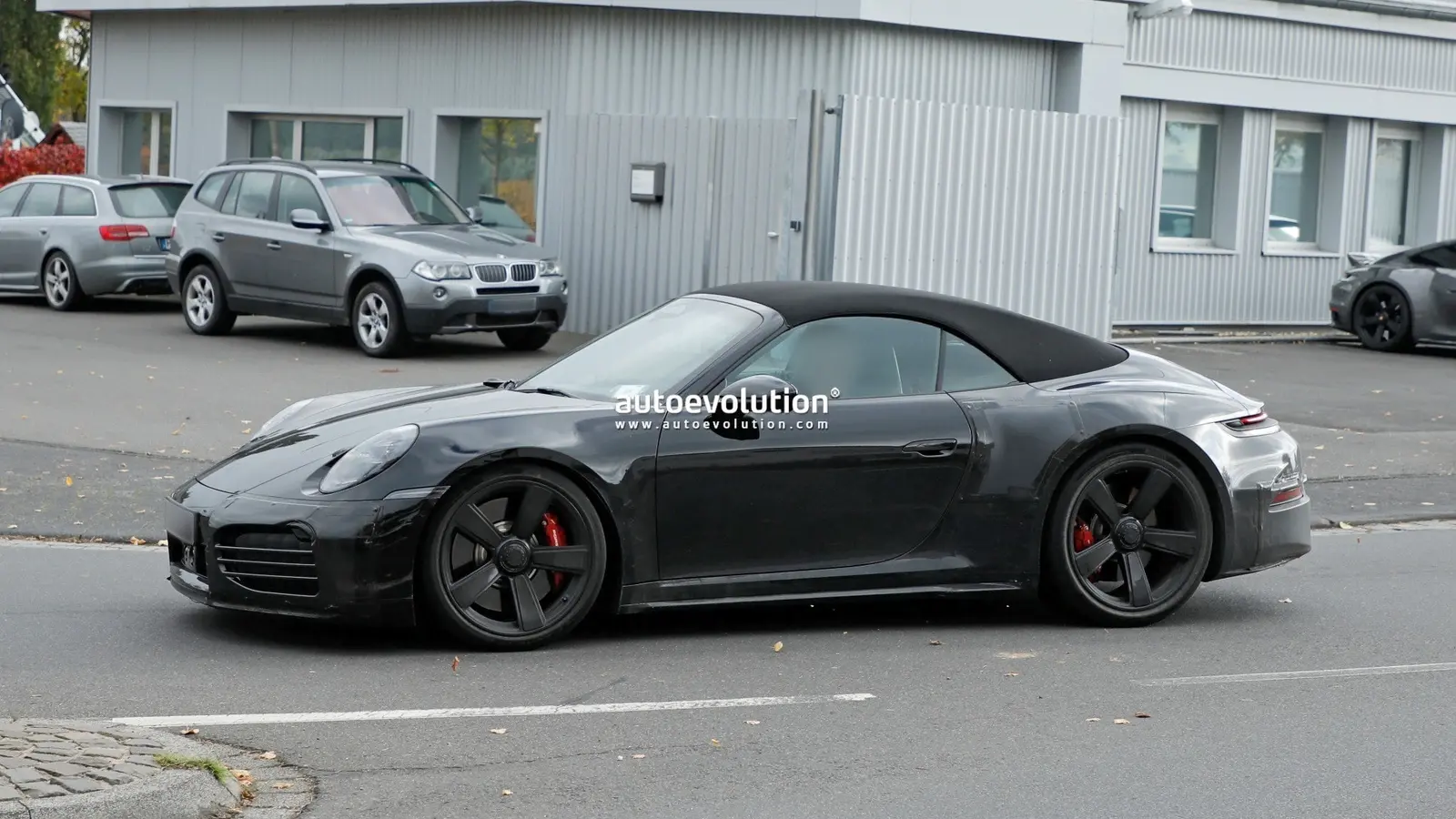
Porsche has been spotted testing a new 911 variant in cabriolet form that looks like a toned-down Turbo S — but with two bewildering details: the side air intakes are closed, and the deployable rear wing from the 992.2 Turbo S appears to be absent. The prototype, believed to be derived from the refreshed Turbo S, has sparked speculation about whether Porsche is planning a base Turbo, a Touring-style model, or something else entirely.
Key visual cues and what they mean
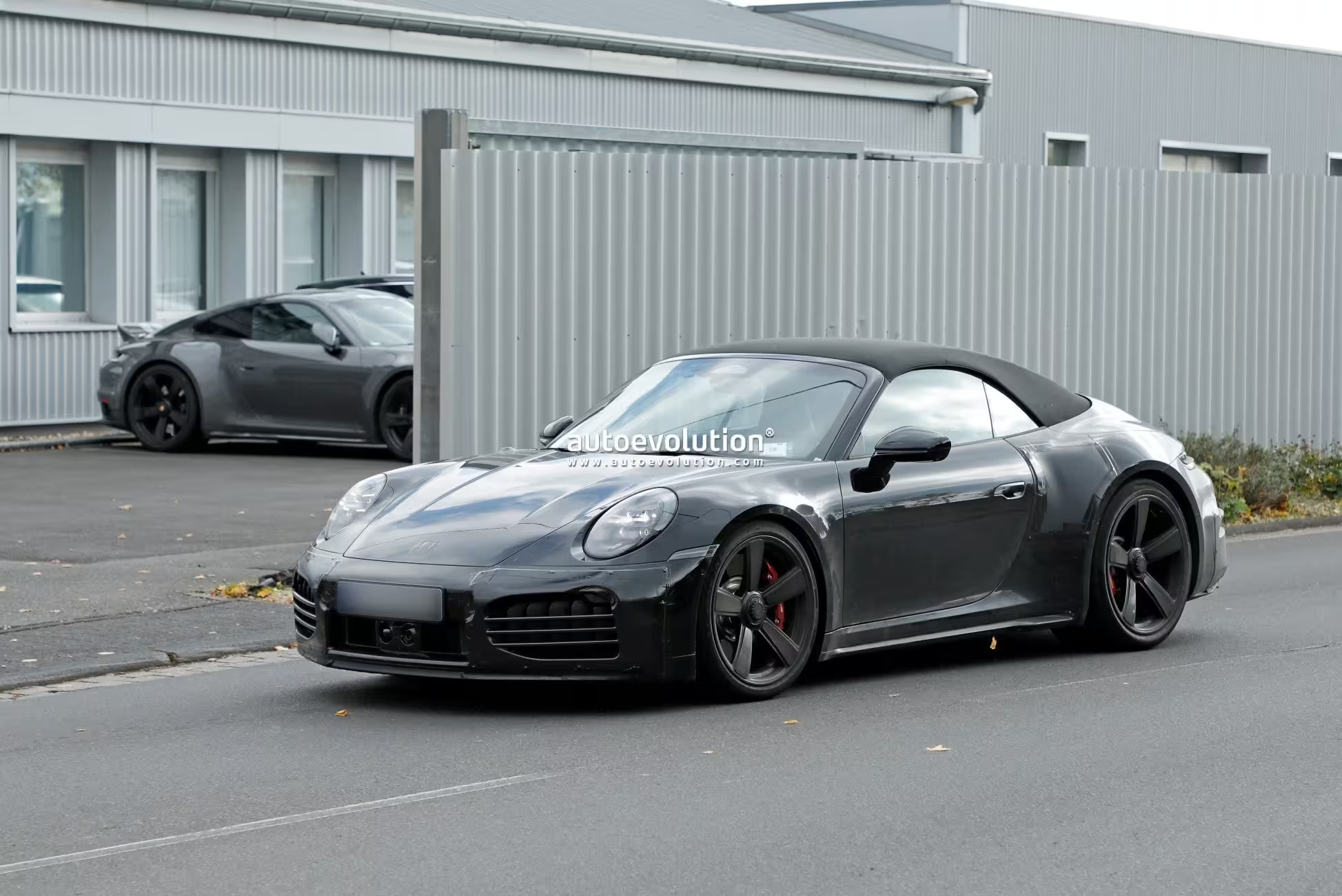
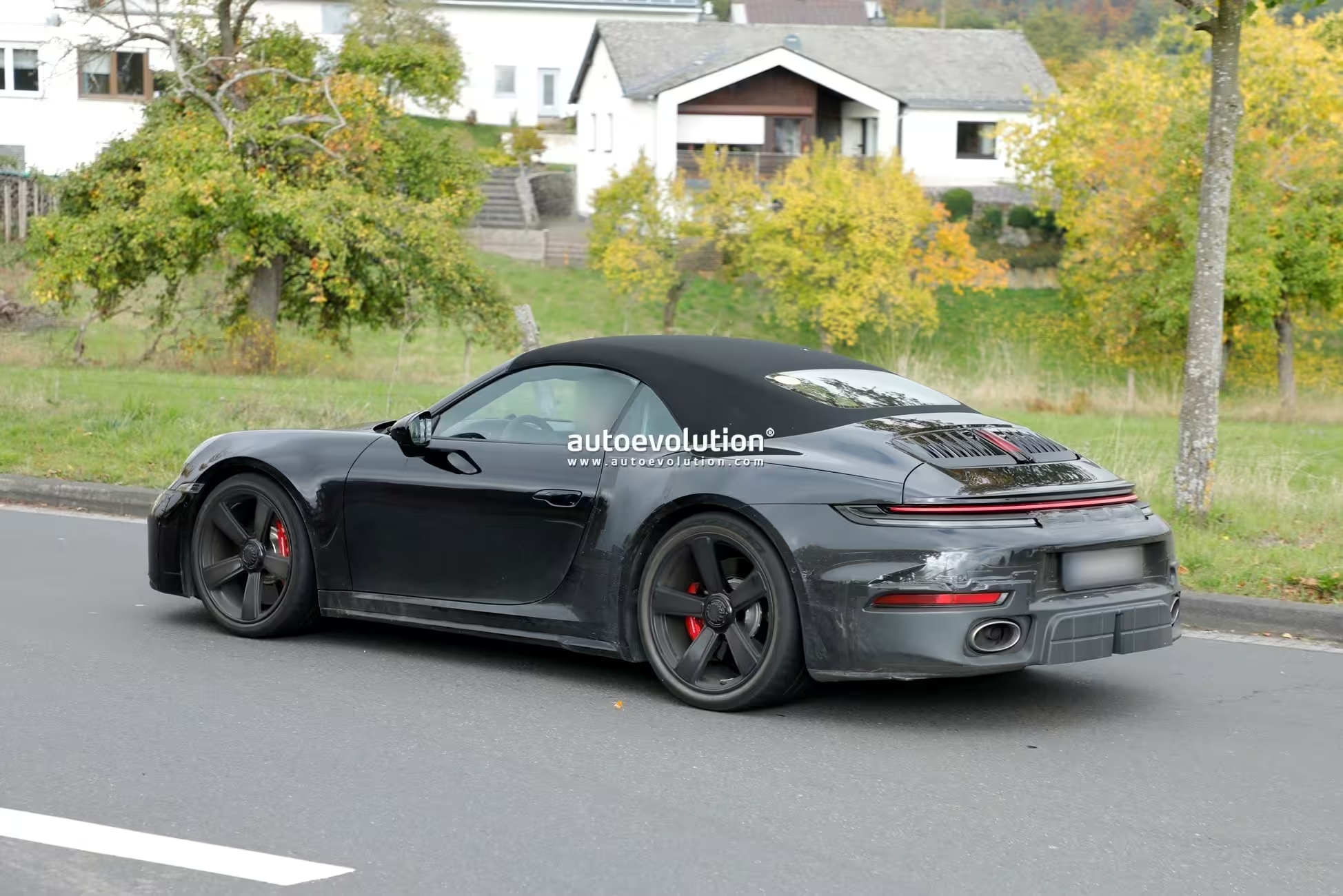
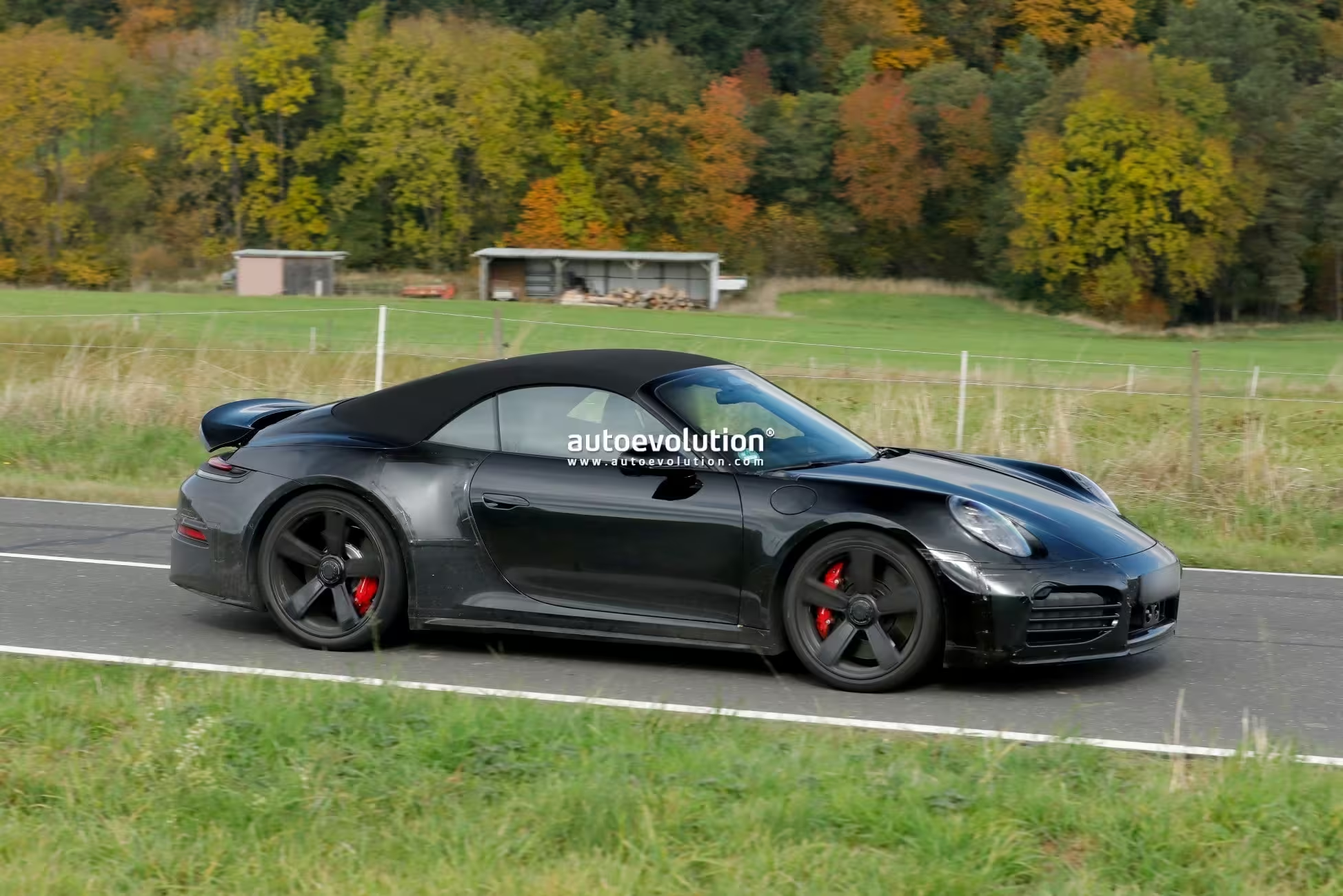
The mule carries centerlock wheels and the front fascia of the current Turbo S, signaling a performance pedigree. Still, closed side scoops suggest reduced cooling needs compared with the full-fat Turbo S — meaning less aggressive peak outputs are likely. The lack of a movable rear wing further reinforces the idea that this could be a more understated, grand-tourer type 911 rather than an all-out track-focused model.
Highlights:
- Centerlock wheels and Turbo S nose
- Closed side air intakes
- No apparent deployable rear wing
Powertrain and performance expectations
The Turbo S currently produces a staggering 701 mechanical horsepower, with 631 hp coming from a 3.6-liter flat-six equipped with twin-scroll, electrically assisted exhaust gas turbochargers. That setup yields 560 lb-ft (760 Nm) from combustion alone, rising to 590 lb-ft (800 Nm) with its electric assistance. If Porsche's new Touring-style 911 is based on the Turbo S architecture but with closed intakes, expect detuned output — likely positioned between the Carrera GTS and the Turbo S.
If this variant turns out to be a hybrid or a Touring edition optimized for refinement and long-distance comfort, a manual gearbox would be unlikely. Conversely, a rear-drive, manual-focused special (like the Sport Classic from 2022) would deliberately sacrifice some peak figures in favor of driver engagement.
Where it might sit in the range
Pricing context: in the U.S., the Turbo S starts at roughly $270,000 for the coupe and $284,300 for the cabriolet. Porsche customers historically favor the S, so replacing the standard Turbo with a more characterful Touring model — perhaps rear-drive and manual — could be a way to broaden appeal among purists.
Lineage and limited editions
Porsche has a history of spinning special editions from Turbo hardware. The GT2 RS is expected to use the facelifted Turbo S as its foundation, continuing a tradition of limited-run, high-price flagship 911s. Porsche's Sport Classic (992.1) was a rear-wheel-drive, manual-only nod to classic 911s with only 1,250 built — proving Zuffenhausen is willing to diverge from pure performance figures to create desirability.
Market and gearbox landscape
As of late 2025, manual offerings in the U.S. 911 lineup are limited to the GT3 and Carrera T. Most 992.2 variants use Porsche's ZF-supplied PDK dual-clutch transmission, a rapid-shifting unit with seven or eight gears that improves both performance and economy. If this Touring-style 911 keeps the hybrid hardware seen in some recent models, it would almost certainly arrive with PDK rather than a manual.
"This prototype feels like Porsche testing the boundaries between track-capable performance and refined touring comfort," says one enthusiast spotting the mule. Whether it emerges as a subtle Turbo, an electrified Touring model, or a limited-run retro-inspired special remains an open question.
Expect an official reveal sometime in early 2026. Until then, the closed scoops and subdued aero give us plenty to debate about Porsche's next move for the 911 range.

“Cars are evolving faster than ever. I cover electric vehicles, smart mobility, and the future of transportation worldwide.”

Discussion
Leave a Comment