
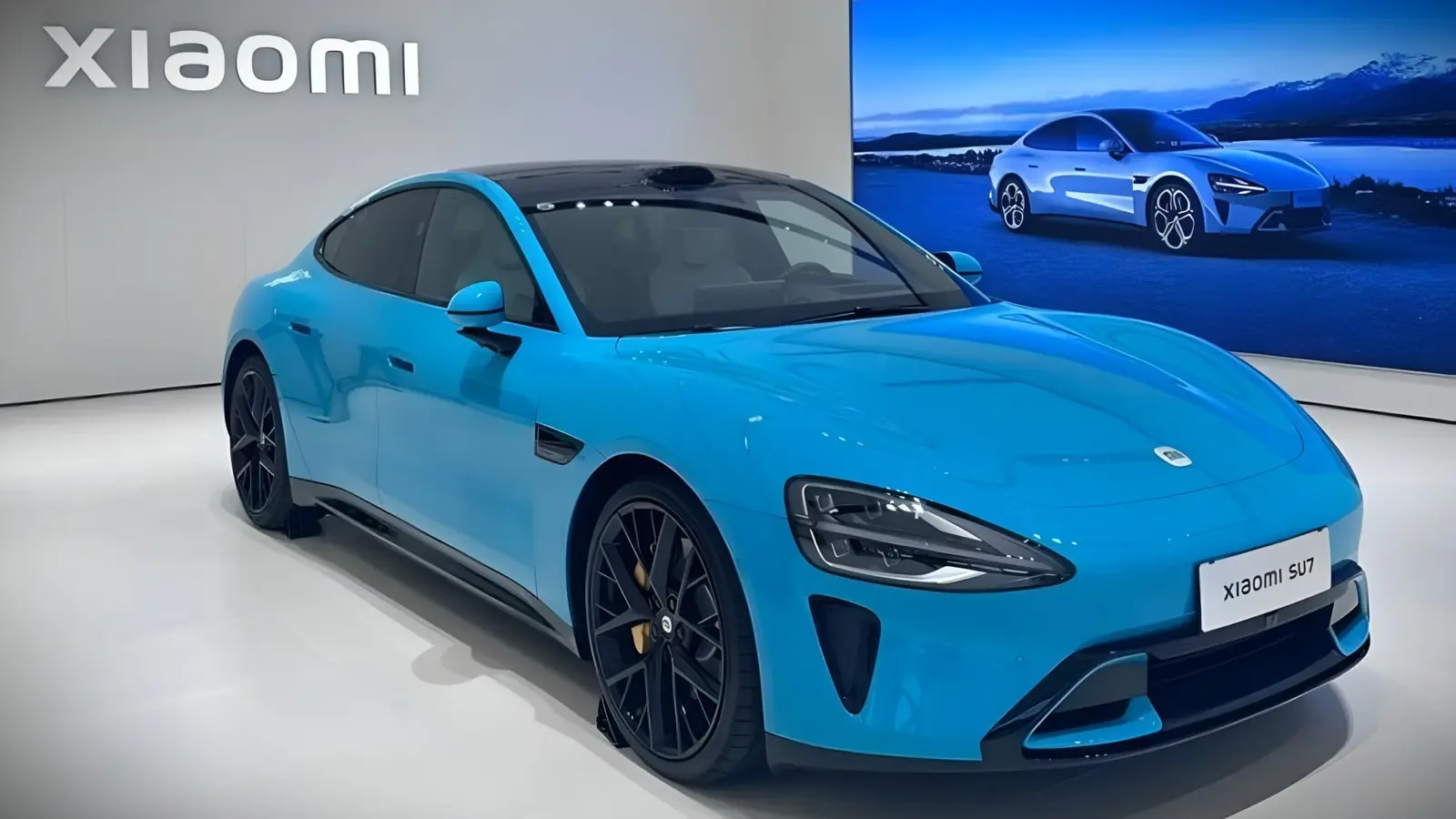
Xiaomi SU7 refresh confirmed for March 19, 2026
Xiaomi is accelerating its push into the electric vehicle market with a significant mid-cycle update for its SU7 sedan. The 2026 SU7 — scheduled to debut on March 19 — has already drawn massive interest: more than 100,000 preorders were recorded within two weeks of opening. That level of demand underlines Xiaomi's momentum as an EV maker and highlights how rapidly Chinese automakers iterate to stay competitive.

Why China’s competitive market forces faster EV updates
China’s automotive market is famously cutthroat. Automakers there frequently refresh models and roll out new tech at a pace far faster than in many Western markets. Price competition, aggressive development cycles, and frequent product launches push brands to update vehicles quickly — often just two years after launch. The SU7, introduced in 2024, is a prime example: the new 2026 refresh arrives well ahead of what Western benchmarks might expect.
Preorders, pricing and market positioning
Despite a price hike of 10,000–14,000 yuan (around $1,400–$2,000), consumer demand for the refreshed SU7 has stayed strong. The large preorder volume is notable given the refresh has not been widely revealed in full yet. Xiaomi’s YU7 crossover, which entered production in 2025, has dampened SU7 sales somewhat, but the new version appears to be recapturing interest thanks to meaningful technical upgrades rather than radical styling changes.
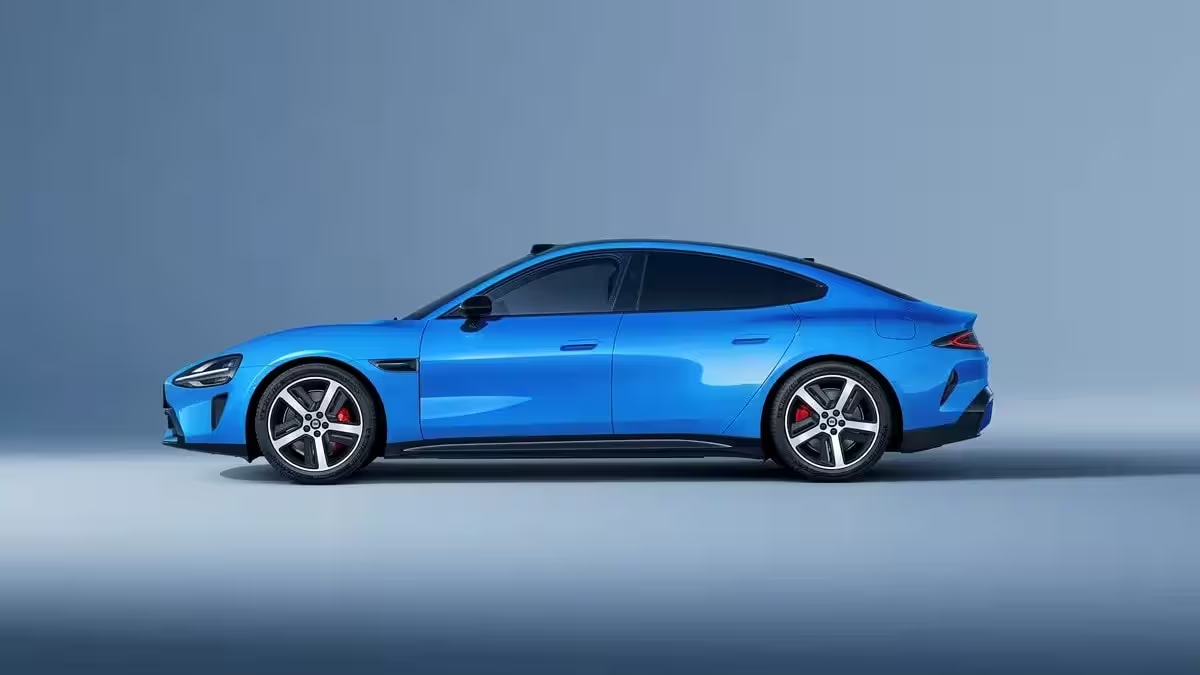
Key technical upgrades: charging, voltages and range
Under the skin is where Xiaomi focused most of its improvements. The entire SU7 range now benefits from higher-voltage electrical architecture, boosting charging performance. Most models adopt an 800-volt class strategy: Standard and Pro trims move from a 400V platform to roughly 752V, while the Max goes from 871V to 897V. These changes translate into faster charging times and improved efficiency.
Xiaomi claims the refreshed SU7 can add 670 km (416 mi) of range after just 15 minutes of charging under CLTC testing — a sizeable increase from the prior 510 km (317 mi) in the same time frame. As always, real-world charging depends on conditions, battery temperature, and charger capability, but the figures indicate a major leap in charge-speed performance for an EV in this class.

Battery and motor improvements
The updated lineup uses V6s Plus electric motors across all trims, which lift power outputs. Standard and Pro trims now produce approximately 320 hp (up from 299 hp), while the range-topping Max now develops 690 hp (up from 673 hp). Range numbers also improved across the board, with the Pro reportedly surpassing 900 km (560 mi) under CLTC — positioning the SU7 competitively among long-range electric sedans.
Autonomy hardware and compute: LiDAR and 700 TOPS
One of the most significant changes in the 2026 SU7 is the democratization of advanced driver-assistance hardware. LiDAR sensors and a 700-TOPS driving computer will be standard across all trims. Previously, LiDAR and high compute were reserved for higher-tier versions: the Pro and Max had LiDAR and about 508 TOPS, while the Standard trim lacked LiDAR and only featured 84 TOPS.
By equipping every SU7 with LiDAR and a 700-TOPS brain, Xiaomi significantly raises baseline ADAS capability for lower trims — enabling more sophisticated perception, stronger sensor fusion, and room for future OTA software updates to expand autonomous features.

Suspension, chassis and passive safety
Xiaomi also reinforced the SU7’s structure and chassis. High-strength steel in critical zones has been upgraded to 2,200 MPa from 2,000 MPa, improving crash performance and rigidity. The refreshed chassis introduces a dual-chamber air suspension, and CDC adaptive damping is now available on the Pro trim — features that enhance ride comfort and handling dynamics while contributing to passive safety improvements.
What this means for buyers and the EV market
The SU7 refresh is a clear statement: Xiaomi intends to compete on technology and value. Faster charging, higher voltages, improved motors, expanded LiDAR and compute, and structural upgrades together make the 2026 SU7 a more compelling package. For buyers seeking cutting-edge electric sedan tech — especially those valuing rapid charging, long range, and advanced driver assistance — the updated SU7 will be an attractive option.
Xiaomi’s ability to generate six-figure preorder interest in a short time also signals broader market faith in its EV strategy. As global EV competition intensifies — from legacy automakers to new entrants — Xiaomi’s iterative, tech-first approach could influence how quickly other manufacturers deploy charging and autonomy improvements across entire lineups.
Looking ahead
Expect Xiaomi to use the March 19 reveal to emphasize real-world performance, charging benchmarks, and ADAS demos. Independent range and charging tests will be key for buyers and reviewers seeking to validate the company’s CLTC-based claims. If Xiaomi’s numbers hold up in independent testing, the SU7 refresh could further tighten competition with rivals such as the Tesla Model 3 in China and beyond.
Overall, the 2026 Xiaomi SU7 refresh focuses on faster charging, smarter driving systems, stronger safety structure, and more power — a rounded update designed to keep the model relevant in one of the world’s toughest EV markets.

“I cover automotive innovation, electric vehicles, and the future of mobility — where technology meets sustainability.”

Discussion
Leave a Comment