
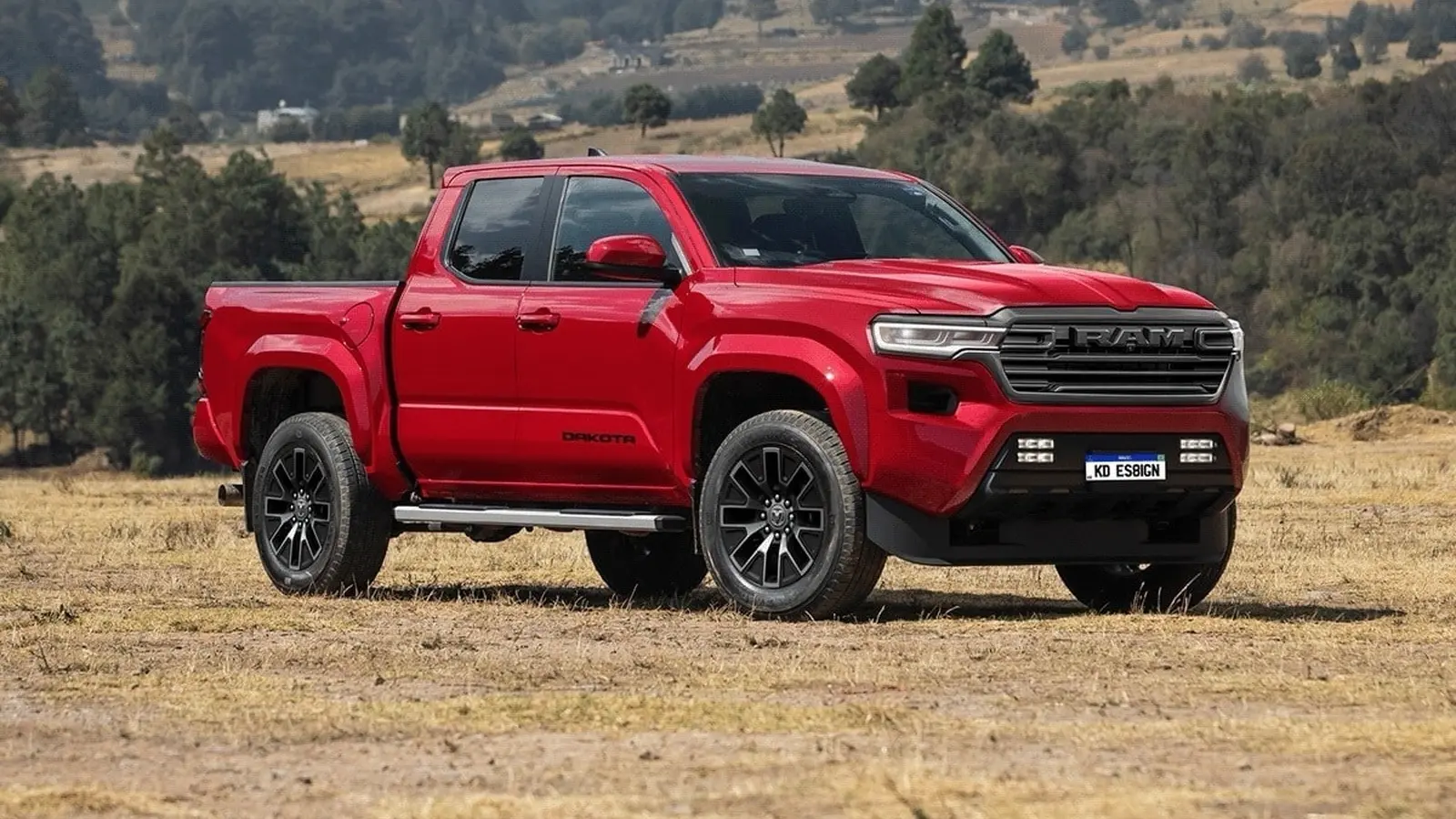
Ram returns to the midsize segment
Ram is officially bringing back a midsize pickup. Stellantis and Ram Trucks boss Tim Kuniskis confirmed the long-awaited model — revived under the Dakota nameplate — will arrive as a genuine body-on-frame truck, engineered from the ground up for capability rather than being a mere "car with a bed." Kuniskis stressed the urgency of the move, saying the ideal time to build this truck was yesterday and the second-best time is now.

What to expect: design, capability, and intent
The new Dakota is being pitched as a proper truck for buyers who prioritize towing, payload, and real work capability. That positions it squarely against established midsize pickups like the Toyota Tacoma, Ford Ranger, and Chevrolet Colorado. Ram’s aim is clear: offer a credible alternative for buyers who might otherwise step up to a light-duty full-size model.
Key highlights expected:
- Body-on-frame construction for durability and towing
- Multiple powertrain options, including four- and six-cylinder gasoline engines and a hybrid variant
- No V8 offering; turbocharged inline-six (Hurricane) likely to be the performance ceiling
- More affordable pricing positioned below the Ram 1500

Powertrains and performance
Underpinning the Dakota will be traditional truck architecture rather than a unibody crossover derivative. Ram plans to offer modern four- and six-cylinder gas engines, and a hybrid system is on the table for buyers seeking improved efficiency without sacrificing capability. A V8 won’t be offered — a sensible decision given that most competitors in the midsize segment don’t carry V8 options either. The turbocharged Hurricane inline-six could top the range for customers wanting maximum torque and on-road performance.
Real-world capability
Ram’s messaging emphasizes usable towing and payload figures rather than headline horsepower. That focus will be critical to convincing pickup buyers who expect functional beds, trailer towing, and off-road competence when required.
Pricing and market positioning
Pricing will be a major selling point. Ram says the Dakota will cost less than the Ram 1500, which starts at roughly $42,025. Industry observers expect the new midsize Ram to begin in the mid-$30,000s to low-$40,000s — a price band designed to compete directly with the Tacoma and other segment leaders. Toyota’s Tacoma sold 274,638 units in the U.S. last year, up about 42.4% versus 2024, illustrating how competitive and lucrative this segment remains.
Why Ram needs the Dakota
Ram’s range has been missing a lower-priced option since the Ram 1500 Classic ended production in October 2024. The Classic provided a budget-friendly bridge between older and newer models; without it, Ram lacked a near-midsize price offering. Bringing back the Dakota is both a strategic and practical move to reclaim that "sweet spot" in the market.

Production and timing
The Dakota is expected to enter production at the Belvidere Assembly Plant in Illinois in 2027 as a 2028 model year vehicle. That timeline gives Ram time to refine powertrains, towing calibrations, and trim levels so the truck meets buyer expectations from day one.
Whether Ram can topple long-time midsize leaders will depend on how well the Dakota balances capability, price, and brand appeal. But with a true truck architecture, multiple powertrains, and a competitive starting price, the Dakota looks set to be a compelling new option for truck shoppers.
Quick takeaway: The Ram Dakota returns as a ground-up midsize, body-on-frame pickup in 2027, offering four- and six-cylinder engines plus hybrid options, no V8, and a starting price aimed below the Ram 1500 to challenge the Tacoma and other segment rivals.

“I cover automotive innovation, electric vehicles, and the future of mobility — where technology meets sustainability.”

Discussion
Leave a Comment