
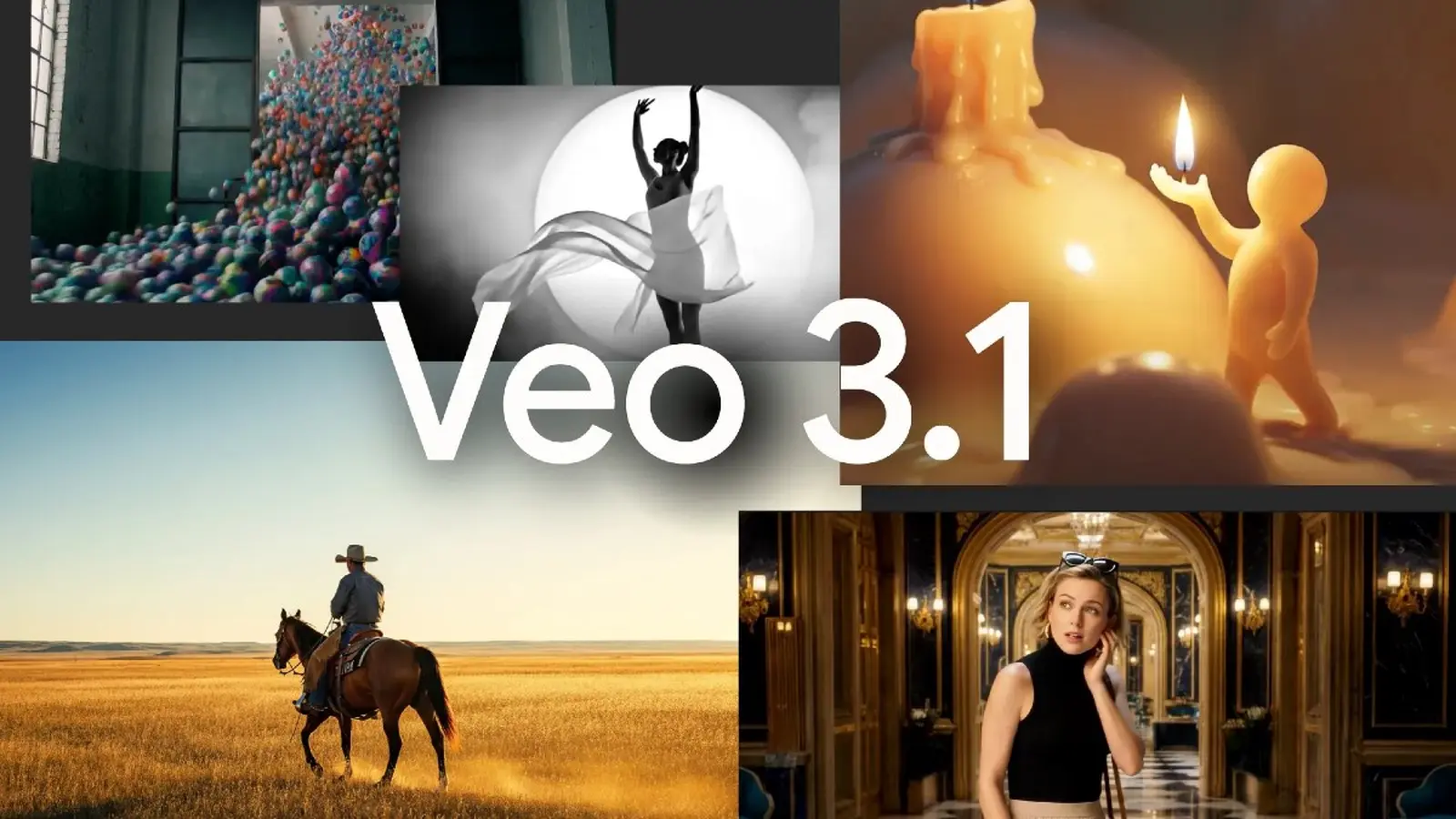
Google has officially introduced Veo 3.1, the latest evolution of its Veo AI model designed to generate video with synchronized audio. The update focuses on richer sound outputs, improved image-to-video conversions, and finer control for creators who want to add or remove elements in footage with AI assistance.
What’s new in Veo 3.1 — sound, realism, and tighter control
Built on the foundations of Veo 3, Veo 3.1 brings a major new layer: audio. Where previous releases focused primarily on visuals, this version produces videos that include natural-sounding audio tracks and better-synced sound design. Google says the model creates more realistic video results overall, and it now allows users to insert objects into scenes that automatically match the look and style of the footage.
Editing features creators will actually use
Veo 3.1 improves the image-to-video pipeline and gives editors more granular control over output. Expect features like:
- AI-generated audio tracks and voice elements that align with visual edits.
- Smoother image-to-video transitions and more faithful rendering of inserted objects.
- Tools for style-matching when you add elements so new items blend seamlessly with the original clip.
Google also announced that Flow — its AI-powered editing tool — will soon let users remove objects from videos using these models. That makes quick fixes and complex edits far easier without manual frame-by-frame work.
How Veo 3.1 reaches Google’s AI ecosystem
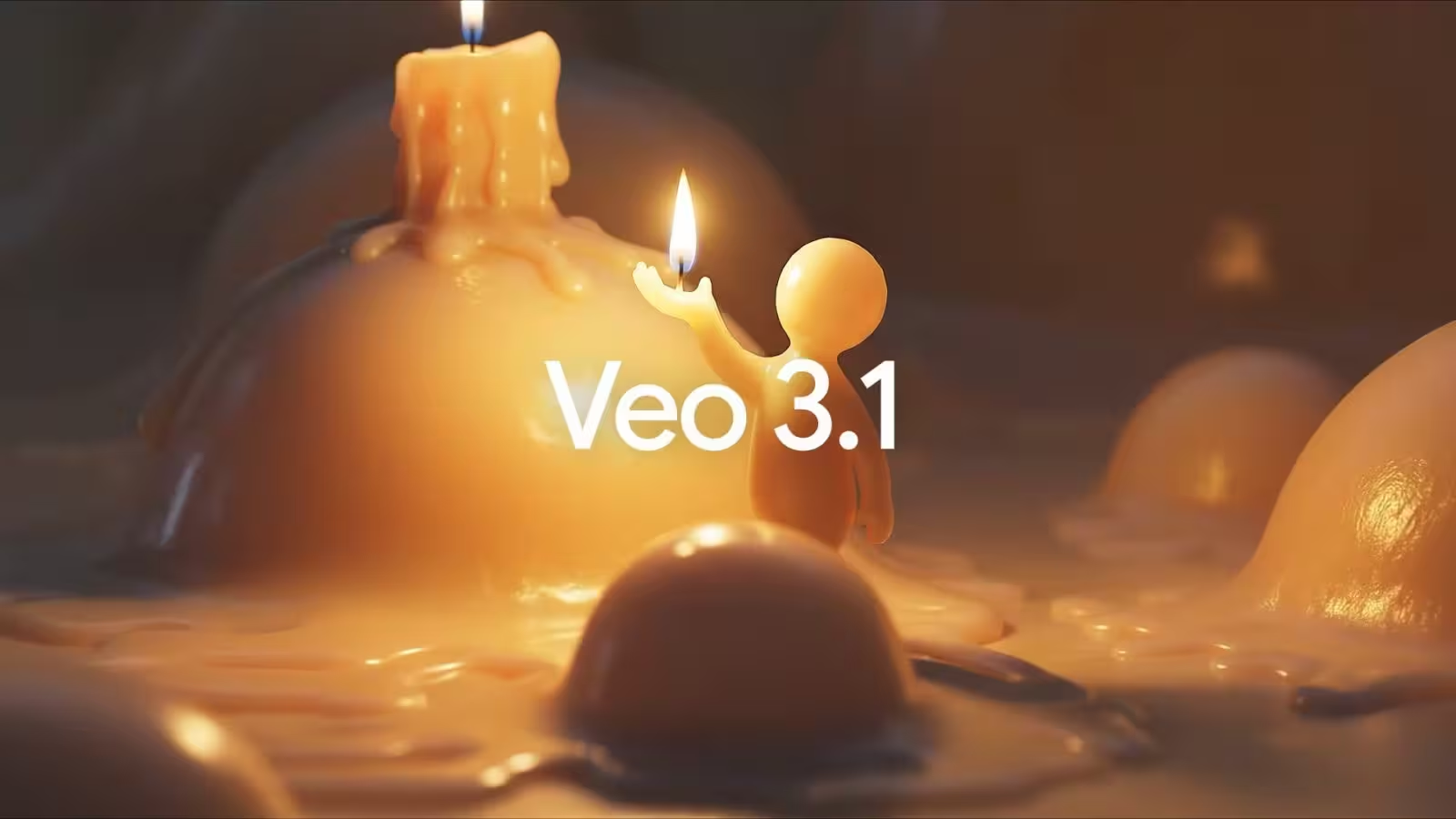
Veo 3.1 won’t be an isolated offering. Google plans to roll the model into Flow and its other AI platforms like Gemini over time, integrating audio-enabled video generation into its broader suite of creative tools. The company says the rollout will be gradual, giving developers and creators time to test and adapt workflows.
Why it matters — for marketers, filmmakers, and everyday creators
Imagine adding a branded prop to a marketing clip and having the model style it to match lighting and motion — or removing an unwanted object from a shot in seconds. These are the kinds of practical gains Veo 3.1 promises. As always, increased realism raises questions around authenticity and misuse, so expect discussions about ethics, watermarking, and responsible deployment as adoption grows.
For now, Veo 3.1 signals Google’s push to make AI-assisted video creation more accessible, adding sound as a core dimension rather than an afterthought. If you produce video content — whether for social, advertising, or storytelling — the new tools coming with Veo 3.1 are worth watching.

“I love exploring gadgets, apps, and trends that redefine how we connect, work, and play in a digital world.”

Discussion
Leave a Comment
Comments
No comments yet. Be the first.