
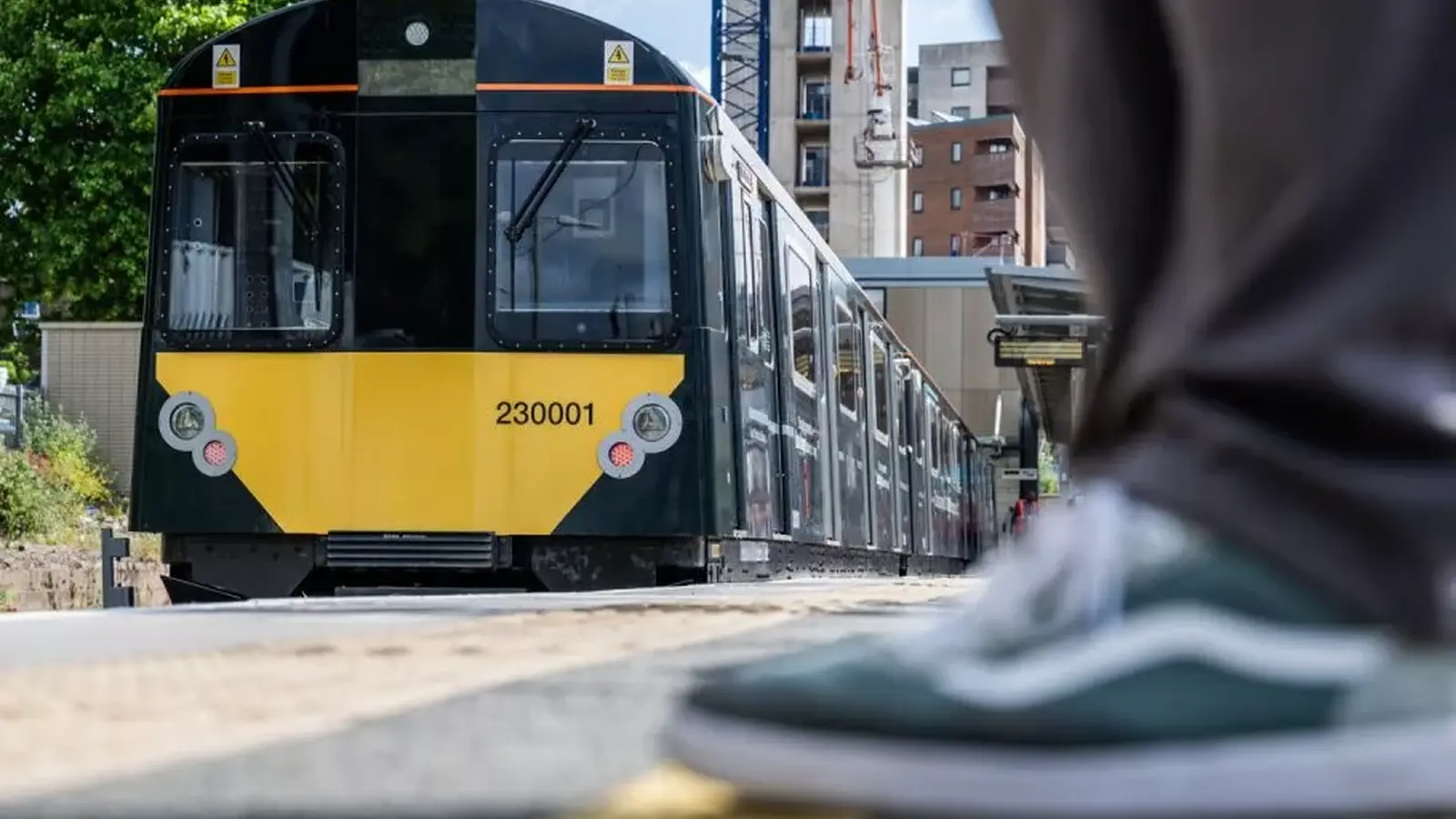
GWR launches the UK’s first battery-only passenger service
Great Western Railway (GWR) has introduced Britain’s first battery-electric passenger train into regular service, a milestone for rail electrification and zero-emission transport. The Class 230 train now runs on the Greenford branch line in west London, replacing the former diesel units on the roughly 8 km round trip between West Ealing and Greenford.
Fast charging on short runs
The battery train serves four stations along the line, with each one-way journey taking about 12 minutes. After completing its outward or return trip, the train pulls into West Ealing where a rapid charging sequence re-juices its battery bank in approximately 3.5 minutes. That fast charge is delivered by a 2,000 kW charger connected to a short live section of rail; the energized rail segment is only powered when the train is precisely positioned over it to keep the system safe.
Range record and testing
During a 22-month trial on the same route, GWR and partners evaluated the rapid-charging system and the train’s behaviour under varied operational conditions. In testing, the Class 230 covered 200.5 miles (about 323 km) on a single full charge — setting a new world record for distance travelled by a battery-electric train without recharging.
That performance significantly improves on the previous benchmark set by Stadler Deutschland in 2021, when a battery train managed 139 miles (around 224 km) on one charge. The new record highlights advances in battery technology, energy management software, and high-power charging infrastructure.

Infrastructure and collaboration
Network Rail worked alongside GWR to install the necessary rapid-charge infrastructure at West Ealing, deploying battery banks and charging equipment and taking part in system safety assessments. The coordinated effort ensured both the rolling stock and the charging facilities were ready for passenger service.
GWR began passenger operations last week and plans to continuously collect operational data to optimise performance and reliability. A full technical report detailing the trials and findings was published in July 2025, analysing whether short, frequent charges at designated stations can enable battery trains to operate reliably on routes that are not fully electrified.
Why this matters to automotive and EV fans
Rail battery systems and high-power charging share many lessons with the electric vehicle (EV) world: thermal management, charging speed, battery longevity and grid interactions. For enthusiasts tracking the shift to electrification, the Class 230’s success illustrates how fast-charging hubs plus robust battery packs can extend zero-emission operation to secondary and branch lines without costly overhead wiring.
- Key specs: Class 230, rapid 2,000 kW charging, ~3.5-minute top-up stops.
- Record: 200.5 miles (≈323 km) on one charge during testing.
- Partners: GWR, Network Rail; data-driven rollout for safe public service.
Outlook
The Greenford trial demonstrates a practical pathway for decarbonising suburban and rural routes where full electrification is uneconomical. For the wider automotive and transport industry, the results reinforce that battery technologies and fast charging continue to improve — shrinking the gap between ambition and operational reality for zero-emission travel across road and rail.
As GWR gathers more real-world data, expect further refinements in charging strategy and battery management that could influence both future train designs and broader electrification strategies across the UK rail network.

“Cars are evolving faster than ever. I cover electric vehicles, smart mobility, and the future of transportation worldwide.”

Discussion
Leave a Comment
Comments (2)
Smart move tbh. Makes sense for short branch lines but battery degradation & charging costs? If fares stay reasonable I'll try it, nice to see real progress
Is this even true? 2,000 kW in 3.5 mins sounds bonkers, and that live rail idea worries me. Precise positioning, failsafe needed… hope they've stress tested it, no surprises