
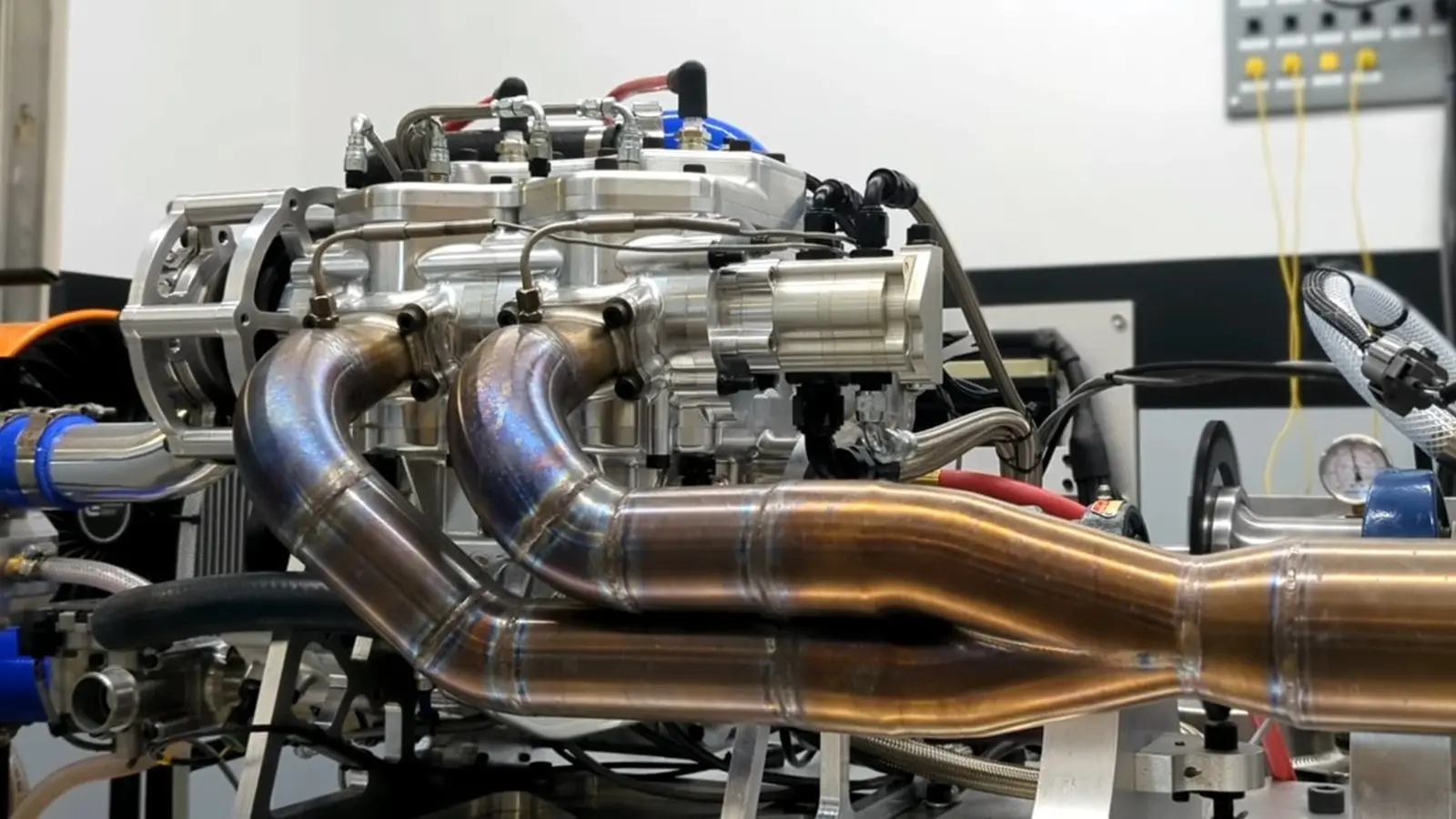
Alpha-Otto’s REV Force: a modern multi-fuel combustion breakthrough
Electrification has transformed the automotive landscape, but internal combustion engines are far from extinct. Alpha-Otto Technology, a startup founded in 2022, is betting on that reality with a new engine architecture called REV Force with STLTC — a high-power-density, multi-fuel internal combustion platform designed to serve vehicles, aircraft, ships, factories and even homes.
How it works in plain terms
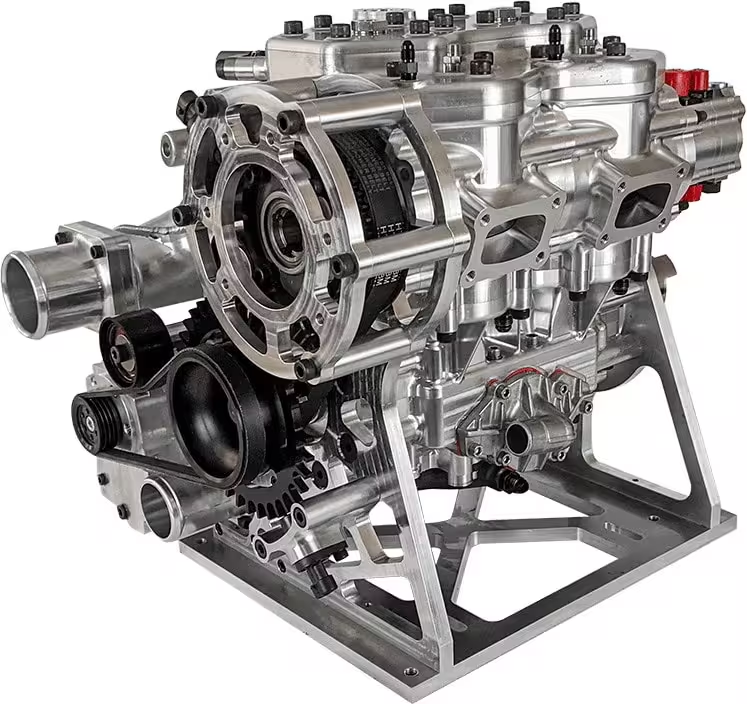
REV Force combines a rotary exhaust valve and a force-variable induction system with a combustion strategy Alpha-Otto calls Spark-assisted Turbulent Low-Temperature Combustion (STLTC). In effect, the design is a two-stroke reciprocating engine that produces a power stroke every crankshaft revolution, giving it higher power density than a conventional four-stroke unit.

Key technical ideas:
- Rotary exhaust valve: replaces traditional poppet valves to better control exhaust timing and scavenging.
- Force-variable induction: dynamically controls air charge to tune combustion for different fuels and loads.
- STLTC: a low-temperature, spark-assisted combustion method intended to reduce unburned hydrocarbons and improve thermal efficiency.
The result, Alpha-Otto claims, is an engine architecture that is simpler (fewer moving parts), lighter and cheaper to manufacture than many modern piston engines, while tolerating a wide range of liquid and gaseous fuels.
True multi-fuel capability
What sets REV Force apart is its fuel flexibility. Tests so far reportedly show operation on gasoline, ethanol, kerosene (JP-8), diesel, methanol, compressed natural gas (CNG), liquified petroleum gas (LPG) and hydrogen, with minimal hardware changes. That opens applications beyond cars — think auxiliary power for ships, range-extender units for aircraft, modular power for data centers and resilient home or factory backup energy.
"Run it on hydrogen for near-zero carbon operation, or use ammonia, diesel or jet fuel where infrastructure demands it," says Alpha-Otto literature. That pragmatic stance makes REV Force attractive for markets where fuel choice is dictated by availability, cost or regulations.
Performance and efficiency claims
Alpha-Otto quotes a power density of about 4.4 horsepower per kilogram (roughly 2.2 lb per hp), which they say is higher than any other piston engine class. They also claim the STLTC cycle can be up to 50% more thermally efficient than a conventional spark-ignition engine — a significant figure if independently verified.
Practical specs discussed by the company include an initial two-cylinder, 600cc REV Force unit producing around 170 horsepower. That compact package could be used directly in lightweight vehicles or paired with electric motors in hybrid systems.
Power Cube: the first real-world product
Alpha-Otto is demonstrating REV Force in a hybrid generator called the Power Cube. The unit combines a REV Force prime mover with an axial-flux electric motor to produce 100 kW from a platform that measures roughly one square meter and weighs about 100 kg (220 lb). The idea is modularity: individual Power Cubes can be used for distributed power or stacked into clusters to create data-center-grade solutions.
Potential configuration:
- Single Power Cube: 100 kW output, compact footprint.
- Stacked cluster: up to 20 MW capacity in a container-sized enclosure for industrial or data-center backup power.
Testing, IP and commercialization roadmap
Work on the REV Force concept dates back roughly a decade, although Alpha-Otto formally launched in 2022. The company reports two prototype generations and around 240 hours of bench testing using multiple fuels. International and U.S. patents were issued in December 2024.

Funding to date includes federal grants totaling about $1.2 million and a WeFunder round in 2025 that raised just over $900,000 from 299 private backers. Alpha-Otto says it could have a Power Cube ready for a full-scale demonstration within 36 months and is in talks with major engine OEMs to license production rather than build its own factories.
Planned near-term steps:
- Secure Letters of Interest (LOIs) and engineering partners.
- Finalize small-scale production tooling and pilot projects for the 600cc/170 hp two-cylinder REV Force unit.
- Demo Power Cube clusters for commercial and industrial customers.
Market positioning and implications
Alpha-Otto does not aim to sell finished engines directly to consumers. Instead, it plans to license the REV Force architecture to established OEMs who can produce at scale. That strategy helps the startup avoid heavy capital expenditure while tapping existing manufacturing networks.
Why this matters:
- Flexibility: industries with different fuel needs can adopt the same basic platform.
- Cost: simpler mechanical layout could lower production and maintenance costs versus modern multi-valve engines.
- Transition tech: REV Force offers a potential bridge where electrification is impractical — maritime, aviation, heavy industry and remote power.
What to watch for
Skeptics will want independent verification of the claimed thermal efficiency and real-world emission levels on conventional fuels. Critical milestones to watch are:
- Third-generation prototype test results and published data.
- OEM partnerships and signed LOIs.
- A public Power Cube demonstration and performance benchmarks.
Quote highlight:
"If REV Force delivers on its efficiency and multi-fuel promise, it could reshape how we think about combustion engines in a world moving toward decarbonization — not by denying electrification, but by providing resilient, flexible power where batteries alone don’t fit," an industry analyst commented.
Bottom line
REV Force is an ambitious attempt to reinvent the internal combustion engine for a fuel-diverse future. Its combination of two-stroke power density, rotary exhaust control, STLTC combustion and modular hybrid integration could open new markets — provided the company can prove real-world efficiency, low emissions on conventional fuels and secure OEM partners for production. For enthusiasts, fleet operators and industrial buyers, the next 18–36 months will be decisive in determining whether REV Force remains a promising concept or becomes a practical alternative in the global power mix.

“Cars are evolving faster than ever. I cover electric vehicles, smart mobility, and the future of transportation worldwide.”

Discussion
Leave a Comment