
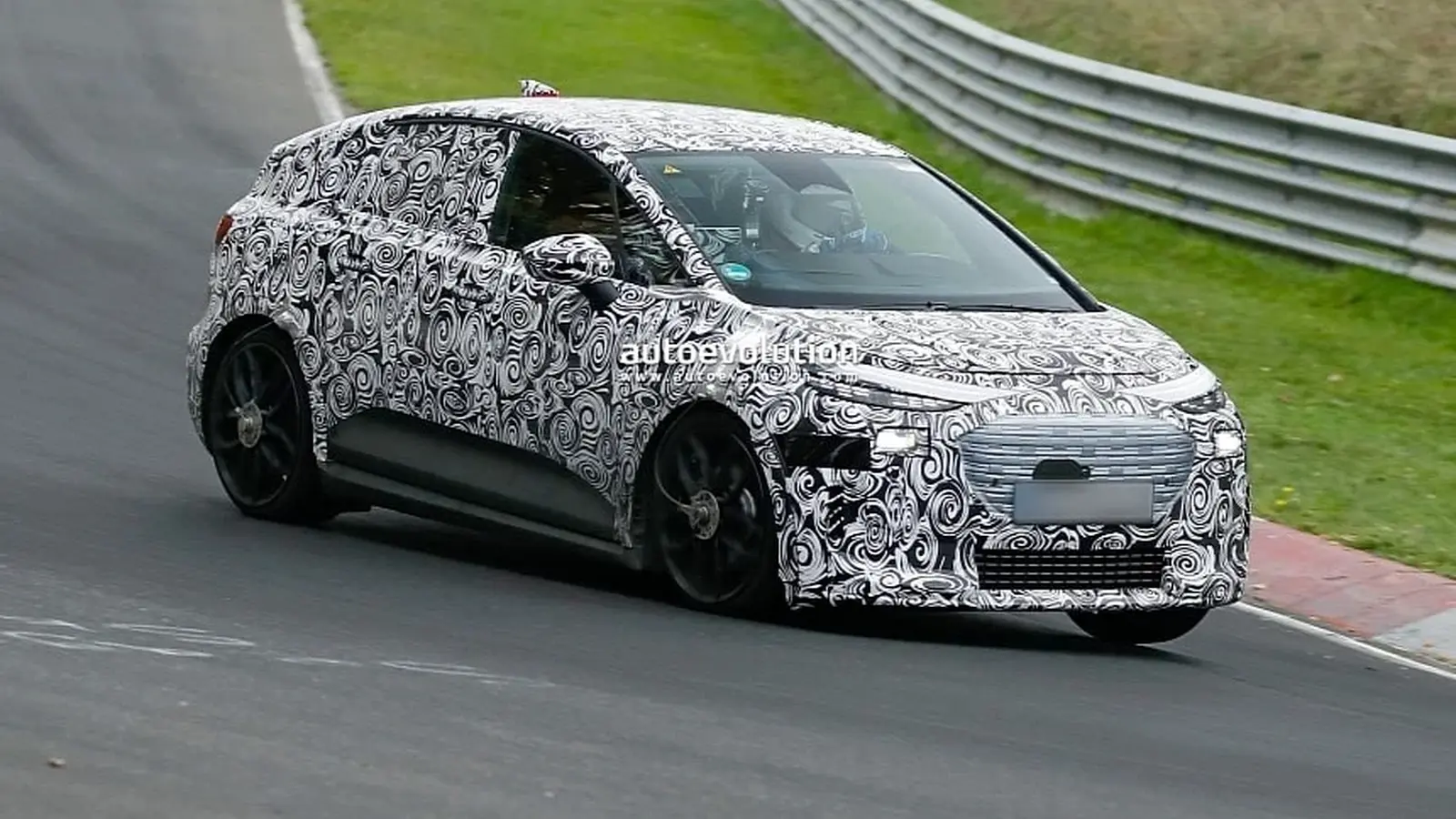
Audi's compact electric returns to the ring
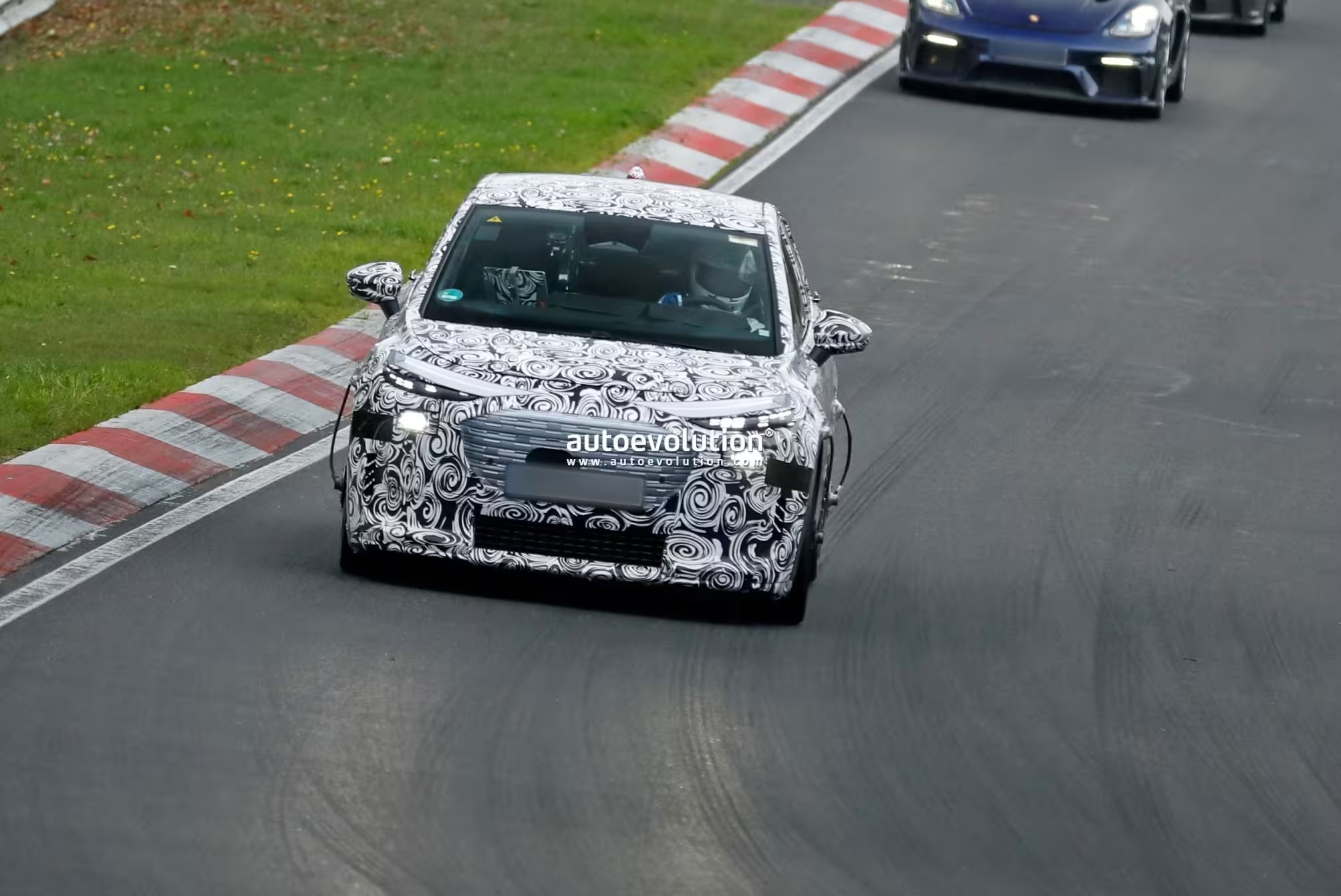
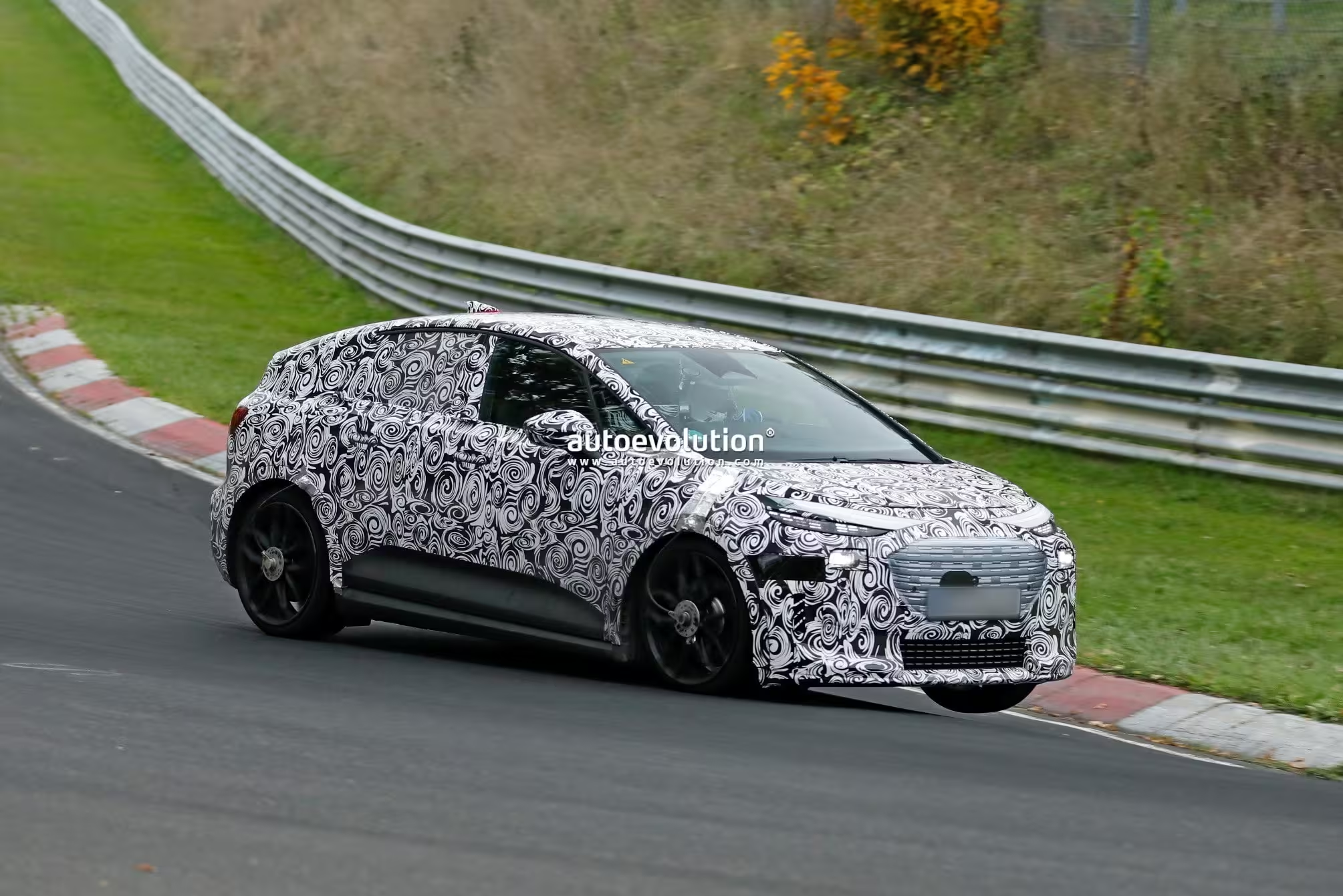
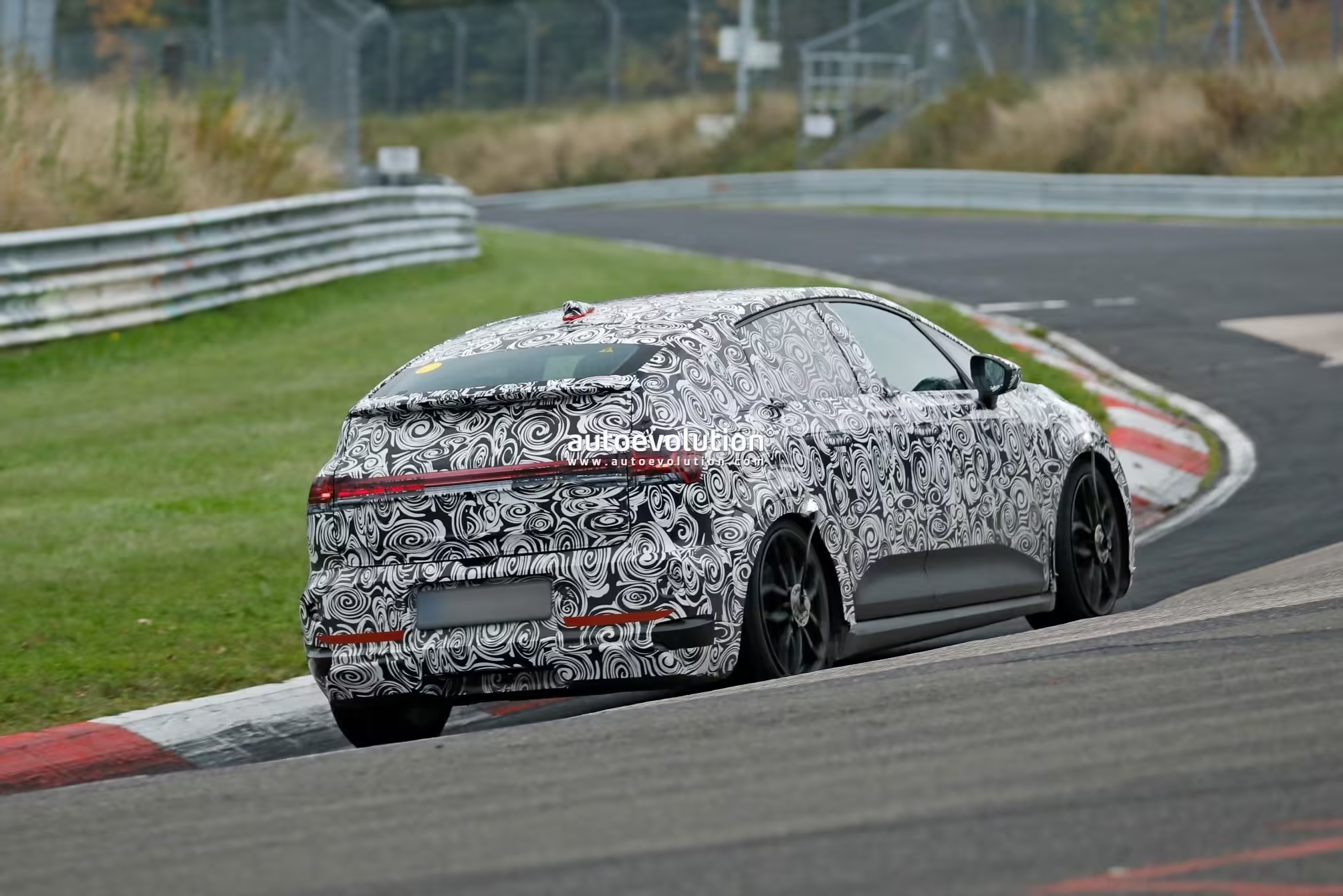
Audi has begun Nürburgring testing of the 2027 A2 e-tron, an all-electric revival of the compact A2 that wears production-intent body panels during hot-lap and durability runs. Initially camouflaged under Volkswagen ID.3 GTX bodywork in early sightings, the latest prototypes show a more defined Audi identity: a Q4 e-tron-inspired grille sticker, A2-like rear spoiler and window profile, plus pixelated signature lighting up front and a full-width taillight bar at the back.
Design DNA: familiar yet distinct
From the rear the new A2 e-tron echoes the original internal-combustion A2, but close inspection reveals parts borrowed from Volkswagen’s compact EV family. Front quarter windows and a relatively short rear overhang are reminiscent of the ID.3, and the front-pillars share similar proportions. Audi counters that shared heritage with deliberate styling cues: black door cladding, a distinct rear window and spoiler treatment, and an Audi-style light signature that gives the small EV a standalone presence.
Both front and rear glass on the test cars carry yellow high-voltage stickers, and the rear axle shows drum brakes—an unusual but telling choice that points to VW Group’s long-running MEB architecture underpinning this entry-level Audi. Inside, the cabin is expected to blend elements from the Q6 e-tron and pre-facelift Q4 e-tron, offering a modern cockpit while keeping costs competitive.
Platform, charging and performance expectations
Under the skin the A2 e-tron appears to use a rear-biased MEB setup limited to a 400-volt electrical architecture. That means the car will likely miss the faster 800-volt charging that some rivals now offer, but Audi engineers aim to keep real-world charging times competitive. Early estimates suggest a 10–80% recharge in under 30 minutes—on par with compact EV performance—and Audi of America previously quoted around 28 minutes for the Q4 e-tron on DC fast charging.
Expected drivetrain choices include single-motor rear-wheel-biased layouts and dual-motor all-wheel-drive variants. Top speeds are likely to land between 160 and 180 kph (99–112 mph), with acceleration tuned for everyday usability rather than outright sport. Given current sales trends for Audi battery-electric models in Europe and North America, a high-performance S or RS flagship seems unlikely at launch.
How the A2 e-tron fits the market
The A2 e-tron is aimed squarely at buyers seeking a premium compact EV with Audi branding and efficient packaging. It will face competition from recently redesigned segments such as the Mercedes-Benz CLA Sedan and Shooting Brake, which benefit from newer electrical architectures in some cases. Still, the A2’s combination of Audi styling, competitive charging times, and accessible pricing could help it carve out a niche.
Quick highlights:
- Platform: VW Group MEB (400V)
- Charging: ~10–80% under 30 minutes (target)
- Powertrain: single- and dual-motor options expected
- Top speed: ~160–180 kph (99–112 mph)
Context from the Q4 e-tron
To give context, the single-motor Q4 40 e-tron starts from roughly 46,150 euros in Germany, offers up to about 411 km (255 miles) WLTP range, and does 0–100 kph in around 8.1 seconds. The range-topping Q4 55 quattro is the sharpest performer, with a dual-motor setup capable of 0–100 kph in roughly 5.4 seconds (5.0 seconds to 62 mph in U.S. trims) and up to about 335 hp in its most potent state. In the U.S., the Q4 lineup starts near $50,600.
"The Nürburgring runs are about stress-testing systems and refining chassis balance," an industry engineer familiar with prototype programs said. "For a compact EV like the A2 e-tron, it's where durability meets real-world handling."
Audi’s testing at the Nordschleife signals the brand’s commitment to ensuring the A2 e-tron meets driving and quality expectations before it arrives at showrooms. For buyers, that should translate into a small premium hatchback EV with credible Audi character, practical charging capability, and the familiar MEB cost advantages that have allowed Volkswagen Group to scale electric models quickly.

“Cars are evolving faster than ever. I cover electric vehicles, smart mobility, and the future of transportation worldwide.”

Discussion
Leave a Comment