

Big bets are being placed on memory chips. Samsung's Device Solutions leadership says orders should swell through 2026 and 2027 — and the company is already positioning itself to capitalize.
What changed? The answer is simple and loud: hyperscalers building massive AI clouds. These companies have been buying memory in volumes few anticipated. Prices climbed. Supply tightened. The result: a windfall for major memory makers and a scramble to scale production.
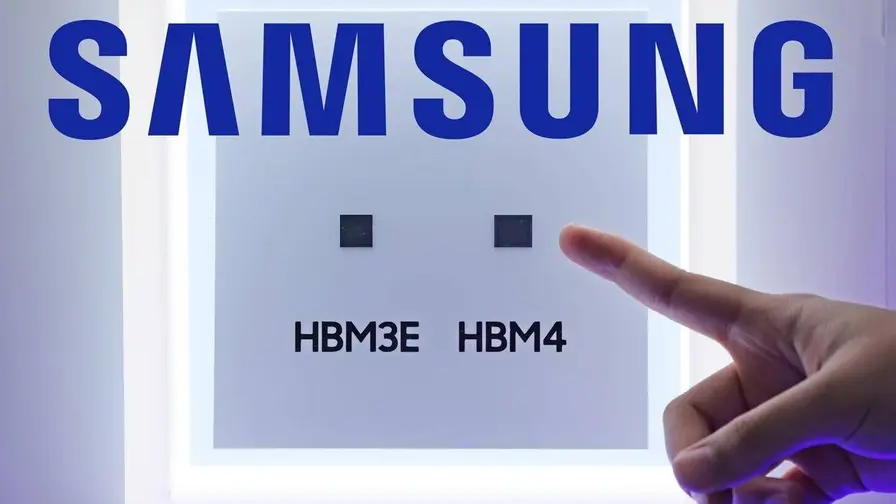
Samsung has ridden that wave. Strong demand for HBM3E lifted sales in the third quarter and carried momentum into the fourth. Now the company is shifting focus to HBM4. Mass-production plans target the first quarter, and early customer shipments, Samsung says, have delivered gratifying performance.
Behind the chip labels are concrete engineering advances. One is hybrid bonding for HBM stacks. By changing how layers are joined, Samsung reports about a 20% cut in thermal resistance for 12H and 16H stacks, and lab results showed roughly an 11% drop in package temperature in baseline tests. That matters: cooler stacks sustain higher speeds and longer lifetimes.

Another thread is zHBM, a vertical-stacking approach that stacks dies along the Z axis. The payoff is dramatic — up to four times the bandwidth while trimming power consumption by roughly 25% — a combination AI farms crave.
Samsung is also exploring custom HBM designs that embed compute capabilities inside the memory itself, blurring the line between storage and processing. That approach aims to shave latency and boost energy efficiency for specialized workloads.
So yes, Samsung expects strong orders in 2026 and 2027. The driver is familiar: ever-expanding AI workloads demanding more bandwidth and better thermal and power efficiency. Will these memory advances be the bottleneck breaker for next-gen models? Keep watching — memory is quietly becoming the headline act in the AI arms race.

“I love exploring gadgets, apps, and trends that redefine how we connect, work, and play in a digital world.”

Discussion
Leave a Comment
Comments
No comments yet. Be the first.