

Imagine walking down a crowded street and your eyewear quietly whispers a name. Sounds like science fiction. Or surveillance?
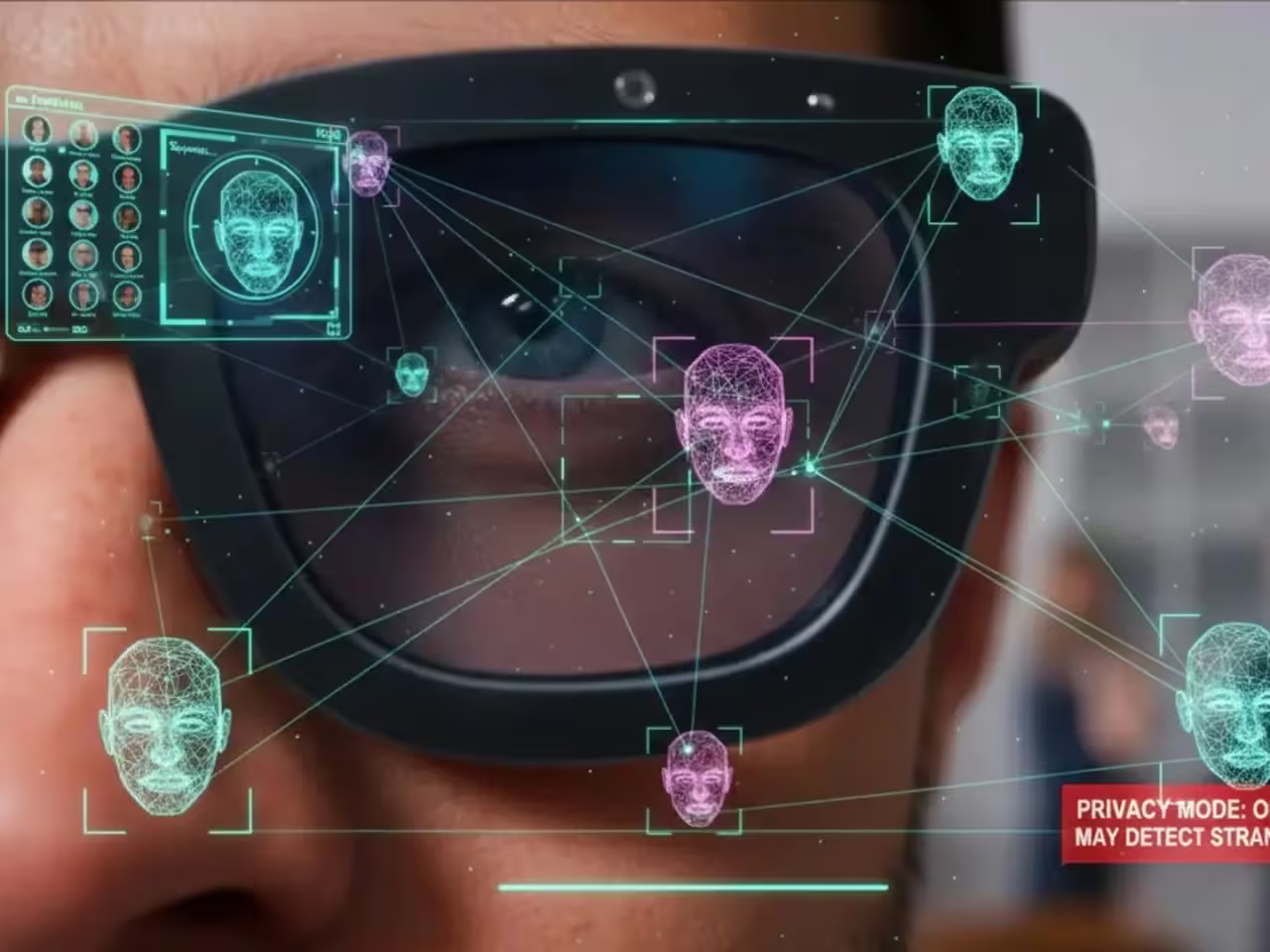
New reporting from the New York Times says Meta is quietly working on a feature called Name Tag that would enable its smart glasses to identify people through an on-device AI assistant. The detail comes from an internal document reviewed by the paper. According to that memo, Meta planned to roll the feature out at a moment when regulators and civil-rights groups were distracted by other battles — a timing choice that has privacy advocates uneasy.
Name Tag, the document explains, is not meant to be a free-for-all face scanner. Instead, the system would first focus on people a user has already encountered on Meta platforms, or on those with public profiles on services like Instagram. In other words, Meta is reportedly exploring limits: identify contacts and public accounts rather than every face on the street. Still, limits on paper do not erase practical risks.

Meta has already partnered with well-known eyewear brands such as Ray-Ban and Oakley on its AR hardware. The company apparently intends to bring Name Tag to market later this year. An early plan even envisioned introducing the capability at a conference for blind and low-vision users before wider availability — a choice that underscores a tension at the heart of the product. Who benefits? Who is exposed?
Erin Logan, a Meta spokesperson, pushed back softly when asked about the reports, telling The Verge that Meta builds products to help people connect and enrich their lives. She added that while interest exists for features like Name Tag and similar products are on the market, Meta is still exploring options and will take a thoughtful approach before releasing anything.
That cautious language follows a history of legal headwinds. Meta stumbled in 2017 after introducing automatic face-tagging in Facebook photos and ultimately shelved biometric tagging under pressure in 2021. Yet the company appears to be circling back to facial recognition via eyewear. Leaks from last year also suggested a so-called Super-sensing mode — an always-on camera state that could continuously monitor a user’s surroundings and call out names.
Privacy policy changes at Meta hint that AI on glasses could remain active until the user explicitly disables it with a manual command such as 'Hey Meta.' That raises clear concerns: constant sensing tied to a massive social network or public-account databases opens doors to unintended tracking, doxxing, or misidentification. And for a technology that might be pitched as an accessibility boon for blind or low-vision users, the stakes are high.
There are alternatives and precedents. Companies like Envision, collaborating with Solos, offer assistive eyewear that requires the user to snap a photo and manually tag someone in an app before recognition occurs. That design flips the script: control sits with the wearer, not a persistent automatic scanner.
Meta will argue the upside — faster social recognition, more independence for visually impaired users, hands-free convenience. Critics will point to mission creep, weak safeguards, and the real-world power dynamics of identifying strangers in public. Which side ends up shaping the final product may depend less on tech than on law, public pressure, and an uncomfortable public conversation about what we want our glasses to do.

“I cover emerging technologies, digital innovation, and the intersection of tech and everyday life. My goal is to make complex trends accessible and inspiring.”

Discussion
Leave a Comment
Comments (2)
this could actually help blind ppl, but jeez the risks are huge. timing smells shady, privacy lessons ignored. if Hey Meta keeps it on, no thanks — yikes
Wait so my glasses could whisper names? Who okayed this... is it even legal? Feels like stealth surveillance tbh