
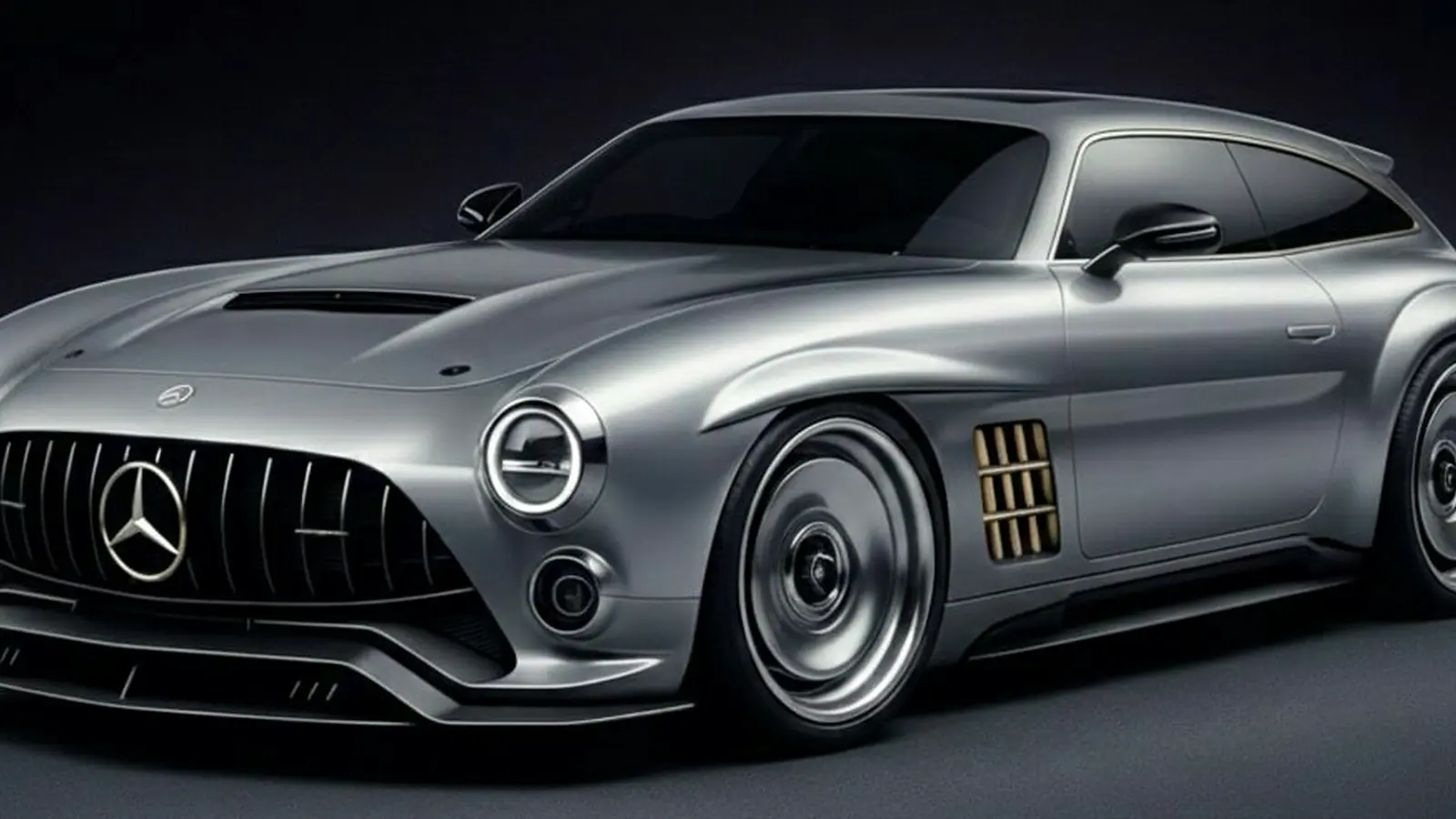
Pixels have a habit of telling truths that committees forget. A recent digital study from route66.designhouse—posted to Instagram and quietly rippling through design circles—does something bold: it turns the 1950s Mercedes‑Benz 300 SL Gullwing into a two‑door shooting brake. The result looks like a historical what‑if that somehow remembers how to breathe.
There’s no badge worship here. The first impression comes from proportion. Long hood. set‑back cabin. That classic Mercedes prestige gap between the front axle and the A‑pillar is exaggerated just enough to convince your eye that a big engine lurks behind the front wheels. It reads like architecture: heavy at the nose, lithe through the hips, purposeful at the rear.

This pixel-born 300 SL shooting brake says more about proportion than a dozen focus groups.
The render borrows cues from the original Gullwing without turning into a museum replica. The hood arc and the uninterrupted sideline are clear nods to 1954’s geometry, but the sculpting avoids the retro‑pastiche trap—no forced chrome ruffles, no awkward mashups of old and new. It’s more an interpretation than a caricature, and that restraint is why the design lands.
Call it romanticism for engineers. The designers leave out the fake vents and the jagged creases favored by some contemporary brands. Instead, surfaces flow. The rear haunches swell like a boxer’s shoulders preparing for a punch. The wheel arches are flared but honest: the wheels look like they belong, not like accessories pasted on for photo-ready aggression.

And yet the concept doesn’t pretend to be a museum piece. Modernity slips in where it matters: subtle LED detailing around round headlamps, a tastefully integrated rear hatch, and cabin choices that ignite debate. The render shows multiple interiors. One leans into today’s hyper‑screen mania—device‑like dash stretching across the cockpit. Another keeps analog dials and a proper shifter silhouette, the kind of choice that asks whether cars should be display windows or drivers’ tools.
Why the shooting brake? The story goes deeper than fashion. The shooting brake began as a utilitarian chassis in the muddy British countryside, a carriage adapted for hunting parties with benches, gun racks and room for dogs. By the mid‑20th century, coachbuilders were marrying luxury fronts to roomy rears for clients who wanted speed and luggage in equal measure. Think: a gentleman who owned the mountain and wanted to bring his trophies home in style.

That heritage explains the emotional pull of a two‑door sports wagon. It’s less about maximal cargo than it is about intent: a car built to perform, to carry purpose and to look like it means business while doing so. And here, in this render, the shooting brake silhouette restores that sense of purpose to a car type that modern SUVs and four‑door imitators have often diluted.
There’s also a geography joke in the background worth smiling at: route66.designhouse is based in Munich, a city synonymous with BMW. The designers imagined a Mercedes, and that small cultural cross‑pollination is part of the charm. In the GPU vacuum where ideas can be quick and cheap, creators can reframe icons without answering to regulations, cost sheets, or brand gatekeepers. The work is speculative, yes. But speculation can show us what proportion, balance and restraint look like when nobody’s running a focus group.

The louder questions are practical: could a 300 SL shooting brake ever make it to showrooms under modern crash rules and emissions regimes? Maybe not in exact form. But concept renders like this perform a different function. They remind manufacturers—and enthusiasts—what design can do when it chooses elegance over theatricality.
For anyone exhausted by the “aggressive” grille wars and the relentless gadgetization of dashboards, this proposal feels like a small rebellion. It’s a reminder that cars can be poetry as much as product; that a well‑measured line can say more than a million pixelated signatures. Keep watching the feeds. Sometimes the future arrives as a whisper in a render, and sometimes that whisper becomes the map designers use to find their way back to good taste.

“I cover automotive innovation, electric vehicles, and the future of mobility — where technology meets sustainability.”

Discussion
Leave a Comment