
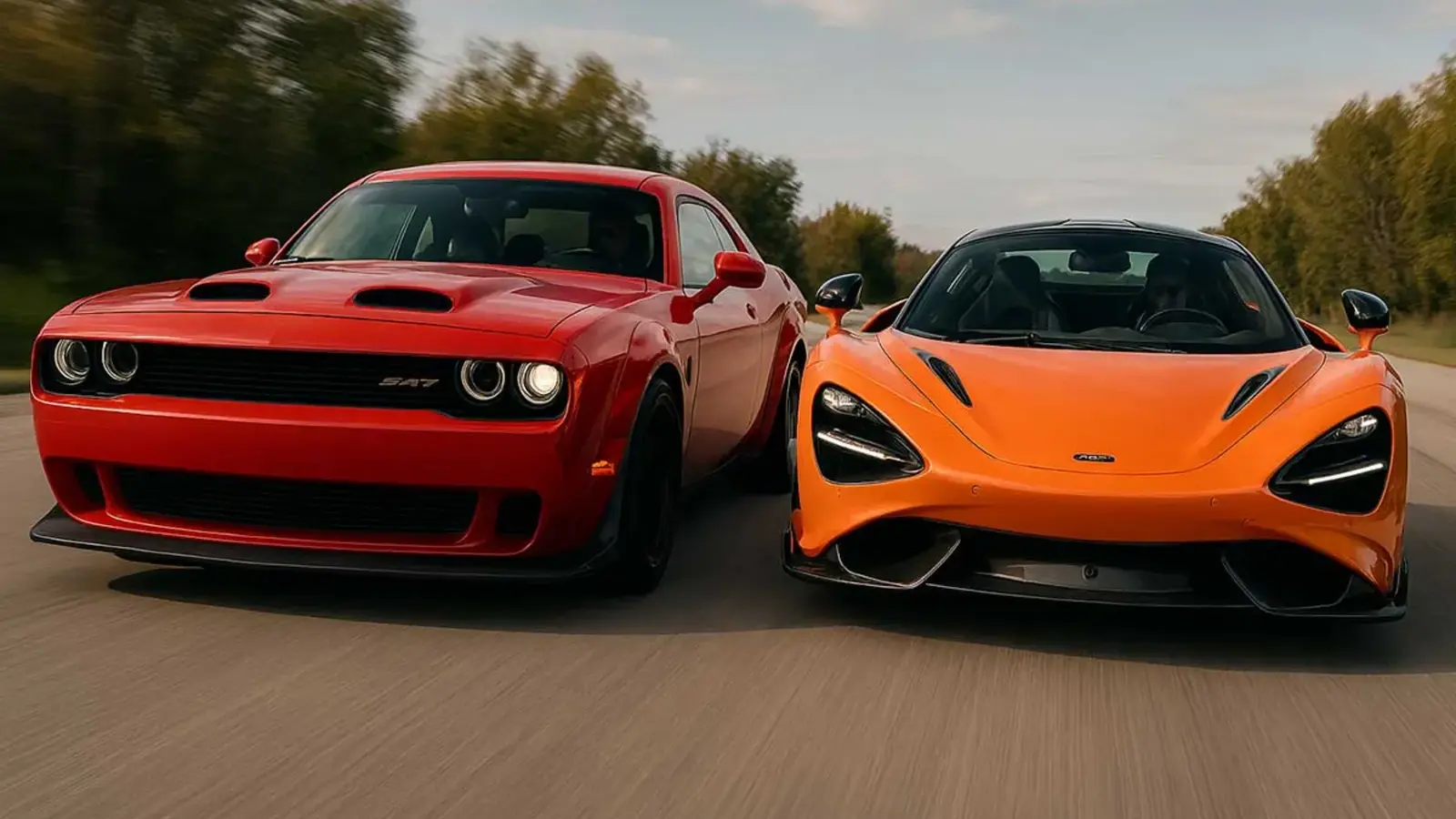
Sub-10 second gasoline rockets: the last hurrah for ICE drag
For decades the quarter-mile (400-meter drag) has been the definitive benchmark for straight-line performance. What was once the preserve of heavily modified garage builds is now achievable straight from factory showrooms. Even as electric cars reset acceleration records with silent thrust, these five production gasoline machines prove that the roar of internal-combustion engines still captures the imagination of petrolheads worldwide.
Top 5 production gasoline cars under 10 seconds (400m)
5. Chevrolet Corvette ZR1 — 9.7 seconds
The Corvette’s journey from an attractive 1950s sports car to a modern mid-engine supercar has been long and transformative. Introduced in summer 2024, the C8 ZR1 stunned with Chevrolet’s first factory twin-turbo V8 for the Corvette line. The 5.5-liter LT7 V8 delivers around 1,064 hp and roughly 1,123 Nm of torque, allowing the ZR1 to cover the 400-meter run in approximately 9.7 seconds. In essence, it offers hypercar levels of performance for a significantly lower price.

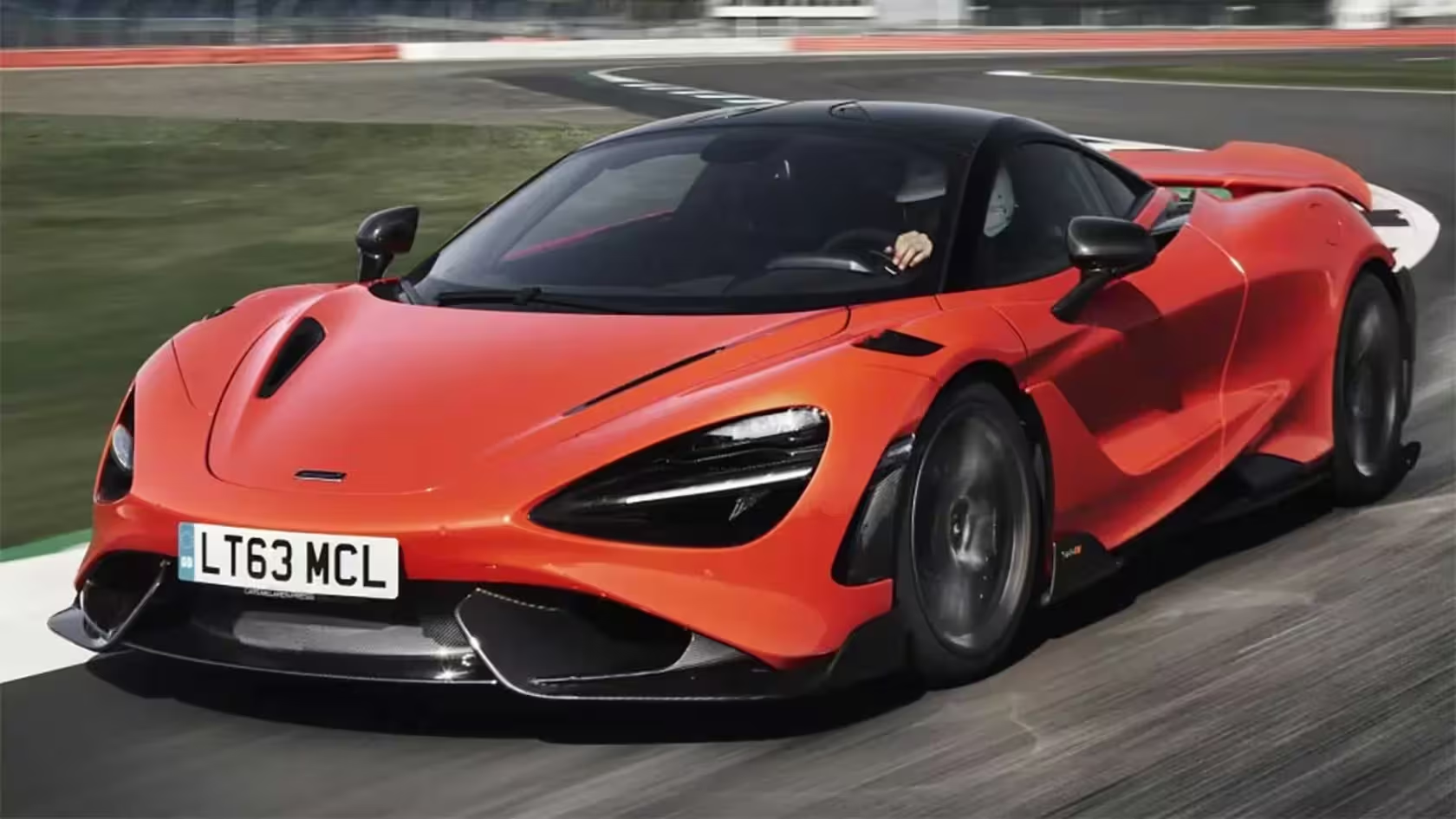
4. McLaren 765LT — 9.6 seconds (as tested)
McLaren’s racing DNA is obvious in the 765LT, a track-focused derivation of the 720S introduced in 2020. With aerodynamic upgrades, weight reduction and a more potent 4.0-liter twin-turbo V8, the 765LT routinely posts quarter-mile times near 9.6 seconds. In specialized drag tests using dedicated drag tires, independent runs have even dropped into the mid-9s, highlighting how much traction and setup matter in straight-line sprints.
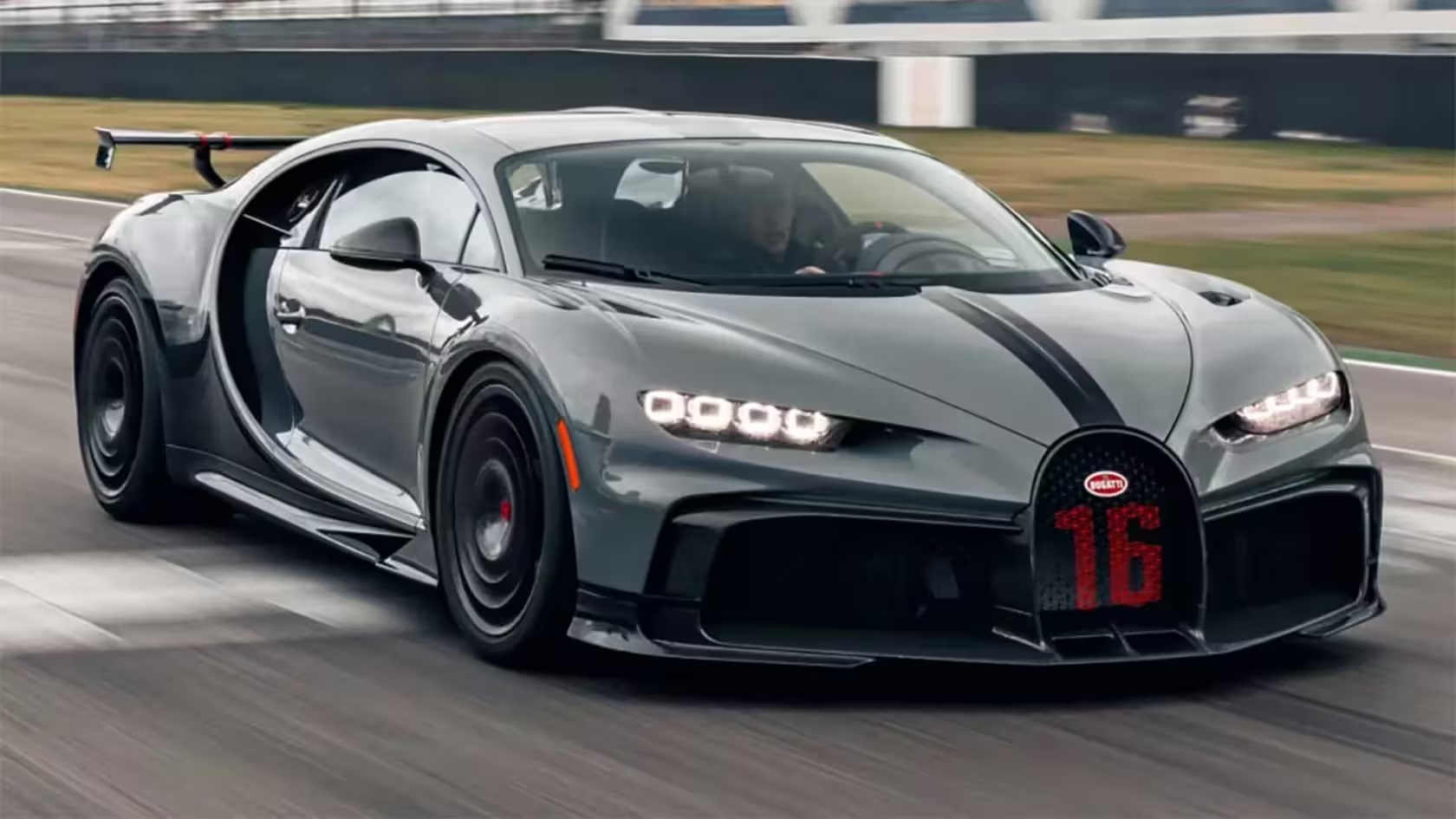
3. Bugatti Chiron Pur Sport — 9.4 seconds
Bugatti’s mission since joining Volkswagen Group has been to build the most extreme production cars. The Chiron Pur Sport, introduced in 2020, prioritizes agility and traction over top speed — shaving about 50 kg from the standard car, adding a fixed rear wing and recalibrating the gearbox for quicker launches. Its W16 quad-turbo engine (around 1,500 hp) is capable of factory-claimed 400-meter times near 9.3 seconds, with independent testing commonly reporting ~9.4s.
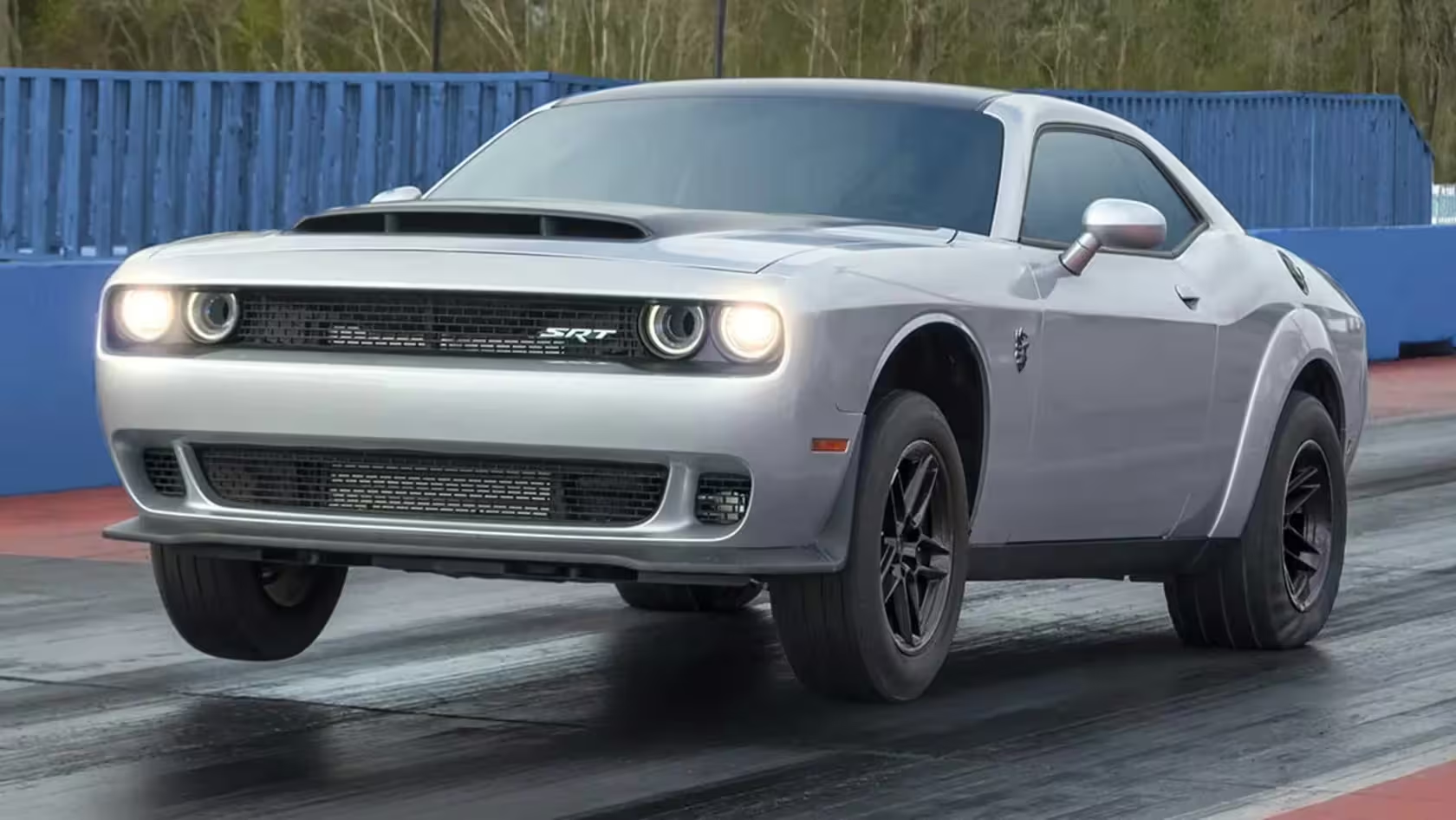
2. Dodge Challenger Demon 170 — 8.9 seconds
Muscle-car culture is built on drag-strip dominance, and the Challenger Demon 170 is the latest extreme expression of that heritage. Launched as the swan-song for the modern Challenger in 2023, this factory drag car uses a heavily modified V8 that produces roughly 900 hp on E10 and over 1,000 hp on E85 (about 1,025 hp). Tuned for launch control, sticky drag radials and raw torque, the Demon 170 covers the 400 meters in an astonishing ~8.9 seconds, making it arguably the quickest production muscle car ever.
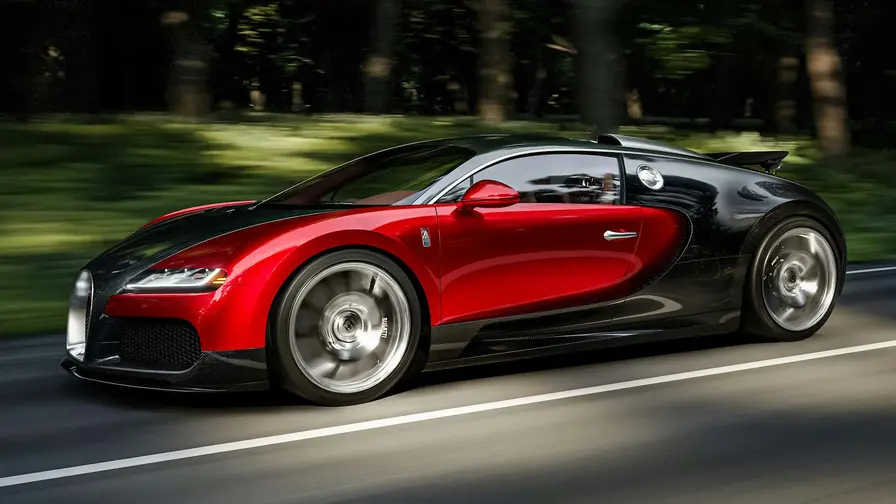
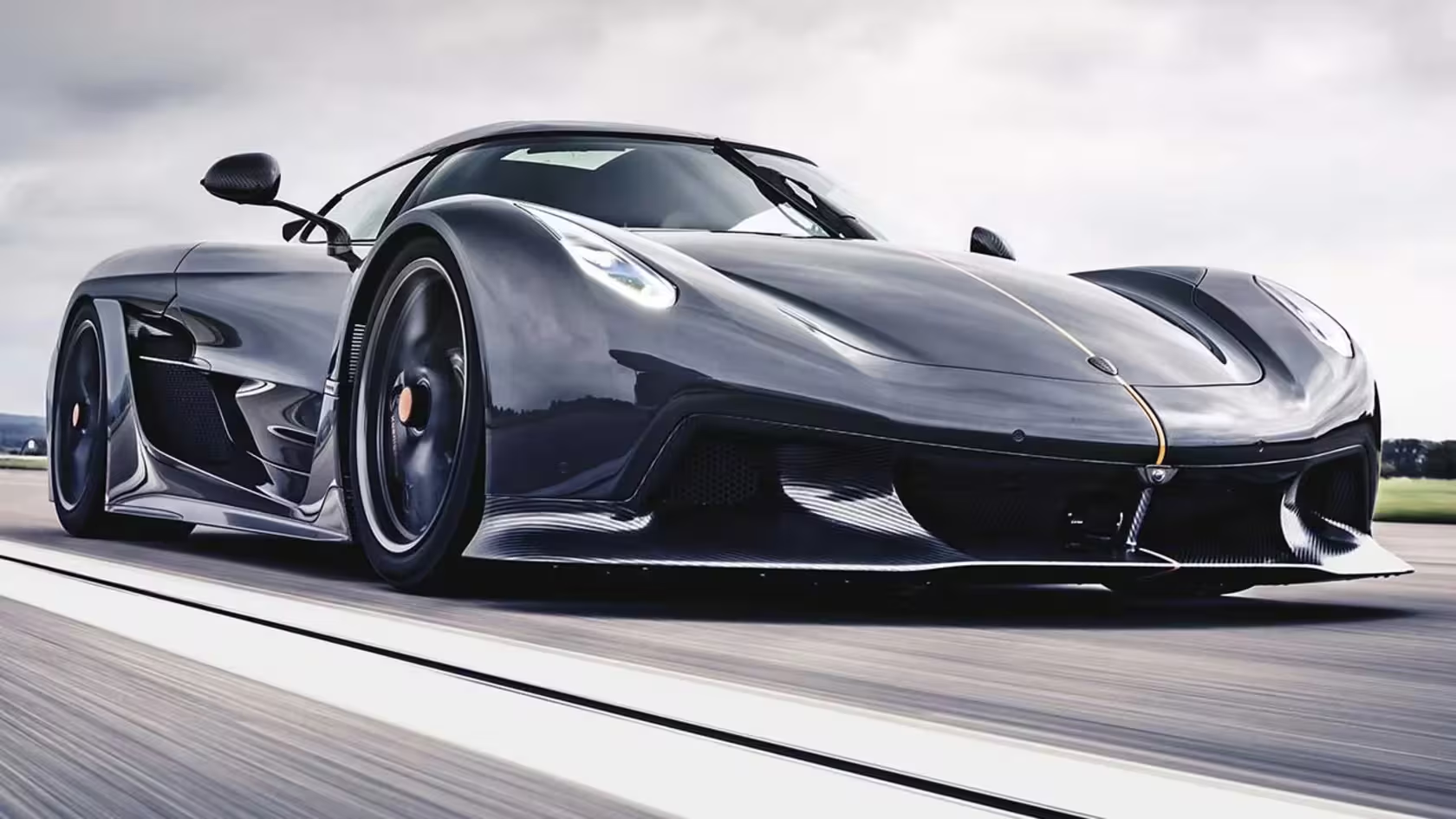
1. Koenigsegg Jesko Absolut — 8.8 seconds
Swedish hypercar maker Koenigsegg pushed boundaries yet again with the Jesko Absolut, a car engineered for extreme speed and performance. Its 5.1-liter twin-turbo V8, optimized for E85, is rated at roughly 1,600 hp in top-spec tune. In spring 2025 the Absolut recorded an official 400-meter time of 8.88 seconds, cementing its place as the fastest production internal-combustion car in quarter-mile testing to date.
Why these cars matter — and what they tell us about the market
These machines are notable for more than raw times. They represent varied philosophies: precision European engineering (McLaren, Bugatti, Koenigsegg), American brute force (Dodge), and high-value performance from established marques (Chevrolet). Factors that push a production car into sub-10 territory include power-to-weight ratio, launch traction (tires and drivetrain), gearing and electronic launch control calibration. Fuel type and tune also play a major role — many of these cars exploit high-octane blends or E85 to extract peak power.
- Key performance enablers: turbocharging, optimized gear ratios, lightweight materials.
- Traction matters: specialized drag tires can shave tenths of seconds off times.
- Fuel and tune: E85 is a common method to unlock higher horsepower figures.
"Even as EVs dominate headlines with instant torque, the visceral spectacle of a screaming V8 or W16 still resonates with drivers and collectors."
Final thoughts
The rise of electric performance will continue to disrupt straight-line records, but for now these five gasoline-powered production cars stand as the last great performers of an internal-combustion era. They deliver engineering excellence, emotional impact and in some cases extreme value for what they achieve. For enthusiasts who love the sounds, smells and mechanical drama of ICE performance, these sub-10 second monsters are likely to be celebrated long after they stop being the fastest on the strip.
Highlights:
- Koenigsegg Jesko Absolut — fastest at ~8.8s (400m)
- Dodge Challenger Demon 170 — quickest muscle car (~8.9s)
- Bugatti, McLaren and Corvette — demonstrating varied routes to sub-10 performance
Whether you follow track data, factory claims or independent test runs, one thing is clear: these gasoline supercars and hypercars have pushed production engineering into territory once thought impossible without heavy modification. They close a remarkable chapter in automotive history while the next one—electrified high performance—opens rapidly.

“I cover automotive innovation, electric vehicles, and the future of mobility — where technology meets sustainability.”

Discussion
Leave a Comment
Comments (2)
Jesko 8.88s official? sounds wild but were they using E85, drag tires or a ramped tune, apples to apples comparison matters
Whoa, these are nuts, the Demon 170 on E85 doing 8.9s?? Gives me chills, love the smell of burnt rubber and turbo spool, sick era