
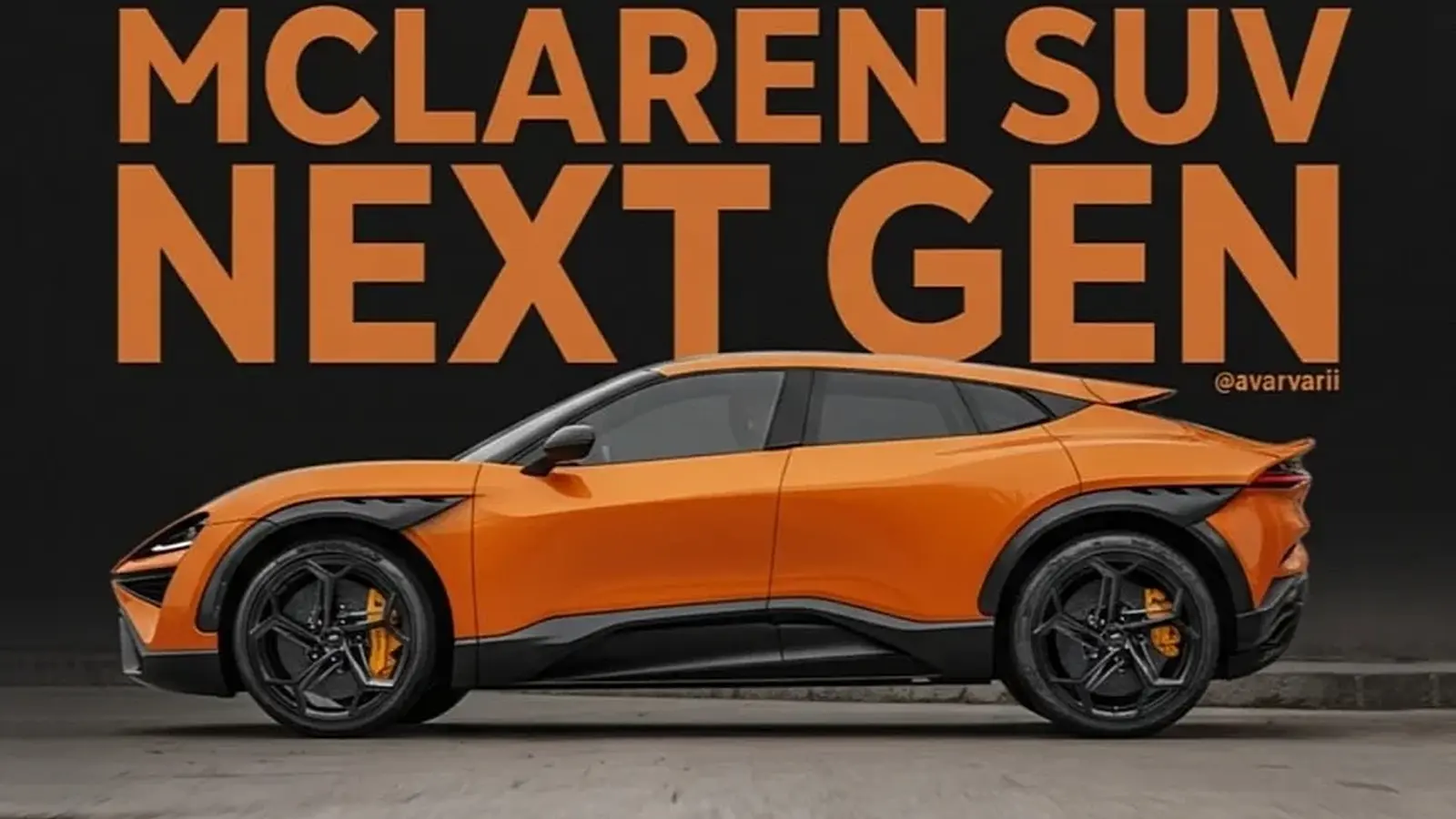
McLaren SPV render arrives — and it's orange, naturally
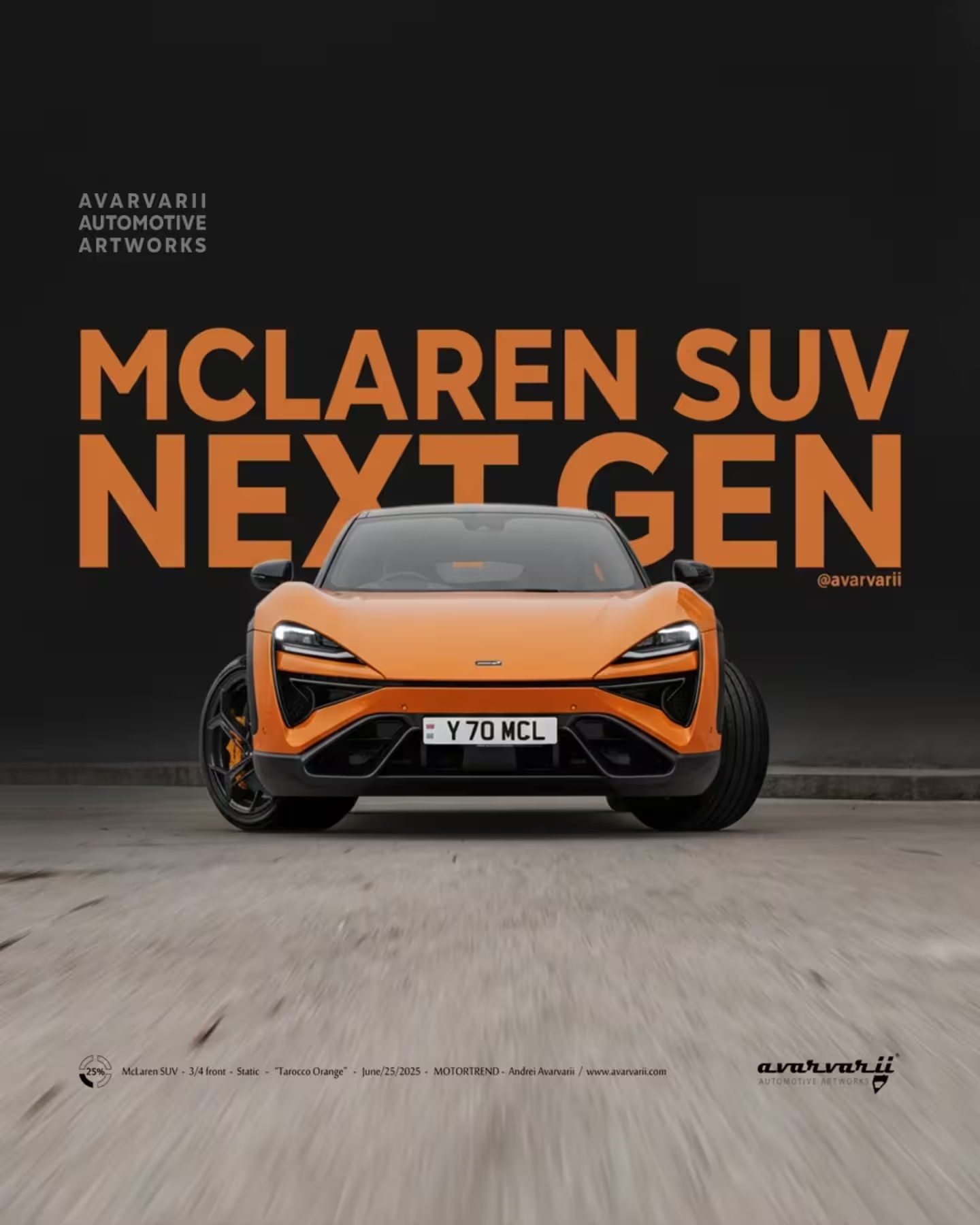
Digital artist Andrei Avarvarii has offered the first convincing visual take on McLaren's much-rumored 2029 SUV, the so-called Shared Performance Vehicle (SPV). Rendered in McLaren's unmistakable orange, the concept imagines how the British marque could translate its supercar DNA into a four-seat performance crossover without losing the brand's focus on lightweight design and driver engagement.
Design language: a McLaren with more presence
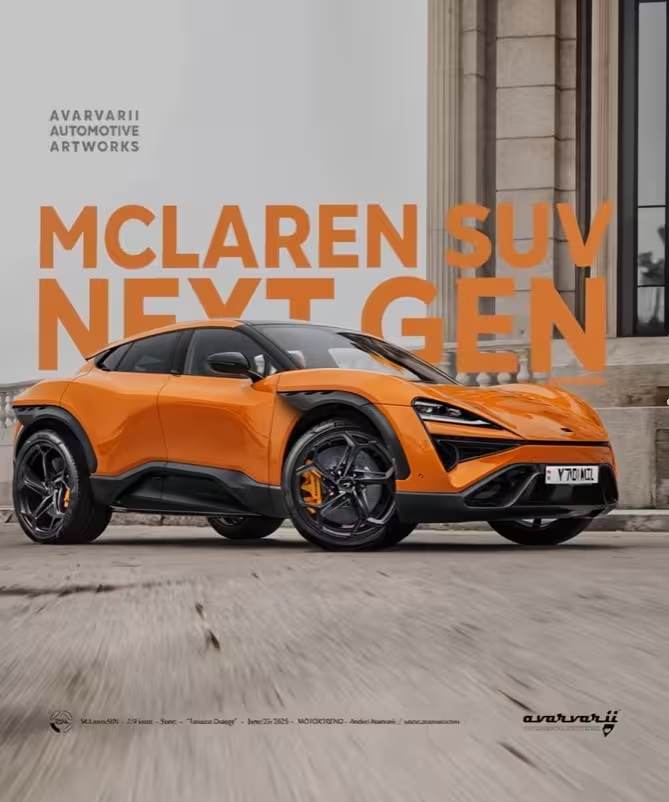
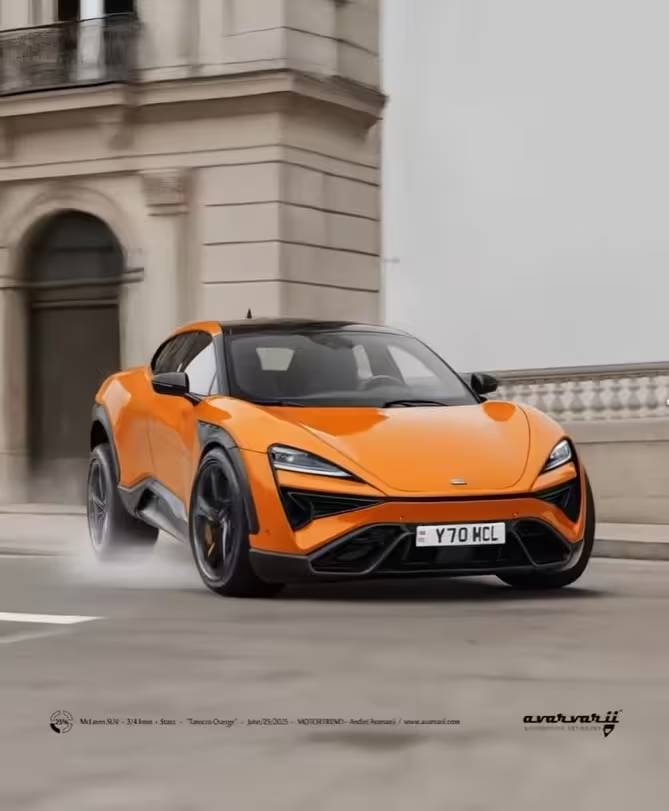
The Avarvarii renderings show steeply raked glass, dihedral door cues, and sculpted hips that read like a stretched sports car. But the silhouette is unmistakably crossover—higher ride height, more interior space and proportionally larger greenhouse. According to the artist, the SPV is "McLaren's boldest departure yet," blending aggressive aerodynamic details with a shape intended to broaden the brand's market appeal.
Short paragraphs here help underline the contrast: McLaren isn't pursuing a bulky luxury SUV like the Rolls-Royce Cullinan. Instead, expect a lithe, performance-first take on the segment, similar in spirit to the Ferrari Purosangue and Aston Martin DBX.
Powertrain and performance expectations
Rumors point to a twin-turbo V8 as the most likely heart of the SPV. McLaren could also add plug-in hybrid electrification to boost output and efficiency—an increasingly common solution to balance performance with emissions regulations.
Possible highlights:
- Twin-turbo V8 with high-rev characteristics
- Optional plug-in hybrid system for extra horsepower and range
- Four-seat layout focused on driver and passenger comfort
If McLaren follows this path, the SPV would likely target rivals such as the Ferrari Purosangue and Aston Martin DBX rather than the heavier, more opulent Urus or Cullinan.
Why McLaren needs an SUV
History shows why exotic marques add crossovers: the Porsche Cayenne proved that a performance-focused SUV can save a company's finances and broaden its customer base. McLaren—a smaller, specialist maker—could similarly use the SPV to increase sales volume and stabilize revenues without abandoning its performance heritage.
But there is a trade-off. The ultra-luxury super-SUV segment is now crowded. Lamborghini and Rolls-Royce have already captured wide swaths of buyers with the Urus and Cullinan, and Ferrari and Aston Martin are carving out their niches. That likely means McLaren's SPV would remain relatively niche in volume, aimed at buyers wanting a focused driving experience with more practicality than a two-seat supercar.
Market positioning and buyer appeal
Where could McLaren compete? The SPV would appeal to enthusiasts who want McLaren engineering in a usable, everyday package—parents who still crave performance, tech-savvy buyers seeking hybrid power, and collectors wanting a rare halo model with extra practicality.
Key comparison points vs rivals:
- Ferrari Purosangue: more grand-tourer luxury, similar performance pedigree
- Aston Martin DBX: softer ride and greater luxury focus
- Lamborghini Urus: heavier, more aggressive SUV performance
Final take
A digital rendering won't replace official prototypes, but it helps set expectations. If McLaren delivers a twin-turbo V8 with hybrid assistance wrapped in athletic styling and a four-seat layout, the SPV could become an intriguing, if niche, alternative in the growing super-SUV market. Whether buyers choose it over a Ferrari or Aston Martin will depend on how much McLaren retains its soul while scaling up production.
Would you swap a Purosangue for a McLaren SPV? The renderings give us a glimpse, but the real test will be how the SPV drives and how McLaren balances performance, weight and luxury.

“Cars are evolving faster than ever. I cover electric vehicles, smart mobility, and the future of transportation worldwide.”

Discussion
Leave a Comment