
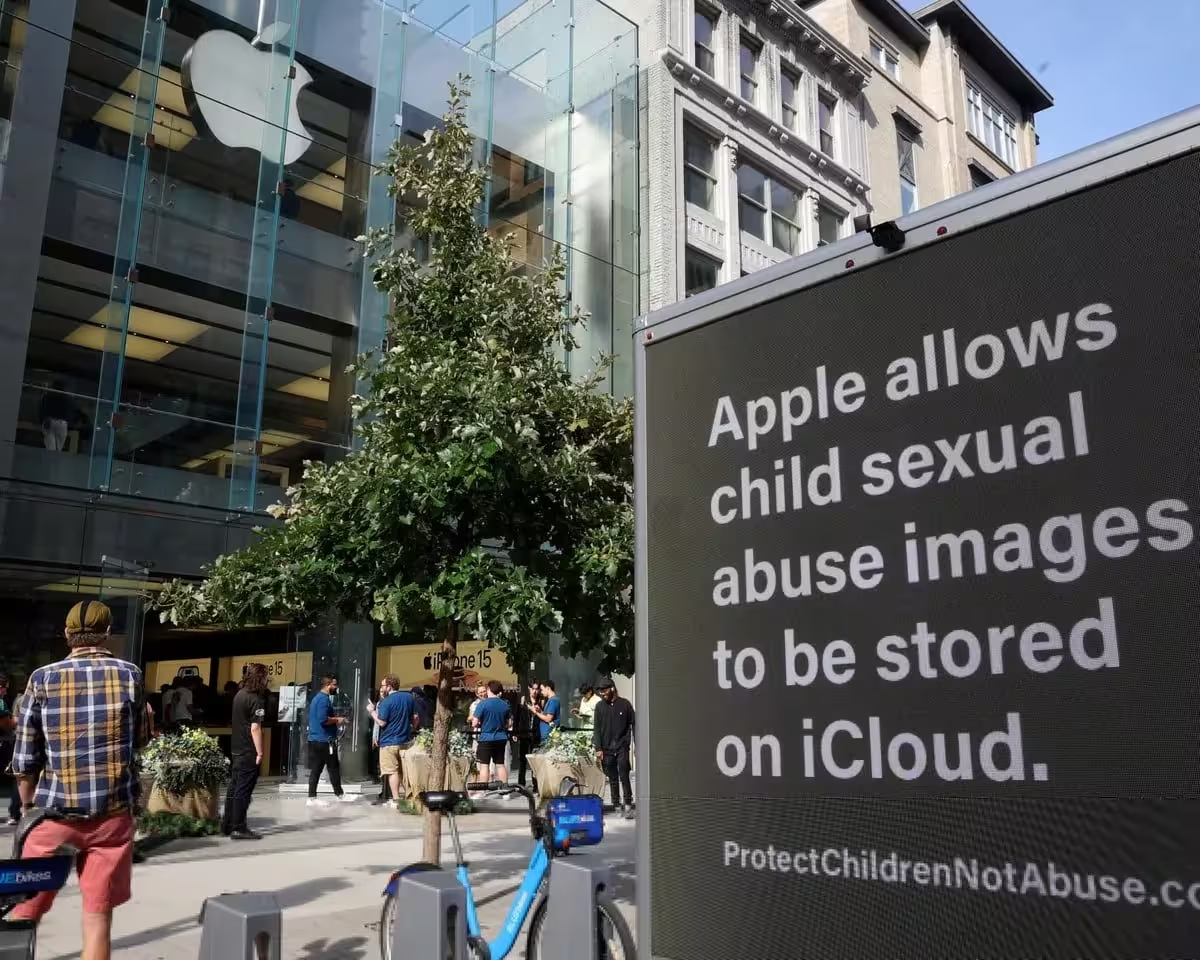
They say silence can be dangerous. In West Virginia’s new lawsuit, the state argues Apple’s iCloud has become exactly that: a quiet, convenient refuge for child sexual abuse material (CSAM).
Attorney General JB McCuskey claims Apple traded active content screening for broad end-to-end encryption, effectively making iCloud a frictionless path for the possession, protection and distribution of illegal images. Harsh words. Serious charge. The core allegation: by removing or sidelining certain detection tools, Apple left room for abuse that state consumer-protection laws were meant to prevent.
It’s not a fresh idea. Back in 2021 Apple proposed scanning iCloud photos to detect CSAM, then paused after intense privacy backlash. Craig Federighi said Apple would redirect effort toward other preventive measures. But the lawsuit contends the pause wasn’t the end of the story—rather, it marked a pivot that left enforcement gaps.
Numbers are central to the state’s claim. Court filings say Apple reported just 267 CSAM incidents to the National Center for Missing & Exploited Children (NCMEC). Compare that to roughly 1.47 million by Google and over 30.6 million by Meta. The discrepancy is stark. It’s one of the reasons West Virginia frames Apple’s approach as materially different from other tech giants when it comes to policing explicit child abuse content.
Adding fuel to the case: an internal message supposedly from Eric Friedman, Apple’s head of fraud mitigation, referring to iCloud as the “largest platform for distribution of child sexual content.” Apple disputes the characterization, but the alleged internal language is exactly the sort of evidence that gives prosecutors leverage—if true, it suggests awareness inside the company of a problem that the state thinks wasn’t being handled.
Apple’s response has been predictable and pointed. Spokesman Peter Ajemian told reporters that protecting user privacy and children’s safety is central to Apple’s work, and that the company continually innovates to meet evolving threats while maintaining secure, trusted platforms. Strong words from a corporation under legal fire.
But West Virginia’s argument goes further. The AG says features like iMessage’s automatic blurring for minors, or other on-device protections, don’t replace systemic detection and reporting. He calls Apple’s broad encryption a kind of shield that can, unintentionally or not, help criminals conceal illegal material from law enforcement. Will other states agree? McCuskey predicts more jurisdictions will join this legal push.
The dispute sits at the collision of two complex priorities: privacy and safety. Which wins? There’s no simple answer. Encryption protects everyday users’ secrets and security. At the same time, prosecutors warn that when encryption is absolute and detection tools are limited, tracking organized abuse becomes harder.
Expect this fight to shape both policy and product design: companies, courts and lawmakers are watching closely.
And if you’re wondering what’s next—watch for other states to take positions, for new technical proposals around safe detection to surface, and for the courts to parse where consumer protection law meets modern encryption.

“I love exploring gadgets, apps, and trends that redefine how we connect, work, and play in a digital world.”

Discussion
Leave a Comment
Comments (2)
Wow that's wild. I get wanting privacy, but if internal folks flagged iCloud as a hotspot for abuse, they gotta fix it, fast...
So Apple picked encryption over active scans? okay... but those report numbers, apples to apples? feels like missing context or spin