
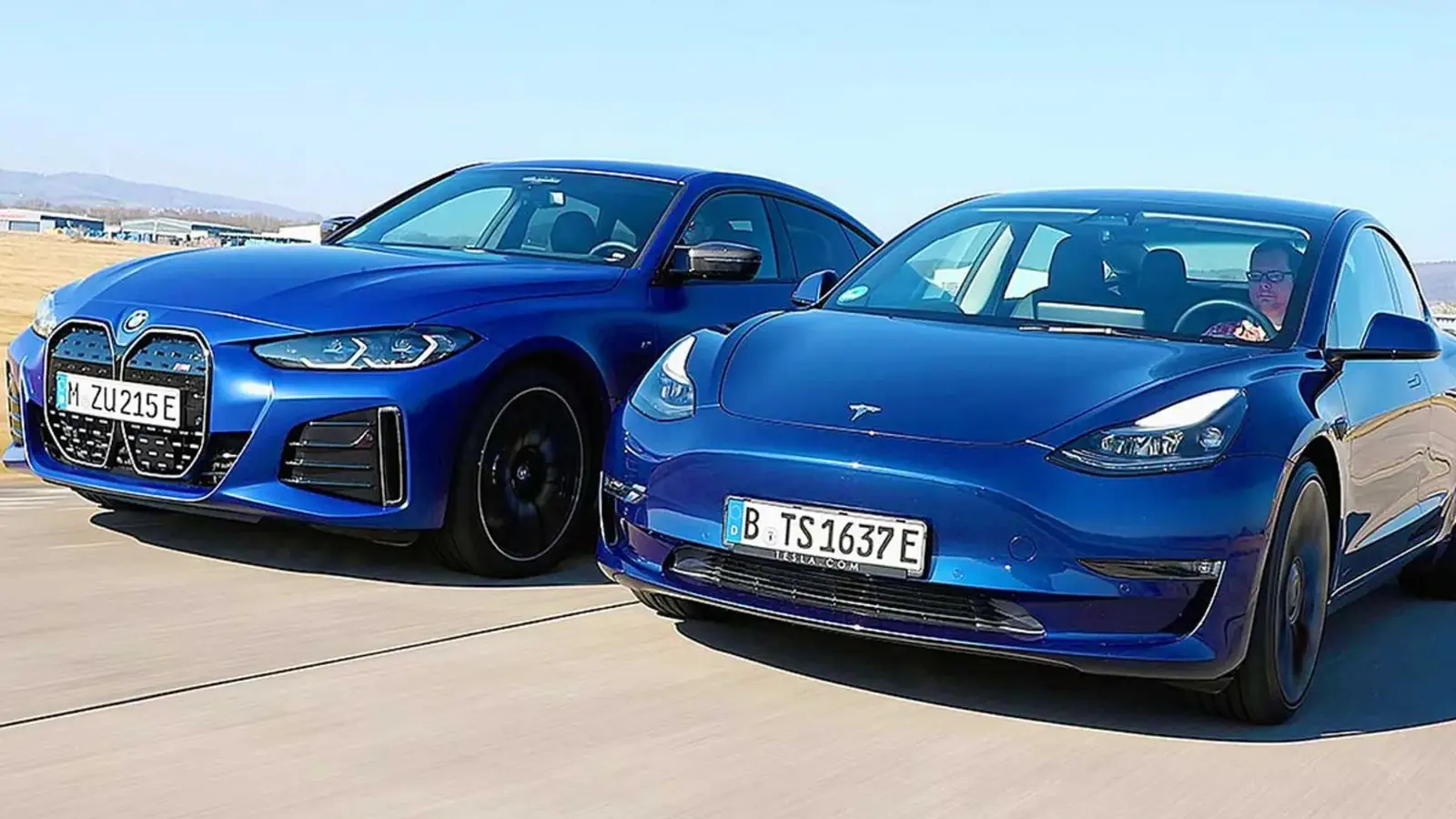
Record-high satisfaction for electric vehicles
Electric vehicles have moved past early skepticism to become a reliable, gratifying choice for millions of drivers. The latest JD Power 2026 Electric Vehicle Experience Study shows owner satisfaction at historic highs — a clear signal that EV technology, reliability and charging infrastructure are maturing fast.

Scores and standout models
Overall satisfaction in the luxury EV segment jumped from 756 to 789 out of 1000, while the mainstream/economy EV category rose to 727. These gains reflect steady improvements across hardware, software, and charging networks.
Top-ranked luxury EVs
- Tesla Model 3 — 804 points
- Tesla Model Y — 797 points
- BMW i4 — 795 points (narrowly closing in on Tesla)
BMW's i4 represents a notable challenge to Tesla's dominance, demonstrating how established European engineering and refinement can eat into Tesla's lead on owner satisfaction.
Surprises at both ends of the table
New entries and established players produced mixed results. Audi's Q6 e-tron landed surprisingly low at 690, trailing newer rivals such as Lucid Air (740) and Rivian R1T (739). On the mass-market side, the Ford Mustang Mach-E led with 760 points, followed by the Hyundai Ioniq 6 (748) and the Kia EV9 (745).
Conversely, the Chevrolet Blazer EV and Honda Prologue underperformed, with the Prologue scoring a worrying 623 despite sharing a GM-derived platform — a reminder that platform partnerships don’t guarantee a polished owner experience.

Charging improvements are a game changer
One of the study’s most encouraging findings is a steep rise in satisfaction with public charging — up by more than 100 points in the study’s scoring. This improvement stems from rapid infrastructure expansion, better reliability of public chargers and Tesla's strategic move to open parts of its Supercharger network to non-Tesla EVs.
Why full BEVs outperform plug-in hybrids
The study shows that owners of battery-electric vehicles (BEVs) report much higher satisfaction than plug-in hybrid (PHEV) owners — by 114 points in luxury and 117 in mainstream segments. Lower maintenance costs, simpler powertrain architecture and smoother software-driven experiences are key advantages. Many owners appreciate the quietness, instant torque, and reduced service visits that pure-electric drivetrains deliver.
What this means for the market
The momentum is clear: 96 percent of current EV owners said they will choose an all-electric vehicle for their next purchase. That degree of repeat intent signals that EV adoption is not a passing trend but a mainstream, durable shift in buyer preferences.
Key implications for consumers and manufacturers
- Consumers benefit from improving charging networks and more competitive vehicle choices.
- Manufacturers must focus on software, service experience, and real-world reliability to stay competitive.
- Opening proprietary charging networks can accelerate adoption and raise satisfaction industry-wide.
For car enthusiasts and buyers alike, the message is simple: the EV era is maturing. Expectations are higher, and the brands that deliver consistent charging access, software polish, and dependable ownership experiences will lead the next chapter of the automotive market.

“Cars are evolving faster than ever. I cover electric vehicles, smart mobility, and the future of transportation worldwide.”

Discussion
Leave a Comment
Comments (2)
are these numbers inflated? Audi Q6 e-tron that low, and Chevy/Honda flopping hard, maybe bad rollout or early software bugs, idk..
wow EVs are actually winning me over… charging seems way better now, still nervous about long trips tho, but impressed!