
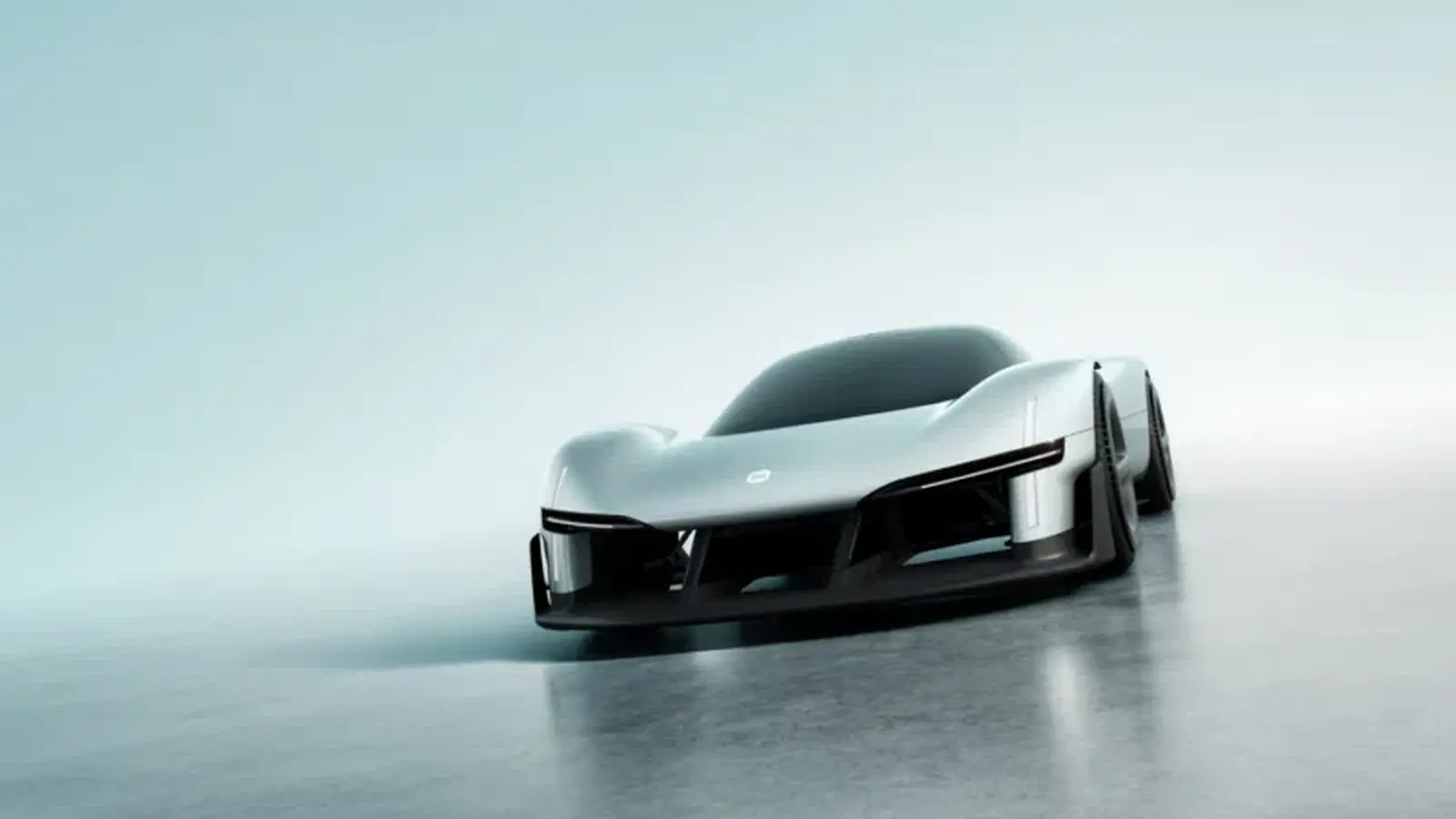
You can almost hear it before you see it—the hush of air being carved, split, and guided. That’s the mood Xiaomi is chasing with its new design documentary on the Xiaomi Vision Gran Turismo, a concept car shaped less like a traditional vehicle and more like an aerodynamic argument.
Released by Xiaomi Auto, the film pulls back the curtain on how the Vision GT came together across three cities—Beijing, Shanghai, and Munich—where design teams traded sketches, simulations, and late-night revisions in pursuit of one deceptively simple goal: make the car feel “sculpted by wind.”
The documentary’s real obsession, though, isn’t drama or shiny renders. It’s balance. Xiaomi frames the Vision Gran Turismo around the eternal performance-car tug-of-war between aerodynamic drag and downforce. Too much of one and you lose speed; too much of the other and you lose stability. The Vision GT is presented as Xiaomi’s attempt to land right on that knife-edge—an idea that explains the concept’s sleek, futuristic surfaces and tightly controlled proportions.

If you want to see the result in the metal (or at least in the show lighting), Xiaomi has placed the Vision Gran Turismo on display at Mobile World Congress (MWC), where it’s been doing what concept cars do best: stopping people mid-walk and pulling cameras out of pockets.
The backstory matters here. Vision Gran Turismo isn’t just another one-off studio exercise—it’s part of a long-running invitation launched by Kazunori Yamauchi, the producer of the Gran Turismo franchise. The brief is famously liberating: create the ultimate “dream car” concept without being boxed in by everyday production realities, supply chains, or conservative engineering sign-offs. Over the years, the project has attracted some of the most recognizable names in performance lore, including Bugatti, Ferrari, and Porsche.

Xiaomi arrives as the 36th brand to join the program, and its entry carries a couple of notable firsts: it’s the first Chinese brand invited, and it’s also the first global technology company to step into the Vision Gran Turismo roster. That context helps explain why Xiaomi is treating this like more than a styling exercise—it’s a statement that the company wants to be taken seriously in the broader automotive conversation, not just as a newcomer building EVs.
Lu Weibing, Partner and President of Xiaomi Group and President of the Mobile Phone Department, leaned into a key point many enthusiasts always ask about concept cars: is it real, or is it fantasy? According to Lu, the Vision GT doesn’t “defy the laws of physics.” In other words, while it’s a concept created for Gran Turismo, it’s portrayed as theoretically buildable and aligned with aerodynamic principles, not a pure sci-fi prop.

Still, don’t expect to see it at a dealership. Xiaomi has confirmed the Vision GT won’t enter mass production. Its true destination is digital—headed into the Gran Turismo universe, where players worldwide will be able to drive it the way concept cars are often best enjoyed: flat-out, consequence-free, and in the hands of millions instead of a handful of collectors.
And Xiaomi’s Gran Turismo story is already moving beyond concepts. Earlier this year, the company announced that its flagship performance electric vehicle, the SU7 Ultra, became the first Chinese car to be featured in the racing simulation Gran Turismo 7. The SU7 Ultra was scheduled to be available in-game starting January 29, 2026, at 14:00 Beijing time (06:00 UTC)—a small calendar detail that signals something bigger: Xiaomi isn’t just borrowing the spotlight for a one-time cameo; it’s trying to build a long-term bridge between real-world EV ambition and gaming’s most influential car culture stage.
For Xiaomi, the Vision Gran Turismo isn’t a production promise—it’s a credibility play, built on airflow, global teamwork, and a steering wheel that mostly lives in pixels.

“I cover automotive innovation, electric vehicles, and the future of mobility — where technology meets sustainability.”

Discussion
Leave a Comment