
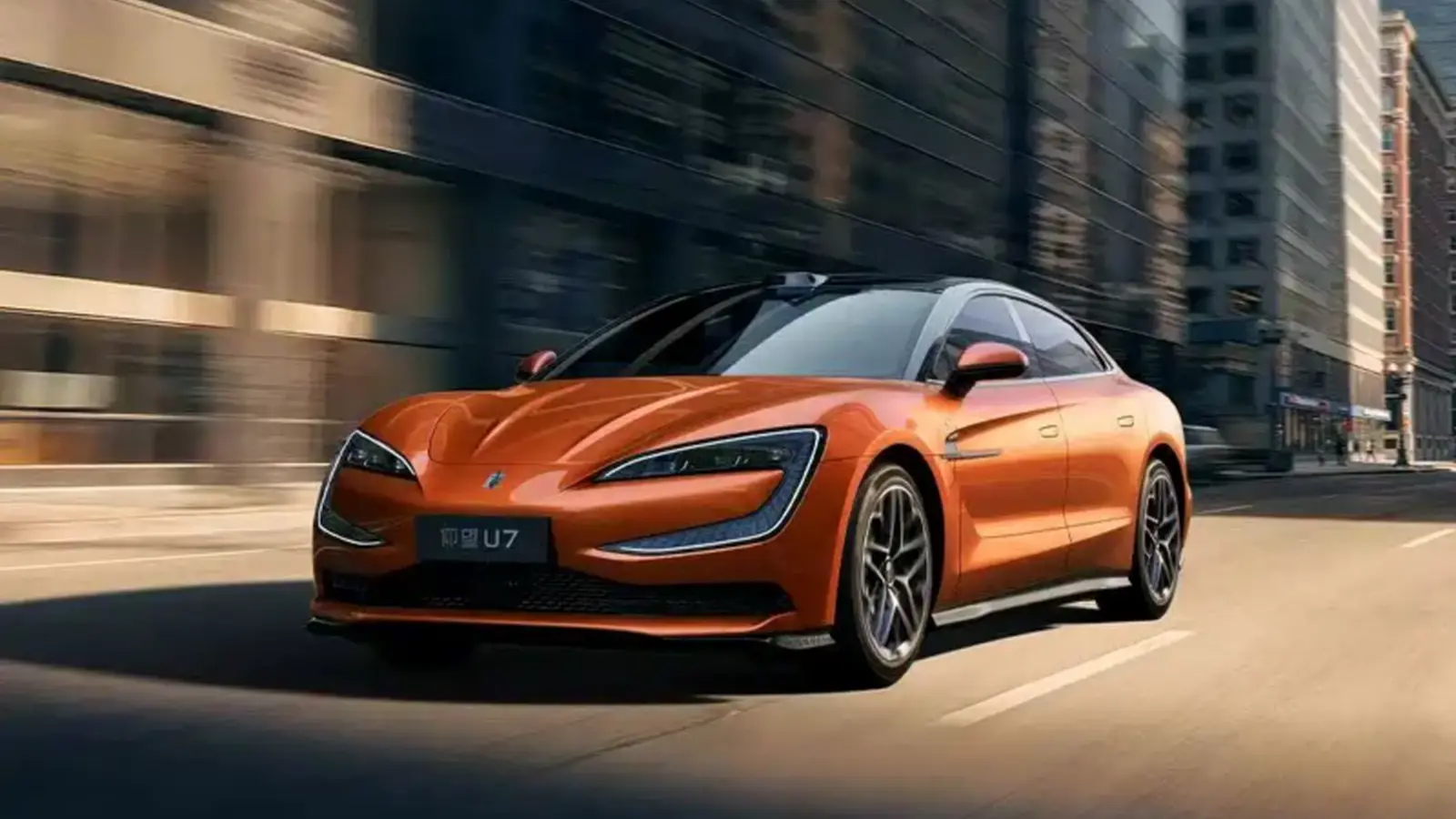
The first thing that stands out about the new Yangwang U7 isn’t the leather, the screens, or even the price tag. It’s the number: 1,006 kilometers. That’s the claimed electric driving range, and it instantly puts BYD’s flagship luxury sedan into a conversation usually dominated by the most ambitious EVs on the planet.
Unveiled by BYD’s ultra‑premium Yangwang division, the 2026 U7 arrives as a large executive sedan aimed at the top tier of the market. Pricing starts at 658,000 yuan (about $95,400) and climbs to 888,000 yuan ($128,700), depending on configuration. Buyers can choose between fully electric and plug‑in hybrid versions, each offered with either four or five seats.
The headline figure—1,006 km of range under the CLTC cycle—comes courtesy of BYD’s second‑generation Blade Battery. It’s paired with extremely fast charging capability that promises dramatic top‑ups: from empty to 70 percent in roughly five minutes, and from 10 to 97 percent in about nine minutes under ideal conditions.
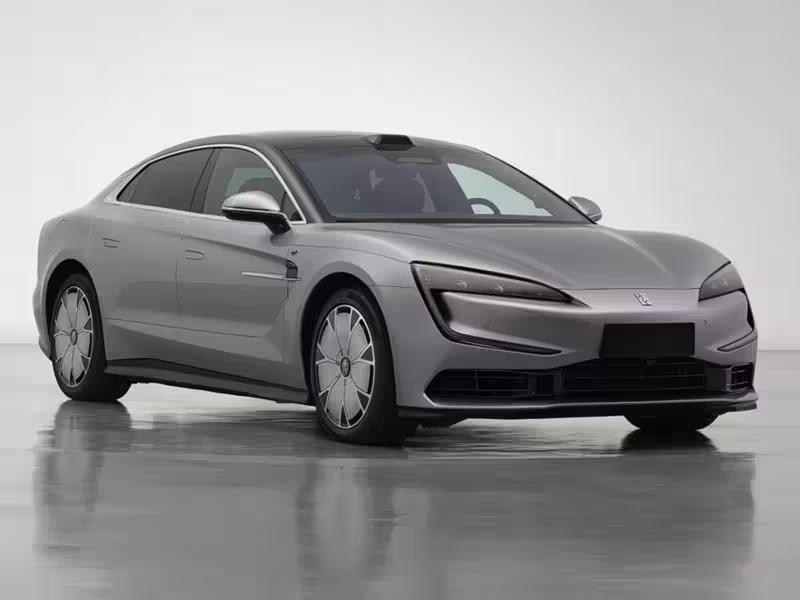
Luxury sedan scale with unmistakable presence
Dimensionally, the U7 sits firmly in full‑size luxury territory. The pure electric model stretches 5,265 mm in length, 1,998 mm wide and 1,517 mm tall, riding on a 3,160 mm wheelbase. The plug‑in hybrid version is even longer at 5,360 mm, with a 3,200 mm wheelbase. An active rear spoiler subtly adjusts depending on speed and driving conditions, adding both stability and a bit of drama to the car’s silhouette.
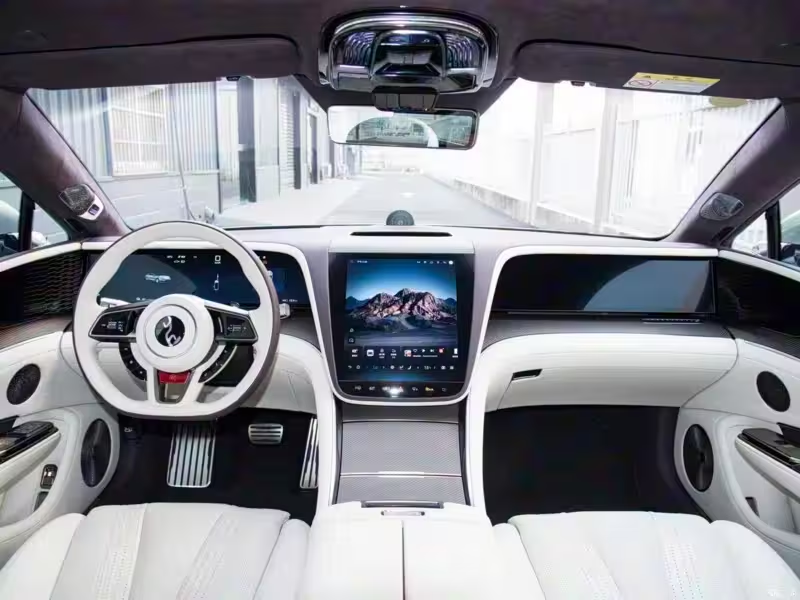
Inside, the design leans toward symmetry and clean technology. A large vertical infotainment screen anchors the center of the dashboard, flanked by a digital instrument cluster and a dedicated display for the front passenger. The overall layout feels less like a traditional cockpit and more like a carefully arranged lounge.
Every seat is wrapped in Nappa leather. Up front, occupants get 20‑way power adjustment along with heating, ventilation, lumbar support, and even hot‑stone massage functions. Opt for the four‑seat flagship version and the rear becomes the main attraction: independent seats, deep recline, electric leg rests, head and foot supports, plus a touchscreen embedded in the center armrest to control entertainment and comfort features.
Sound matters too. The cabin is fitted with a 23‑speaker Dynaudio system designed to deliver a theater‑like listening experience whether you’re in the driver’s seat or stretched out in the back.

A four‑motor powerhouse hiding under the elegance
Beneath the polished exterior lies one of the most technically ambitious platforms BYD has built. The fully electric U7 uses a quad‑motor layout, sending power to each wheel independently. Depending on the version, the EV delivers CLTC ranges of 860 km or the headline 1,006 km.
The plug‑in hybrid configuration takes a different route. It combines four electric motors with a 2.0‑liter horizontally opposed turbocharged engine. The front motor alone produces up to 260 kW (349 hp), while total motor output reaches a staggering 1,000 kW—around 1,340 horsepower.
Even with that level of performance, efficiency remains central to the concept. The PHEV variant can drive 200 to 220 km purely on electricity before the engine becomes necessary, while the combined range stretches to roughly 1,100 km.
All of this power is managed by BYD’s e⁴ quad‑motor architecture. It works alongside a bidirectional 20‑degree rear‑wheel steering system, allowing the large sedan to turn within a surprisingly tight 4.85‑meter radius. Features like tank turn capability, crab walk, and automated e⁴ parking add maneuverability that feels more like a tech demonstration than a traditional luxury sedan.
Ride control also pushes into new territory. The DiSus‑Z suspension system replaces conventional hydraulic dampers with magnetic levitation motors, enabling rapid adjustments to road conditions. Paired with the DiSus‑A+ intelligent air suspension, the system can pre‑sense road surfaces, stabilize the car during high‑speed tire blowouts, reduce pitch during acceleration or braking, and even lift one side of the vehicle to avoid obstacles.
Driver assistance comes through BYD’s “God’s Eye A” system, also known as DiPilot 600. Unlike many advanced navigation systems, it operates without relying on high‑precision maps, using an end‑to‑end architecture designed to interpret real‑world driving conditions directly.
Put it all together and the Yangwang U7 feels less like a single product and more like a rolling showcase of BYD’s most ambitious engineering ideas. Range, charging speed, and raw power grab the headlines—but the real story might be how many advanced technologies the company has packed into one very large, very confident luxury sedan.

“Cars are evolving faster than ever. I cover electric vehicles, smart mobility, and the future of transportation worldwide.”

Discussion
Leave a Comment