
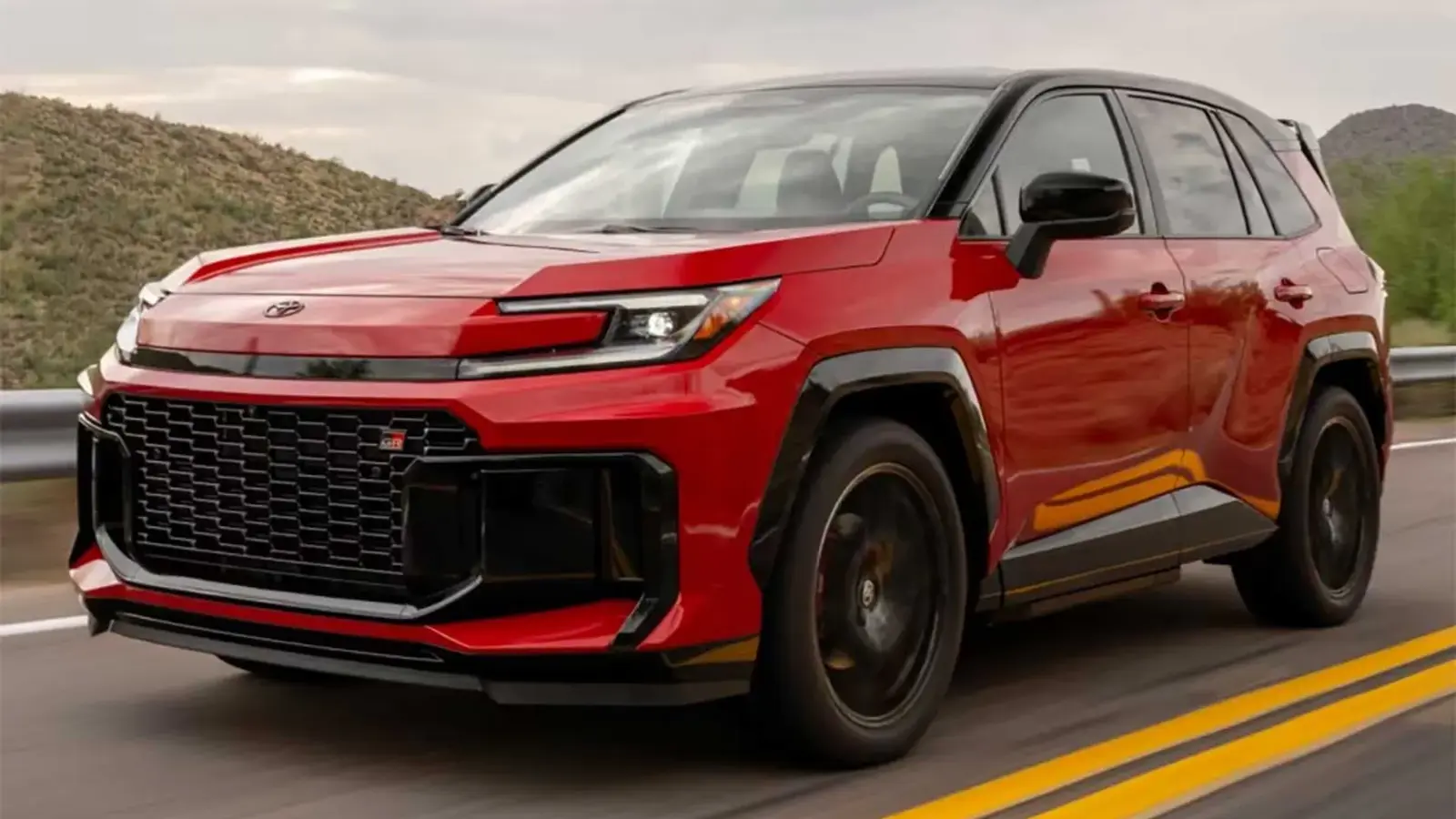
Here’s something you don’t see every day in the car market: a brand‑new generation arrives with more power, better efficiency, and a longer electric range… yet somehow costs thousands less. That’s exactly the curveball Toyota quietly threw when it revealed the pricing for the 2026 RAV4 Plug‑in Hybrid.
No flashy press event. No big marketing push. Just a silent update on Toyota Motor North America’s pricing portal. And there it was — the new RAV4 PHEV starting at $41,500. That’s $3,315 cheaper than the outgoing model.
For a vehicle that already sat near the top of the plug‑in hybrid SUV pack, the price drop feels almost strategic. Especially because the 2026 RAV4 isn’t just a mild refresh. It’s a complete redesign built on the sixth‑generation XA60 platform.
The RAV4 nameplate hardly needs an introduction. Since the original helped shape the compact crossover segment decades ago, it has grown into one of America’s best‑selling vehicles. Even as buyers knew a redesign was coming, the outgoing model still moved nearly 480,000 units last year. Instead of fading out, sales actually ticked up slightly — proof that Toyota managed the generational handoff with unusual precision.
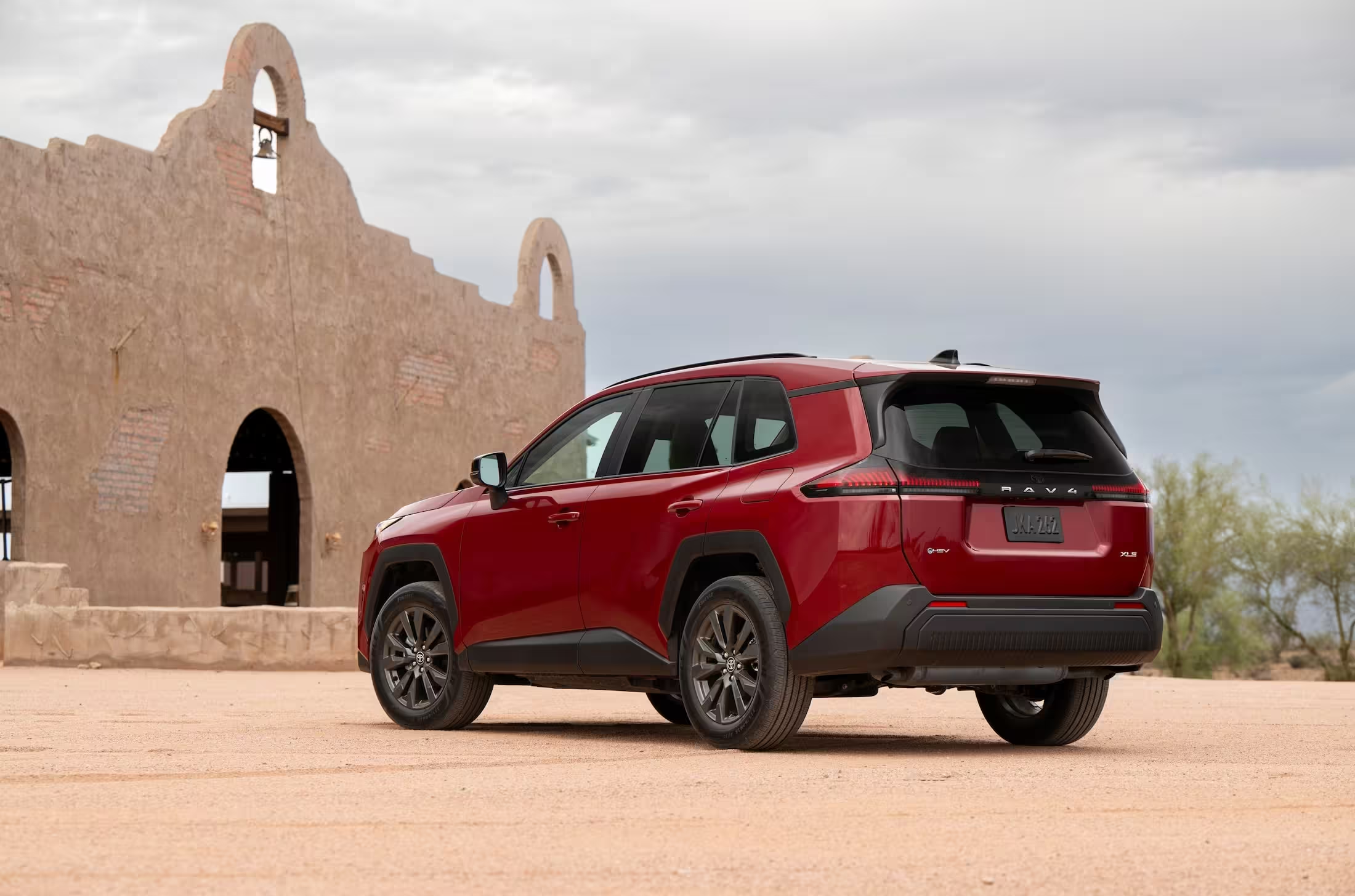
When the new model finally landed in winter 2025, Toyota took an unusual rollout approach. The traditional gasoline engine was quietly retired. Instead, the lineup launched with hybrid power only. The plug‑in hybrid version followed later, completing the electrified strategy.
Visually and structurally, the new RAV4 splits its personality into three themes. Core trims such as LE, XLE Premium, and Limited cover the everyday crossover crowd. The Woodland model leans into rugged, outdoorsy vibes. And the sporty side includes SE, XSE, and a first‑ever GR Sport variant designed to inject some attitude into the segment.
Even the base hybrid model saw a pricing shift. Without the cheaper gasoline version in the lineup, the 2026 RAV4 now starts at $31,900 instead of $29,800 from the previous generation. But the increase comes with standard hybrid tech, new styling inside and out, and a fresh batch of digital features — making the jump easier to swallow.
The real twist arrives with the plug‑in hybrid.
A Plug‑In Hybrid That Somehow Got Better and Cheaper
On paper, the new RAV4 Plug‑in Hybrid improves nearly every metric. Combined system output climbs from 302 horsepower to 324 hp. The estimated all‑electric driving range stretches from 42 miles to about 52 miles. Efficiency improves as well, with a projected 40 mpg combined rating.
In other words, it’s quicker, stronger, and more capable than before — the outgoing model already sprinted to 60 mph in around 5.7 seconds, putting it among the quickest compact SUVs on sale.
Yet the starting price dropped.
The entry SE trim opens the lineup at $41,500. Above it sit several personality‑driven variants: the adventure‑focused Woodland at $45,300, the stylish two‑tone XSE starting at $47,200, and the performance‑flavored GR Sport topping the range at $48,500. Each trim tweaks the design language slightly, from blacked‑out sport details to trail‑ready visual cues.
For buyers scanning the crowded compact SUV landscape, that pricing move changes the conversation.
The RAV4 Plug‑in Hybrid isn’t entering an empty battlefield. It faces a long list of familiar rivals — Honda CR‑V, Mazda CX‑5, Ford Bronco Sport, Volkswagen Tiguan, Hyundai Tucson, Kia Sportage, Subaru Forester, and more. But once you narrow the field to models that actually offer plug‑in hybrid systems, the competition shrinks fast.
.avif)
Only a handful of direct PHEV competitors remain.
The Hyundai Tucson Plug‑in Hybrid starts around $40,325 and comes in two trims, SEL and Limited. Its system produces 268 horsepower and delivers about 32 miles of electric driving range with a combined rating near 35 mpg. Kia’s closely related Sportage Plug‑in Hybrid follows the same formula, beginning at roughly $40,490 with similar specs and two X‑Line trims.
Both Korean crossovers undercut the RAV4 slightly on price, but they trail Toyota in power and electric range.
The other contenders come from a different corner of the market. The Mitsubishi Outlander PHEV, starting near $40,445, offers three rows of seating and a unique design that some buyers love — and others don’t. Its mechanical cousin, the Nissan Rogue PHEV, arrives with a much steeper entry price around $45,990 despite similar hardware.
Both deliver around 248 horsepower and roughly 38 miles of electric range, which again leaves the Toyota ahead in outright performance.
That leaves the 2026 RAV4 Plug‑in Hybrid in a curious position. It’s more powerful than most rivals, travels farther on electricity, and now undercuts its own predecessor by a wide margin. In a segment where electrified SUVs often come with a premium, Toyota appears to be betting that value — not just efficiency — will keep the RAV4 at the top of the crossover hierarchy.
And if early reactions are any indication, that quiet price drop may end up being one of the smartest moves in the compact SUV market this year.

“I cover automotive innovation, electric vehicles, and the future of mobility — where technology meets sustainability.”

Discussion
Leave a Comment