
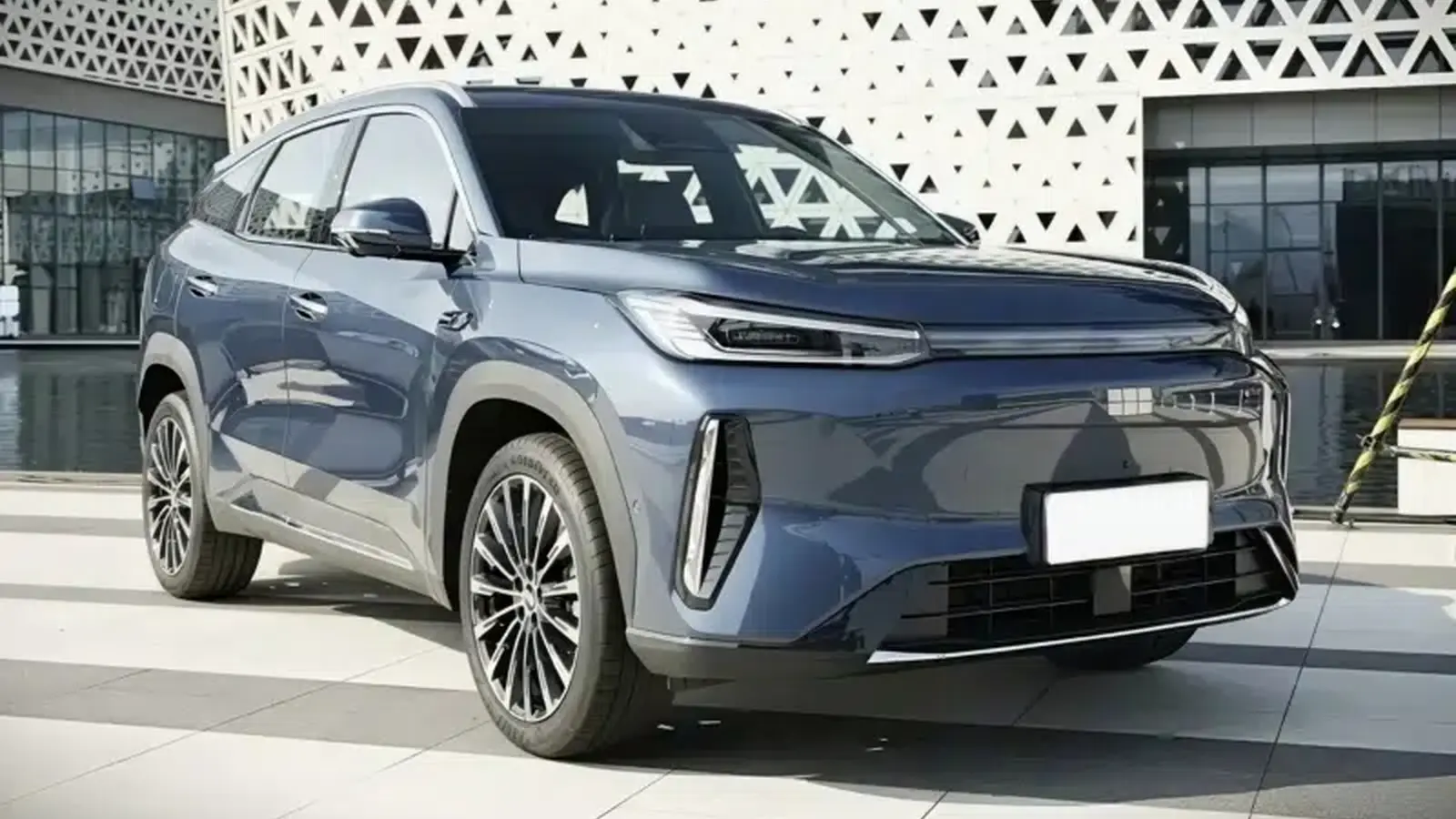
A family SUV that can quietly handle a full week of electric commuting—and still promise a road‑trip range stretching well past 1,700 kilometers—sounds almost like marketing fantasy. Yet that’s exactly the claim surrounding the newly revealed Geely Galaxy M7, a mid‑size plug‑in hybrid that just made its technical debut in China.
The M7 is the first model in Geely’s Galaxy M series to enter the mid‑size SUV arena, and the company is clearly leaning into one message: long-distance freedom without abandoning electric driving. On paper, the numbers are striking. A 225 km pure‑electric range under the CLTC cycle puts it among the longest‑range PHEVs in its class, while a full tank and battery together stretch the theoretical driving range to 1,730 km.
Under the hood sits a 1.5‑liter naturally aspirated engine paired with an electric motor as part of Geely’s latest plug‑in hybrid system. The gasoline engine alone produces 82 kW, but the real story is how the system manages efficiency. A 29.8 kWh lithium iron phosphate battery supplies the EV driving capability, large enough to handle most daily urban travel without waking the engine.

Geely’s in‑house battery technology, branded the Aegis Golden Brick battery, integrates a thermal management system designed to stabilize performance across temperature swings while supporting fast charging. The company also highlights a hybrid engine with a claimed thermal efficiency of 47.26 percent—an ambitious figure even by modern hybrid standards.
Working quietly behind the scenes is the Star Intelligence 2.0 energy management platform, a cloud‑linked system that monitors driving conditions and adjusts the powertrain strategy in real time. According to Geely, this setup trims fuel consumption by about 15 percent and cuts thermal losses by roughly 30 percent compared with earlier hybrid systems.
Designed for families, not just spec sheets
The Galaxy M7 borrows styling cues from the larger Galaxy M9. A full‑width LED light bar stretches across the nose, while a two‑tone body treatment gives the SUV a slightly more upscale presence than typical plug‑in family crossovers. At the rear, a visual‑sensing tailgate adds a touch of convenience tech.
Size matters in this segment, and the M7 sits squarely in the mid‑size category. It measures 4,770 mm long, 1,905 mm wide, and 1,685 mm tall, riding on a 2,785 mm wheelbase—dimensions that should translate into generous rear passenger space.

Inside, Geely has leaned heavily into digital comfort. The dashboard features a floating central touchscreen paired with a fully digital instrument cluster running the Flyme Auto operating system. Ambient lighting offers 256 AI‑controlled color options, while audio comes through a 23‑speaker Flyme Sound system. Even small conveniences—like a 50 W wireless charging pad—hint at the tech‑focused audience Geely is targeting.
Practicality hasn’t been forgotten either. The rear seats fold in a 4:6 split, allowing the cargo area to expand for luggage or weekend gear.
The Galaxy M7 is expected to compete in China’s fiercely contested plug‑in hybrid SUV market, roughly within the 100,000–150,000 yuan price bracket, though official pricing has yet to be confirmed. Rivals such as the BYD Song Pro DM‑i and Song PLUS DM‑i already dominate the segment, but Geely’s strategy appears clear: push electric driving distance further than most PHEVs while keeping overall efficiency extremely low.

Regulatory filings first revealed the M7 back in December 2025, offering early glimpses of its production specifications. More recently, industry reports suggested the SUV could deliver fuel consumption as low as 3.35 L/100 km when the battery is depleted—an efficiency figure that places it near the top of its category.
Of course, real roads tell the real story. Laboratory figures often look impressive, but independent testing will ultimately determine whether the Galaxy M7 can genuinely deliver its promised electric range, ultra‑low fuel use, and marathon combined driving distance.
If those numbers hold up outside the lab, Geely’s latest plug‑in SUV might not just be another entrant in China’s crowded hybrid market—it could quietly become one of the most practical long‑range family PHEVs on sale.

“I cover automotive innovation, electric vehicles, and the future of mobility — where technology meets sustainability.”

Discussion
Leave a Comment