
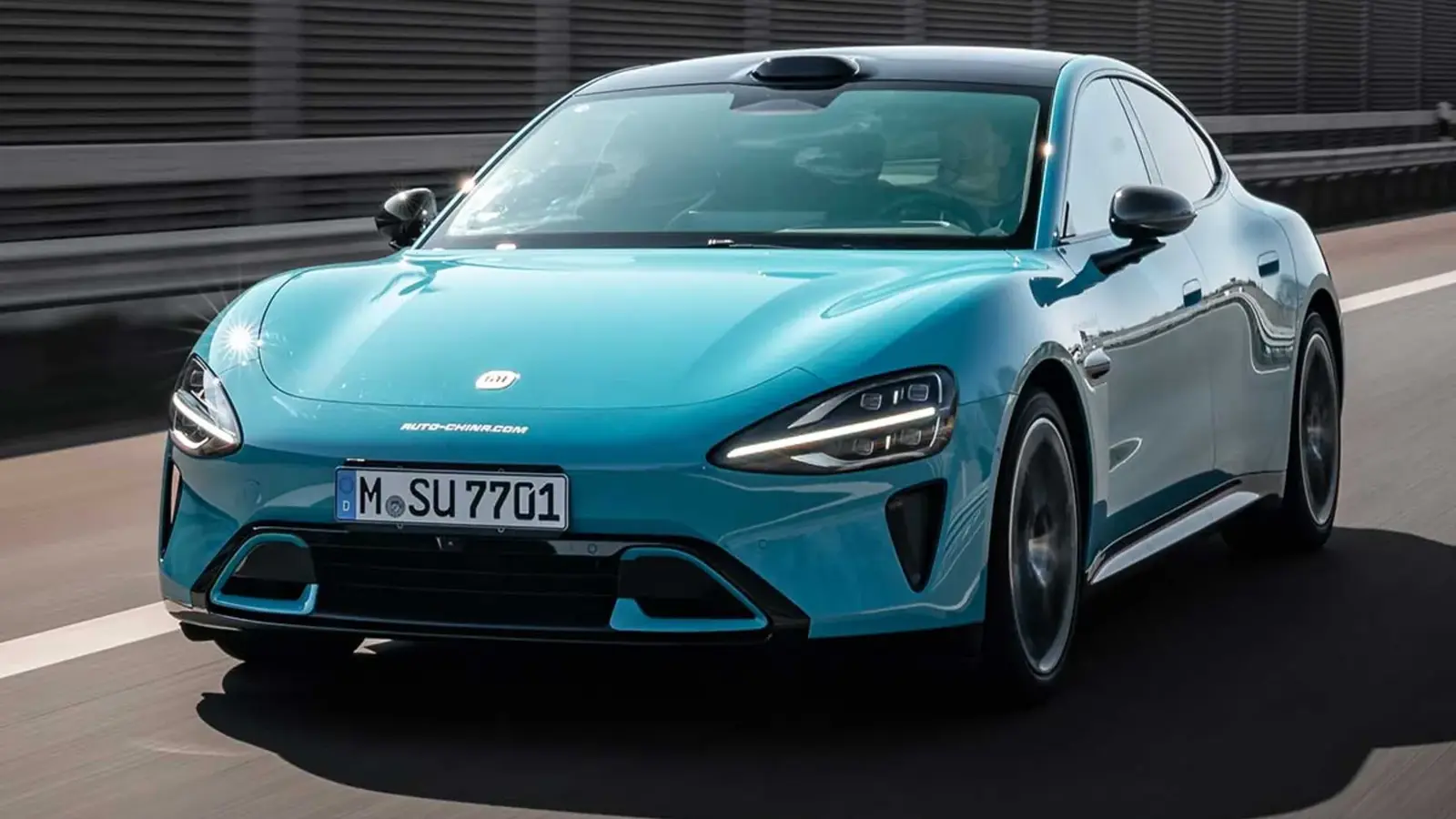
Xiaomi isn’t wasting time proving it belongs in the auto industry. Less than two years after the original SU7 sedan stunned the EV market, the tech giant is already preparing a significant update—and it arrives on March 19.
The refreshed Xiaomi SU7 isn’t a full redesign. Think of it more as a careful evolution: sharper engineering, smarter electronics, and a charging system that edges closer to the next generation of ultra‑fast electric mobility. Pre‑sale pricing has been set between 229,900 and 309,900 yuan (roughly $33,320–$44,910), positioning the sedan squarely in China’s fiercely competitive premium EV segment.
But the headline number grabs attention immediately. The SU7 Pro is now rated for up to 902 km of range under the CLTC test cycle—a figure that puts it among the longest‑range electric sedans currently available in China.
Charging tech moves closer to the ultra‑fast future
Underneath the sleek bodywork, Xiaomi has reworked the electrical architecture across the lineup.
The Standard and Pro models now operate on a 752‑volt platform, replacing the earlier high‑voltage setup. Meanwhile, the range‑topping SU7 Max steps further into cutting‑edge territory with an 897‑volt architecture, a level typically associated with next‑generation EV charging systems.
The result? According to Xiaomi, the Max variant can recover as much as 670 kilometers of driving range in just 15 minutes when connected to compatible fast chargers. For drivers accustomed to long charging stops, that number alone could change the conversation around EV road trips.
Range estimates across the updated lineup break down as follows:
- SU7 Standard: up to 720 km (CLTC)
- SU7 Pro: up to 902 km (CLTC)
- SU7 Max: up to 835 km (CLTC)
Another mechanical tweak sits at the heart of the car. Xiaomi has standardized its V6S Plus electric motor across all versions of the sedan. Output figures have reportedly increased for several trims, though the company hasn’t yet revealed exact kilowatt ratings.
A unified brain for assisted driving
The update isn’t only about range and charging. Xiaomi is also tightening its approach to software‑defined driving.
Every version of the refreshed SU7 will now share the same assisted‑driving hardware platform. At the center sits a 700 TOPS computing system running Xiaomi’s HAD driver‑assistance software, designed to support advanced safety features and future over‑the‑air improvements.
Higher‑spec trims also gain notable chassis upgrades. Xiaomi adds dual‑chamber air suspension paired with CDC adaptive dampers—technology aimed at improving both ride comfort and high‑speed stability. In practice, that means the sedan should feel smoother on rough urban roads while staying composed during spirited highway driving.
Design changes are subtle. Xiaomi focused mostly on small refinements, including adjustments to the center‑console controls and other interior details. Buyers will still have plenty of visual choice, however, with nine exterior color options available.
The SU7 story itself is unusual. Xiaomi, once known almost entirely for smartphones and consumer electronics, entered the automotive sector with remarkable speed. When the original SU7 debuted, it signaled the company’s ambition to become a serious player in electric mobility—not just a tech brand experimenting with cars.
Production, however, has been in a transitional phase. Industry data reported by CarNewsChina indicates SU7 deliveries slowed sharply in February 2026, with just 218 units sold while the factory prepared for the updated model.
The March 19 launch will clarify final specifications, production plans, and the model’s exact positioning in China’s rapidly evolving EV market. What’s already clear is Xiaomi’s broader strategy: combine high‑voltage charging, powerful onboard computing, and deep software integration.
In other words, the SU7 isn’t just another electric sedan. It’s Xiaomi’s blueprint for what a technology‑driven car company could look like.

“I cover automotive innovation, electric vehicles, and the future of mobility — where technology meets sustainability.”

Discussion
Leave a Comment