
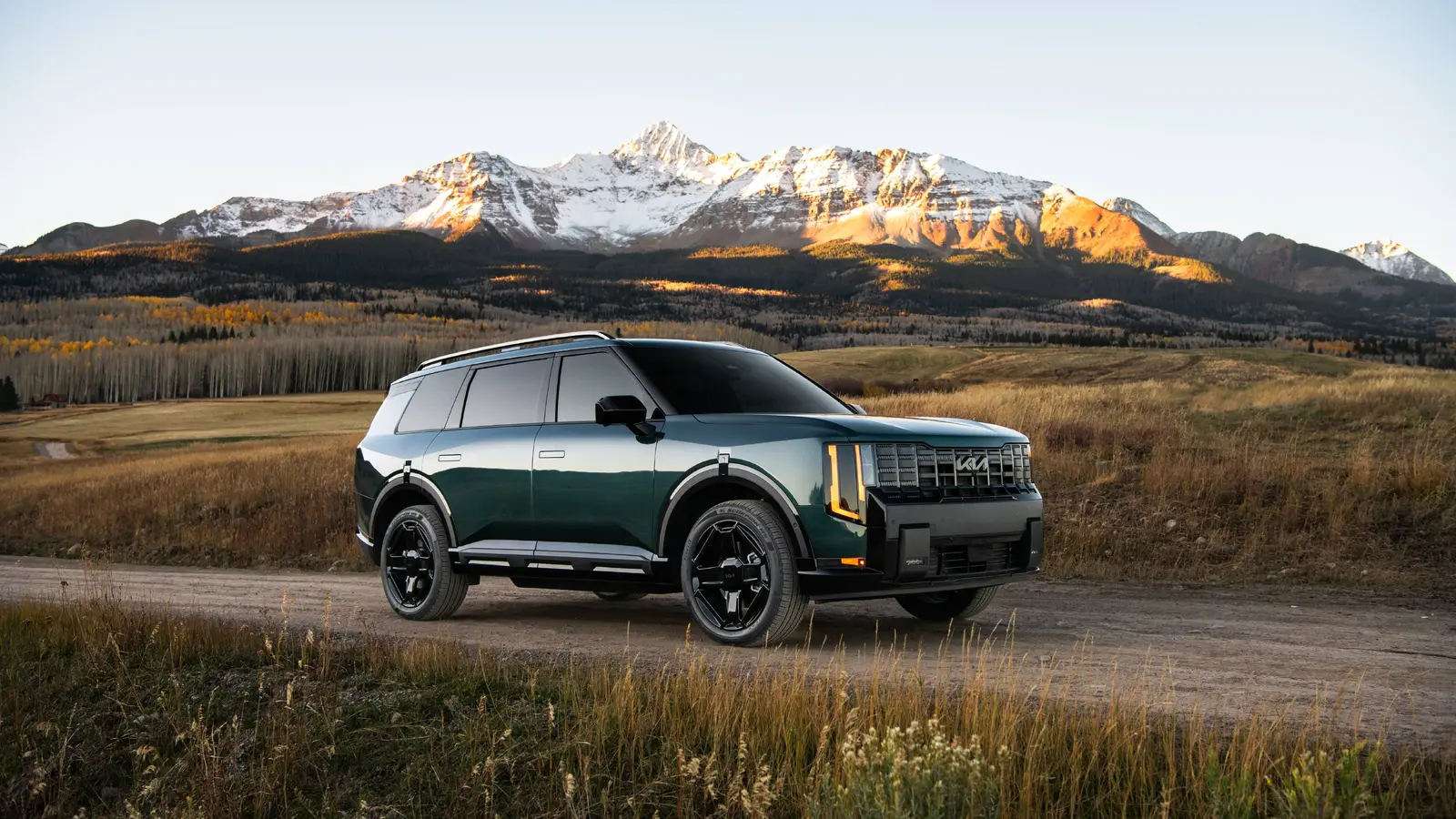
If you had walked into our editorial office a decade ago and suggested that a three-row family SUV from Kia would one day have us questioning the necessity of a British or German luxury badge, you probably would have been laughed out of the room. Yet, here we are. It has been roughly ten years since the original Telluride concept broke cover at the 2016 Detroit Auto Show, sending shockwaves through the industry. When the first generation finally hit the streets in 2019, it didn't just sell well; it fundamentally altered the automotive landscape. Dealerships couldn't keep them in stock, prompting Kia executives to affectionately dub it the "Selluride." It was the ultimate flagship that redefined a brand.
Now, the 2027 Kia Telluride has arrived, and the stakes have never been higher. The question on everyone's lips—and certainly the one dominating our testing garage—is whether the Korean automaker can catch lightning in a bottle twice. After spending extensive time dissecting the spec sheets, analyzing its design language, and evaluating its market positioning, we can confidently say that Kia isn't just looking to beat the Honda Pilot or the Toyota Grand Highlander anymore. They have aimed their crosshairs directly at Solihull. The 2027 Telluride is a masterclass in democratizing luxury, offering a Range Rover-esque experience for the pragmatic buyer.
Here is our comprehensive, definitive review of the 2027 Kia Telluride.

1. Exterior Design: The "Range Rover Effect" and Architectural Dominance
In the automotive world, road presence is currency. The original Telluride had it in spades, but the 2027 model takes that foundational DNA and injects it with a heavy dose of aristocratic swagger. As automotive design analysts, we often talk about "architectural stability"—the way a vehicle's proportions convey strength and permanence before you even open a door. The new Telluride executes this flawlessly.
Dimensional Growth and Stance
Kia didn't just tweak the bumpers; they fundamentally stretched the vehicle's architecture. The wheelbase has been extended by 2.7 inches, now sitting at a commanding 117 inches, while the overall length has grown by 2.3 inches to 199.2 inches. These aren't just numbers on a page; they represent a deliberate push into a larger, more imposing footprint that rivals full-size behemoths like the Chevrolet Traverse.
The Details That Matter
The Evolved Tiger Nose: The front fascia is dominated by a massive, reimagined "Tiger Nose" grille. What fascinated our design team is how Kia handles trim differentiation. If you opt for the top-tier SX Prestige, the grille features vertical slats color-matched to the body, creating a sophisticated, monolithic look. Conversely, the X-Line trim blacks out the grille and badging entirely, leaning hard into an aggressive, off-road persona.
Pop-Out Door Handles: For the first time in this class for Kia (and notably absent on its corporate cousin, the Hyundai Palisade), the Telluride features flush, pop-out door handles. This isn't just an aerodynamic tweak; it’s a psychological cue borrowed straight from the playbooks of Tesla and Range Rover, signaling high-tech minimalism.
Illumination as a Signature: The beloved amber daytime running lights return, but they have been modernized into distinct, vertical LED modules. It maintains the Telluride's unmistakable nighttime signature while looking decidedly more premium.
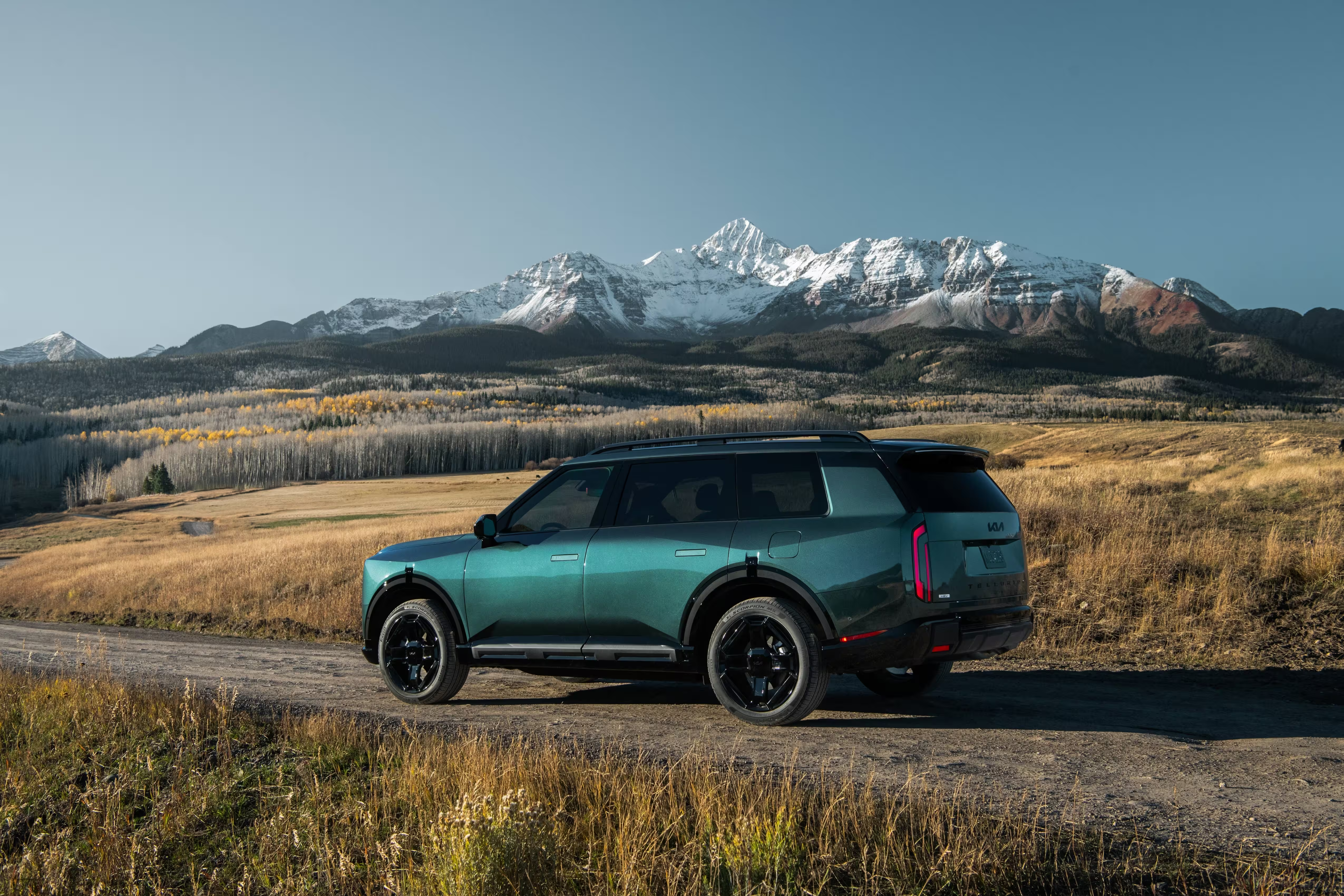
Clean Lines: Moving to the rear, the design team opted for radical simplification. By hiding the rear wiper tucked neatly beneath the upper spoiler and concealing the exhaust outlets, the rear profile is astonishingly clean. It is a minimalist masterstroke that, dare we say, looks more cohesive than some current European luxury offerings.
Exclusive Paintwork: For buyers who eschew the rugged X-Line, Kia offers a stunning Ivory Silver paint—a hue that catches the light with a pearlescent depth that screams "country club" rather than "carpool lane." Rolling on 20-inch geometric, gloss-black blocky wheels, the stance is undeniable.
2. The Powertrain Revolution: Bidding Farewell to the V6
For years, the naturally aspirated V6 was the undisputed king of the American three-row SUV segment. Smooth, predictable, and thirsty. For 2027, Kia has officially retired the old V6, replacing it with a highly sophisticated 2.5-liter turbocharged four-cylinder engine. But the real headline—and the vehicle we focused our deepest analysis on—is the new Turbo-Hybrid (HEV) variant.
This hybrid powertrain is a marvel of modern packaging, pairing the 2.5-liter turbo with two electric motors. The result? A robust 329 horsepower and an immediate 339 lb-ft of torque.
Driving Dynamics and the Enthusiast's Relief
When we first heard "hybrid," our collective hearts sank, anticipating the rubber-band feel of a Continuously Variable Transmission (CVT). In a brilliant move, Kia's engineers opted for a traditional 6-speed automatic transmission for the hybrid model. This choice dramatically transforms the driving experience. Instead of the droning wail typical of hybrid SUVs under hard acceleration, the Telluride delivers direct, tactile shifts that connect the driver to the road.
Make no mistake, this is a heavy machine. The addition of the battery pack and dual electric motors adds roughly 300 pounds over the outgoing generation, pushing the all-wheel-drive hybrid variant to a hefty 5,000 pounds. Yet, the instantaneous low-end torque of the electric motors beautifully masks this weight. 0 to 60 mph happens in a very respectable 7.0 seconds.
More importantly, this forced-induction hybrid setup solves a critical flaw of the old V6: altitude sickness. If you are driving through the Rocky Mountains, traditional naturally aspirated engines gasp for air and lose significant power. The Telluride’s turbo-hybrid setup maintains its grunt at high elevations, making it a superior companion for high-altitude family adventures.
Ride Quality
Interestingly, Kia decided against equipping the Telluride with adaptive dampers—a feature rapidly becoming standard in the $60k bracket. However, the fully independent suspension is tuned so masterfully that you rarely miss them. The ride is buttery smooth, absorbing mid-corner bumps and highway expansion joints with the muted thud characteristic of vehicles twice its price.
| Specification | 2.5L Turbo (Gas) | 2.5L Turbo-Hybrid (HEV) |
|---|---|---|
| Total System Output | 274 hp | 329 hp |
| Total Torque | 311 lb-ft | 339 lb-ft |
| Transmission | 8-Speed Automatic | 6-Speed Automatic |
| Towing Capacity | 5,000 lbs | 4,500 lbs |
| Est. Range | - | 637 miles (1,025 km) |
.avif)
3. The End of Range Anxiety: The 600-Mile Magic Trick
If there is one statistic that will sell the 2027 Telluride Hybrid on dealership floors, it is this: 637 miles. That is the estimated driving range on a single tank of fuel.
In the realm of large, three-row family haulers, efficiency has always been the painful compromise. You bought the space, and you paid for it dearly at the pump. The Telluride Hybrid flips the script, delivering an astonishing 31 MPG in combined driving and up to 36 MPG on the highway.
To put this into a real-world perspective for our readers: imagine loading up the family in New York City and driving all the way to Detroit, Michigan, without stopping for gas a single time. This level of efficiency drastically alters the calculus of the American road trip. It reduces driver fatigue, cuts down on the inevitable chaos of pit stops with children, and firmly positions the Telluride above hybrid rivals like the Toyota Grand Highlander Max in terms of sheer endurance.

4. The Cabin: Engineering the Perception of Luxury
Stepping inside the 2027 Telluride is where the brand’s strategic brilliance truly shines. As automotive journalists, we spend a lot of time analyzing the "touchpoints"—the areas of the car you physically interact with daily. Kia has realized that true luxury is less about the absolute pedigree of the materials and more about the engineering of the user's perception.
The Digital Command Center
Taking a page directly from the critically acclaimed EV9 electric SUV, the Telluride's dashboard is dominated by a sweeping 30-inch curved glass panel. This monolith seamlessly houses dual 12.3-inch displays (one for the driver's instrumentation, one for infotainment) bisected by a dedicated 5-inch climate control panel.
The software running the show is Kia's new ccNC (connected car Navigation Cockpit). It is blazing fast and features a delightful touch of whimsy. In an industry where German UI design often feels cold and clinical, Kia has "humanized" their tech. The interface features charming animal themes—for instance, selecting Apple CarPlay might bring up a subtle elephant graphic. It’s a small, joyful detail that speaks to the family-oriented nature of the vehicle.

Materials: The Sustainable Fake-Out
Here is where the journalist in us geeks out: Kia has entirely eliminated genuine Nappa leather from the Telluride lineup. Wait, don't panic. In its place, they have utilized "SynTex," a highly advanced synthetic leather. It is incredibly soft, breathes well, and realistically, it will withstand the onslaught of spilled juice boxes and muddy golden retrievers far better than actual cowhide.
Similarly, the trim pieces heavily feature what Kia calls "Engineered Hardwood." Let’s call it what it is: high-end plastic. But the execution is flawless. It has an open-pore texture that feels perfectly authentic beneath your fingertips.
To top it all off, the SX Prestige features a dramatic "Blackberry Suede" headliner. This deep, rich, dark purple faux-suede roof lining is a daring choice that pays off immensely, making the cabin feel like a bespoke, custom-tailored lounge.
Tech Triumphs and Quirks
The cabin is loaded with trickle-down tech from the ultra-luxury segment. You get a Digital Rearview Mirror (essential when the third row is packed with heads blocking your view), a 360-degree camera with 3D swiping capabilities, and Digital Key 2.0, allowing your smartphone to act as the absolute key to the car. Audio is handled by a stellar 14-speaker Meridian sound system that effortlessly fills the cavernous interior.
However, we must point out two specific quirks that might trigger the OCD of our more meticulous readers:
The "Squirkle" Steering Wheel: The wheel is an odd hybrid of a square and a circle. It feels fine in the hands, but visually, it takes some getting used to.
The Asymmetrical Logo: For some unfathomable reason, the Kia logo on the steering wheel airbag cover is placed off-center. It is a bizarre design choice in an otherwise beautifully symmetrical cabin.
5. Comfort, Packaging, and the Hybrid Trade-off
A family SUV lives and dies by its packaging, and the Telluride has always been cavernous. The 2027 model pushes the envelope of what is possible in this segment, bringing flagship-level comfort to the masses.

First Class Seating
Up front, the driver is treated to a 14-way power-adjustable seat complete with memory functions and, crucially, a massage feature. Moving to the second row, buyers can spec the $1,200 Executive Package. This transforms the second row into a business-class experience, offering power-adjustable captain's chairs with heating, ventilation, and an "Ottoman" rest mode. Kia even borrowed the brilliant folding smart tables from the Carnival minivan, giving second-row passengers a place to put their tablets or snacks.
Even the third row wasn't ignored. Often treated as the penalty box in mid-size SUVs, the Telluride's third row now features heated seats—a feature previously gatekept by the Hyundai Palisade.
The Hybrid Compromise
However, physics remains undefeated, and packaging a massive battery pack requires compromise. We must highlight a critical "trade-off" for potential buyers: if you choose the Hybrid model, the battery placement robs the interior of exactly 2 inches of second-row legroom compared to the gas-only model. Additionally, you lose about 1 cubic foot of overall cargo volume.
That being said, because the vehicle's footprint grew overall, the Telluride still boasts a highly usable 21.3 cubic feet of space behind the third row. For most families, the loss of 2 inches of legroom is a completely acceptable sacrifice for double the fuel economy, but it is a distinction buyers need to be aware of.

6. Pricing, Competitors, and the Verdict: Is a $60,000 Kia Worth It?
Let’s talk numbers. The base EX Hybrid starts at a highly competitive $46,000. However, the fully loaded SX Prestige Hybrid that we tested carries a sticker price hovering around the $60,000 mark.
The natural reflex for many legacy car buyers is to scoff at a $60,000 Kia. But let’s look at the market context. A comparably equipped Toyota Grand Highlander Hybrid Max or Mazda CX-90 PHEV will easily crest that number, and neither offers the sheer aesthetic bravado or the dense feature list of the Telluride. Furthermore, if you want this level of tech, massaging seats, and executive rear seating from a German brand, you are looking at an $85,000 BMW X7 or Mercedes-Benz GLS.
There is roughly a $3,000 price premium to step up from the standard 2.5L Turbo gas engine to the Turbo-Hybrid. Is it worth it? Absolutely, without a shadow of a doubt. 1. Operational Savings: With 36 MPG on the highway, that $3,000 premium will pay for itself in fuel savings remarkably fast.
2. Superior Drivability: The immediate torque of the hybrid system makes the heavy SUV feel light on its feet, especially in high-altitude environments.
3. Resale Value: As the market aggressively pivots toward electrification, a high-efficiency hybrid three-row SUV will hold its residual value significantly better than a gas-only counterpart on the used market.
The Final Word
The 2027 Kia Telluride is a triumph of strategic product planning. It proves that luxury is no longer defined strictly by the badge on the hood or the origin of the leather; it is defined by the user experience, the seamless integration of technology, and the thoughtful execution of design.
Kia has taken the blueprint of the traditional luxury SUV, reverse-engineered it, stripped away the exorbitant brand tax, and delivered a product that genuinely punches two weight classes above its price tag. If you can get past the asymmetrical steering wheel logo and the slight reduction in second-row legroom, what you are looking at is arguably the most complete, compelling family SUV on the market today. The king has returned, and this time, it’s wearing a tailored suit.

“Cars are evolving faster than ever. I cover electric vehicles, smart mobility, and the future of transportation worldwide.”

Discussion
Leave a Comment