
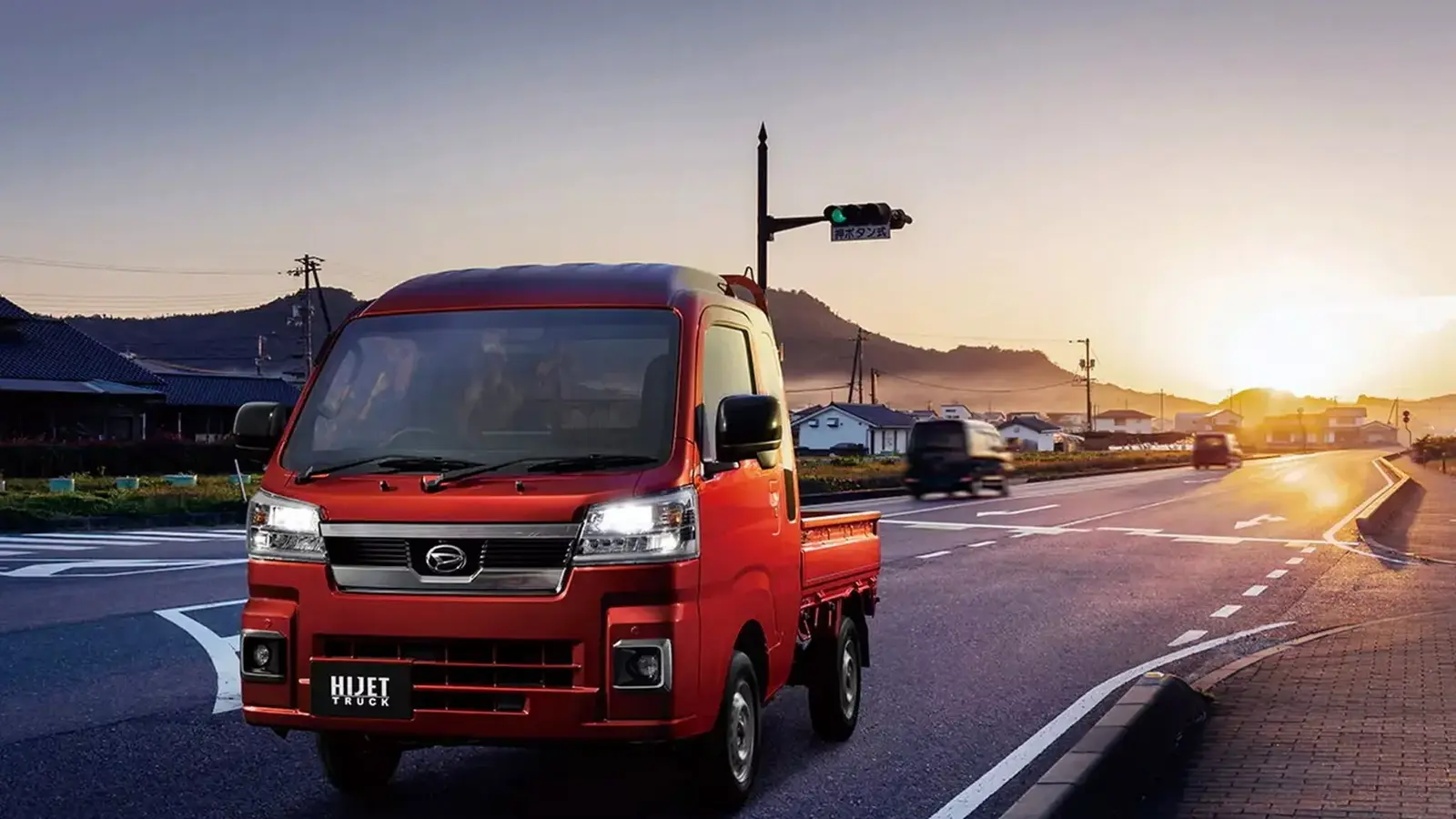
They look almost frozen in time—boxy, compact, and unapologetically simple. Yet underneath that familiar skin, Japan’s favorite kei trucks are quietly getting sharper, smarter, and far more aware of the chaos around them.
The 2026 Daihatsu Hijet Truck lands with barely a visual clue that anything has changed. Same proportions. Same no-nonsense cabin. Park it next to last year’s model and you’d struggle to tell them apart. But this update isn’t about appearances—it’s about what happens when you’re threading through narrow streets, dodging cyclists, or making tight turns in crowded neighborhoods.
Daihatsu’s latest move centers on an upgraded Smart Assist suite, now packing 13 driver-support features tuned specifically for urban life. The system can detect bicycles crossing ahead, spot oncoming vehicles when turning right at intersections, and even notice pedestrians approaching from either side during turns. In a vehicle built for tight spaces and constant stop-and-go work, that extra awareness matters more than flashy design ever could.
The Toyota Pixis Truck, essentially the Hijet’s twin with a different badge, gets the exact same treatment. And in a segment where competition is fierce—think Suzuki Carry, Mazda Scrum, Nissan Clipper, and Mitsubishi Minicab—keeping up with safety tech is no longer optional.

Small Truck, Surprisingly Thoughtful Upgrades
Look closer and you’ll find subtle but meaningful improvements. Higher trims now come equipped with LED headlights featuring adaptive high-beam functionality, automatically adjusting to avoid blinding oncoming drivers. Side View Lamps have also been added, a small touch that makes a big difference when navigating Japan’s famously tight alleys.
Beyond that, the formula stays reassuringly familiar. The Hijet still offers its “Jumbo” variant, stretching the cabin and raising the roof for added comfort—something frequent drivers will appreciate more than any spec sheet upgrade. Meanwhile, both the Hijet and Pixis remain incredibly versatile at the back, configurable as dump trucks, refrigerated units, panel vans, or classic drop-side pickups.
Under the hood, nothing radical—and that’s intentional. Buyers get a 660cc gasoline engine, either naturally aspirated with 46 horsepower or turbocharged for a more energetic 63 horsepower. Transmission options include a five-speed manual or a CVT, paired with either rear-wheel drive or a four-wheel-drive setup. For tougher terrain, a locking differential is available, giving these tiny trucks real capability when the road disappears.
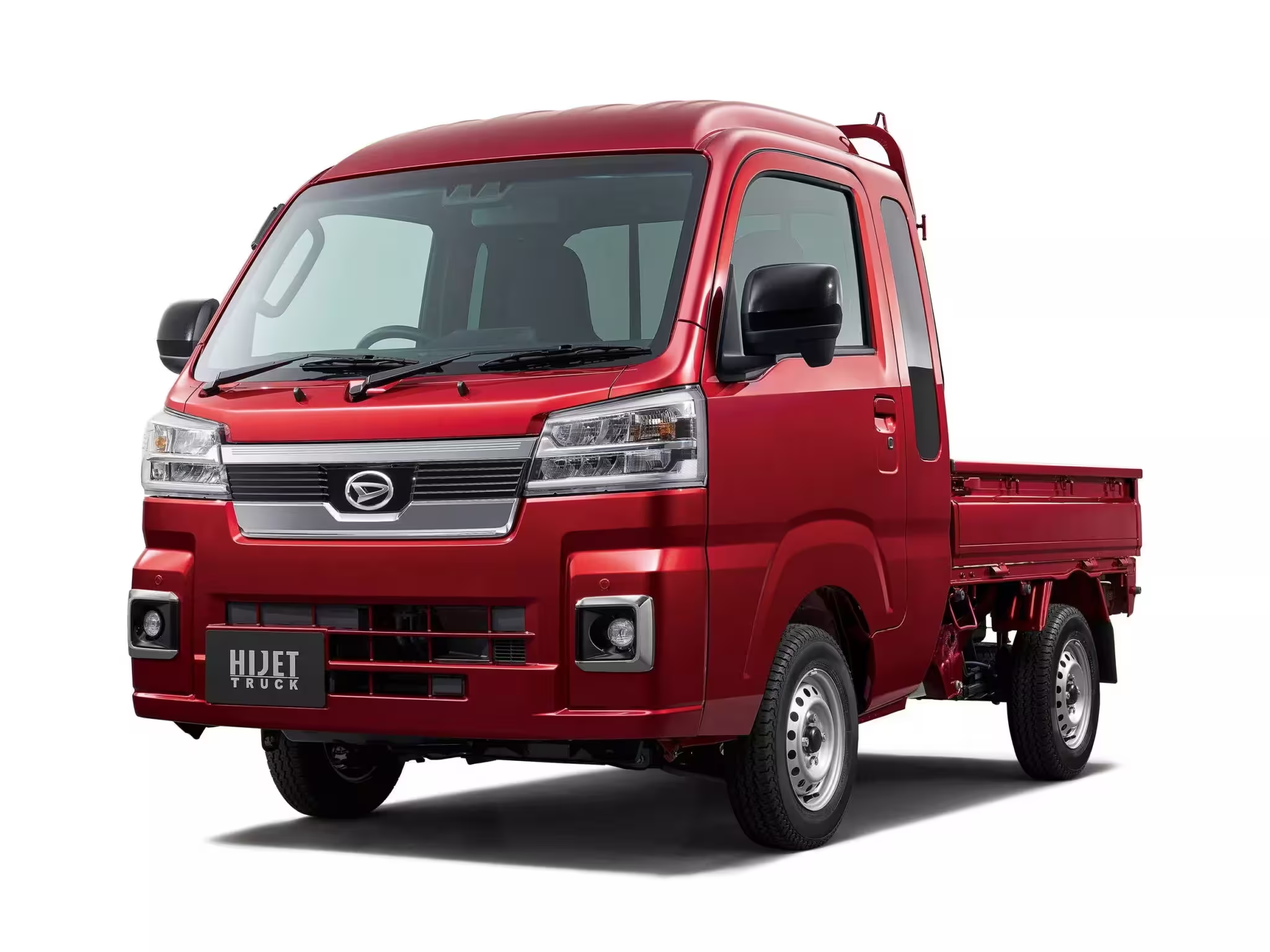
And then there’s the price. Despite the added tech, the Hijet Truck still starts at just ¥1,094,500—about $6,900. Even the top-spec turbocharged 4WD version stays close to $10,000, while specialized commercial builds can climb higher depending on configuration.
That’s the real story: more safety, more awareness, and the same accessible price point that made kei trucks indispensable in the first place.
It’s no surprise the Hijet has sold over 4.5 million units since its debut in 1960. It’s not trying to reinvent itself. It doesn’t need to. Instead, it evolves in small, deliberate steps—just enough to stay relevant in a changing world, without losing the simplicity that made it a staple across Japan.

“I cover automotive innovation, electric vehicles, and the future of mobility — where technology meets sustainability.”

Discussion
Leave a Comment