
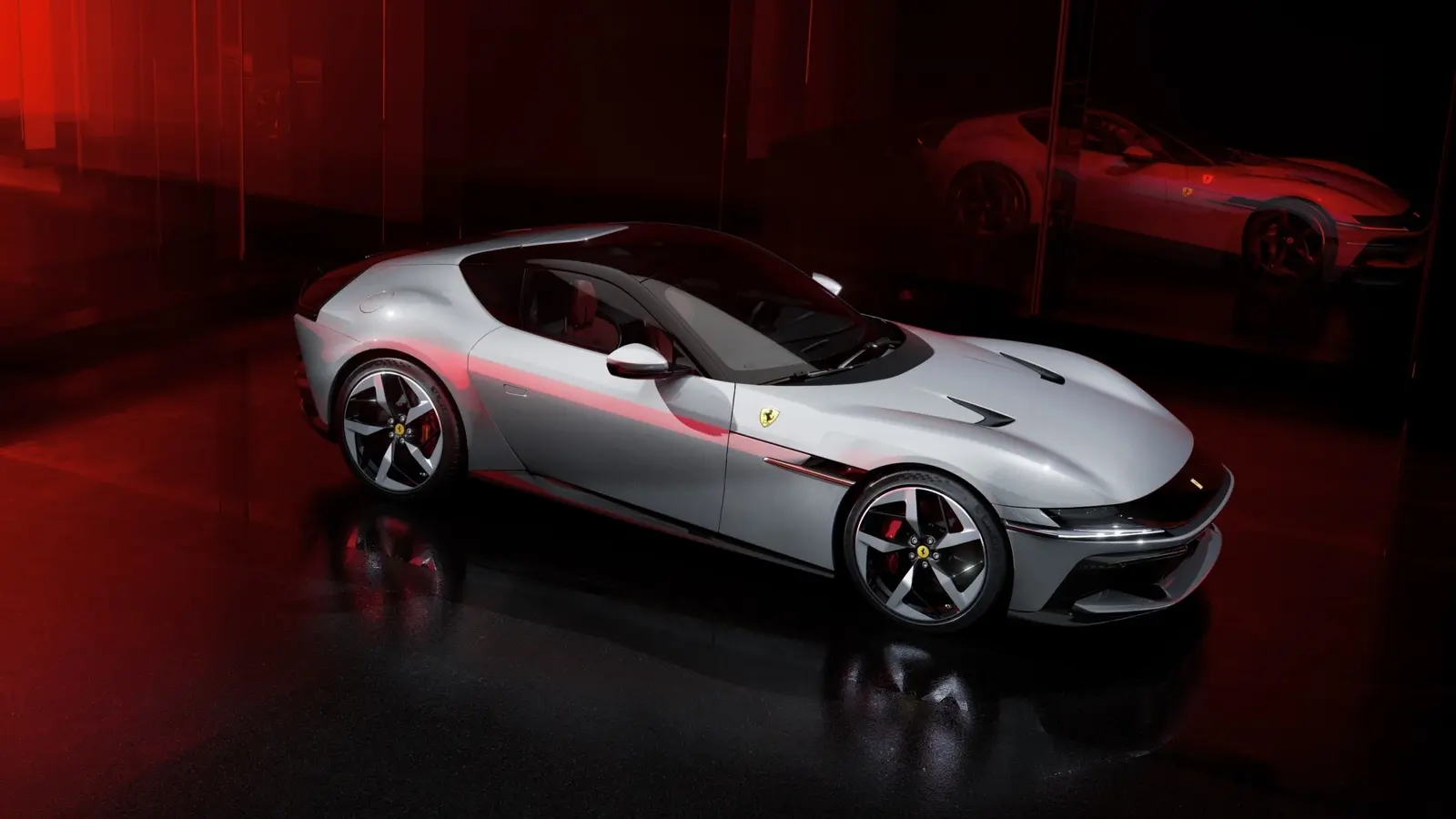
Not every Ferrari story begins with speed. This one starts with glass.
A small batch of the new Ferrari 12Cilindri—those elegant V12 grand tourers meant to carry Maranello’s legacy into the future—has run into an unexpected snag in the United States. The issue isn’t mechanical. It’s not about performance. It’s visibility.
Ferrari has issued a recall affecting 2025 and 2026 model-year cars built between October 2024 and late November 2025. The culprit? Rear and side windows that may not let in enough light to meet U.S. safety standards.
Under Federal Motor Vehicle Safety Standard 205, automotive glass must allow at least 70 percent light transmittance. Drop below that threshold, and visibility can suffer—especially in low-light conditions—raising the risk of accidents. That’s exactly where these cars fall short.
The origin of the problem traces back to a misstep in configuring U.S.-specific technical specifications. Ferrari’s supplier, Saint-Gobain Sekurit Italia, provided the privacy glass in question, but the mismatch appears to have come from how those specs were applied rather than the material itself.
It didn’t take long to catch. A routine pre-delivery inspection in early March 2026 flagged the issue. Within days, Ferrari’s North American arm and its Maranello headquarters confirmed the noncompliance. Production was quickly corrected, and owners will be notified by mid-May.

A flagship V12, slightly dimmed
The timing is notable. The 12Cilindri—internally known as the F167—arrived in 2024 as the spiritual successor to the 812 series. Unveiled in Miami Beach during Ferrari’s 70th anniversary celebrations in North America, it wasn’t just another model launch. It was a statement.
And a crucial one. The Americas account for nearly a third of Ferrari’s global deliveries, with the U.S. leading the charge. Any hiccup here matters.
Beyond the recall, the car itself is anything but ordinary. Its 6.5-liter naturally aspirated V12 has been reworked to spin faster and push out more power, even as tightening global noise regulations quietly tame its soundtrack. With Euro 7 looming, engines like this are living on borrowed time.
Ferrari didn’t stop at the engine. The wheelbase is shorter than before—an unusual move that sharpens handling. The chassis is stiffer, lighter in key areas, and engineered for precision. A faster-shifting transmission and a triple-screen cockpit bring it closer to a modern grand tourer without losing its analog soul.
Then there’s the aero. Active rear flaps adjust between 60 and 300 km/h, adding meaningful downforce when needed. In high-downforce mode, the rear gains an extra 50 kilograms of grip. Subtle, but effective.
All of this comes at a price. In the U.S., the entry point sits just under $466,000 before options—hardly a mass-market concern, but enough to raise expectations.
Which is why even something as simple as window tint becomes headline material. In a car engineered to perfection in so many areas, it’s the smallest details that tend to stand out the most.

“I cover automotive innovation, electric vehicles, and the future of mobility — where technology meets sustainability.”

Discussion
Leave a Comment