
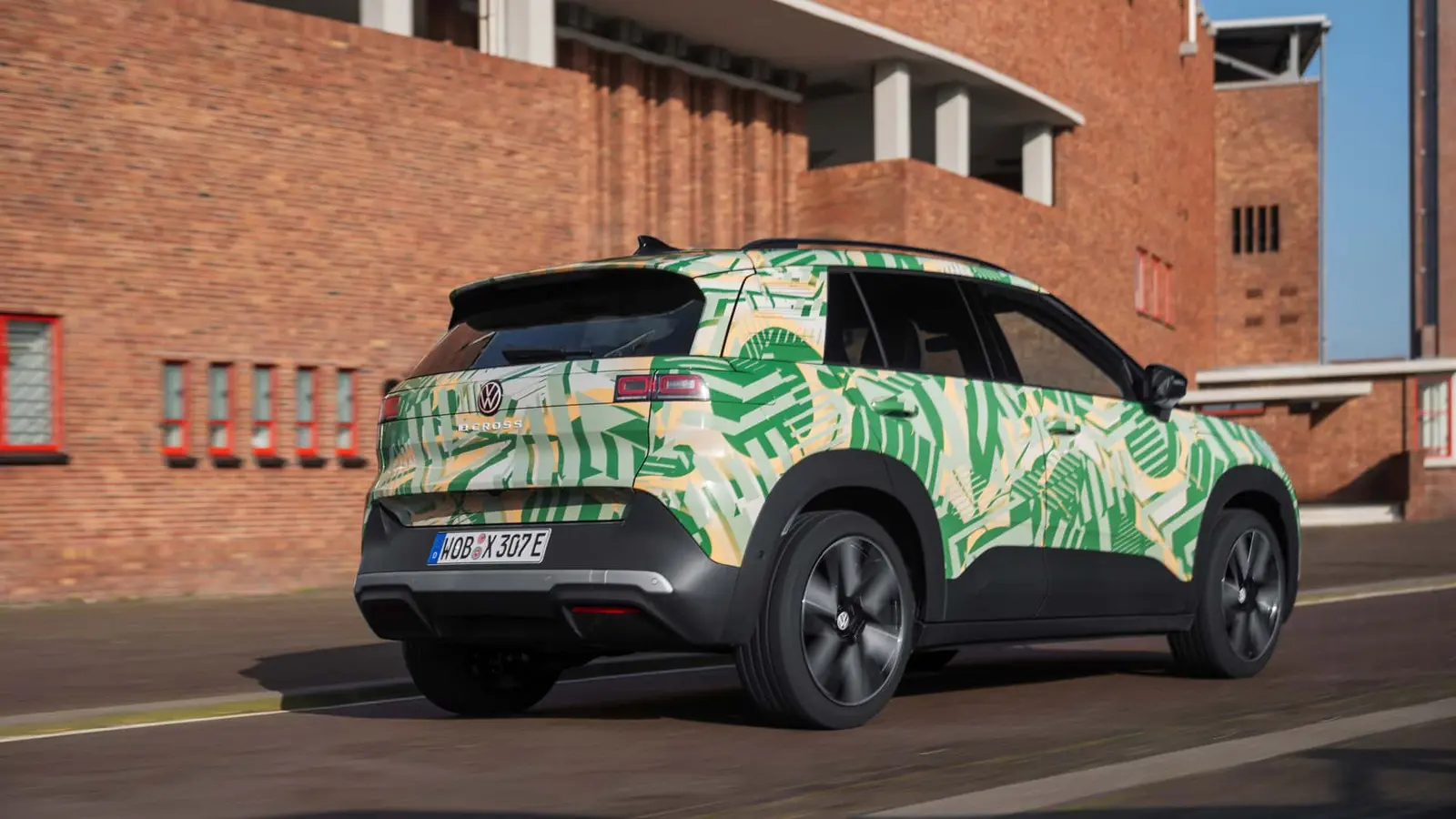
Volkswagen’s next big move in electric mobility isn’t big at all. It’s compact, slightly disguised, and quietly shaping up to be one of the brand’s most important launches in years.
The upcoming ID. Cross—still wrapped in camouflage but now clearly edging toward production—has been spotted again, this time looking far less like a concept and far more like something you’ll soon see in city traffic. Its official debut is penciled in for fall 2026, and the timing couldn’t be more strategic.
This is Volkswagen going straight for the heart of Europe’s favorite segment: the small SUV. Think tight streets, daily commutes, weekend escapes. The ID. Cross is designed for all of it.
Small footprint, surprisingly generous cabin
At first glance, it mirrors the proportions of the T-Cross. The numbers tell a familiar story—just over 163 inches long, about 70 inches wide—but the real difference sits underneath. Built on the newer MEB+ platform, this electric SUV makes better use of every inch.
That translates into a cabin that feels less “subcompact” than expected. There’s more breathing room, smarter storage, and a layout that benefits from the absence of a traditional engine. Even the cargo space nudges ahead of its combustion sibling, with a bit of extra room in the rear and a small but useful front trunk tucked under the hood.
Inside, Volkswagen isn’t reinventing the wheel—but it is refining it. A 10.3-inch digital cluster sits ahead of the driver, with an optional retro display mode that nods to the original Golf. It’s a subtle touch, but one that adds character. At the center, a 12.9-inch touchscreen runs updated software, controlling everything from navigation to climate settings.

Under the skin: familiar tech, sharper execution
The ID. Cross rides on a front-wheel-drive setup as standard, powered by Volkswagen’s APP290 electric motor. Buyers will have three output options, ranging from modest city-friendly performance to something with a bit more punch.
Battery choices follow a similar logic. The entry-level pack uses lithium iron phosphate chemistry—durable, cost-effective, and good for around 196 miles of range. Step up, and you get a higher-density battery pushing that figure to roughly 271 miles on a single charge.
Charging speeds are competitive rather than groundbreaking. Expect up to 105 kW on DC fast charging, enough to take the battery from 10 to 80 percent in under half an hour. For everyday users, that’s more than workable.
There’s also a practical twist: vehicle-to-load capability. Plug in a device, power your gear, or even run small appliances. It’s the kind of feature that doesn’t sound essential—until you have it.
Pricing is expected to start at around €28,000, placing it firmly in the accessible EV category. Three trims—Trend, Life, and Style—will define the lineup, each adding layers of comfort, design, and tech. Higher versions bring features like matrix LED headlights, illuminated branding, and more personalized interiors.
And then there’s the software side. Volkswagen is introducing a new generation of driver assistance called Connected Travel Assist. It doesn’t just react—it anticipates, using shared data to recognize traffic lights, stop signs, and surrounding conditions, stepping in when needed.
Will it come to the U.S.? Right now, it’s not part of the plan. But in a market shifting quickly toward smaller, more affordable EVs, that answer could change.
Either way, the ID. Cross isn’t trying to dominate headlines. It’s aiming for something more realistic—and arguably more important: becoming the electric car people actually buy.

“Cars are evolving faster than ever. I cover electric vehicles, smart mobility, and the future of transportation worldwide.”

Discussion
Leave a Comment