
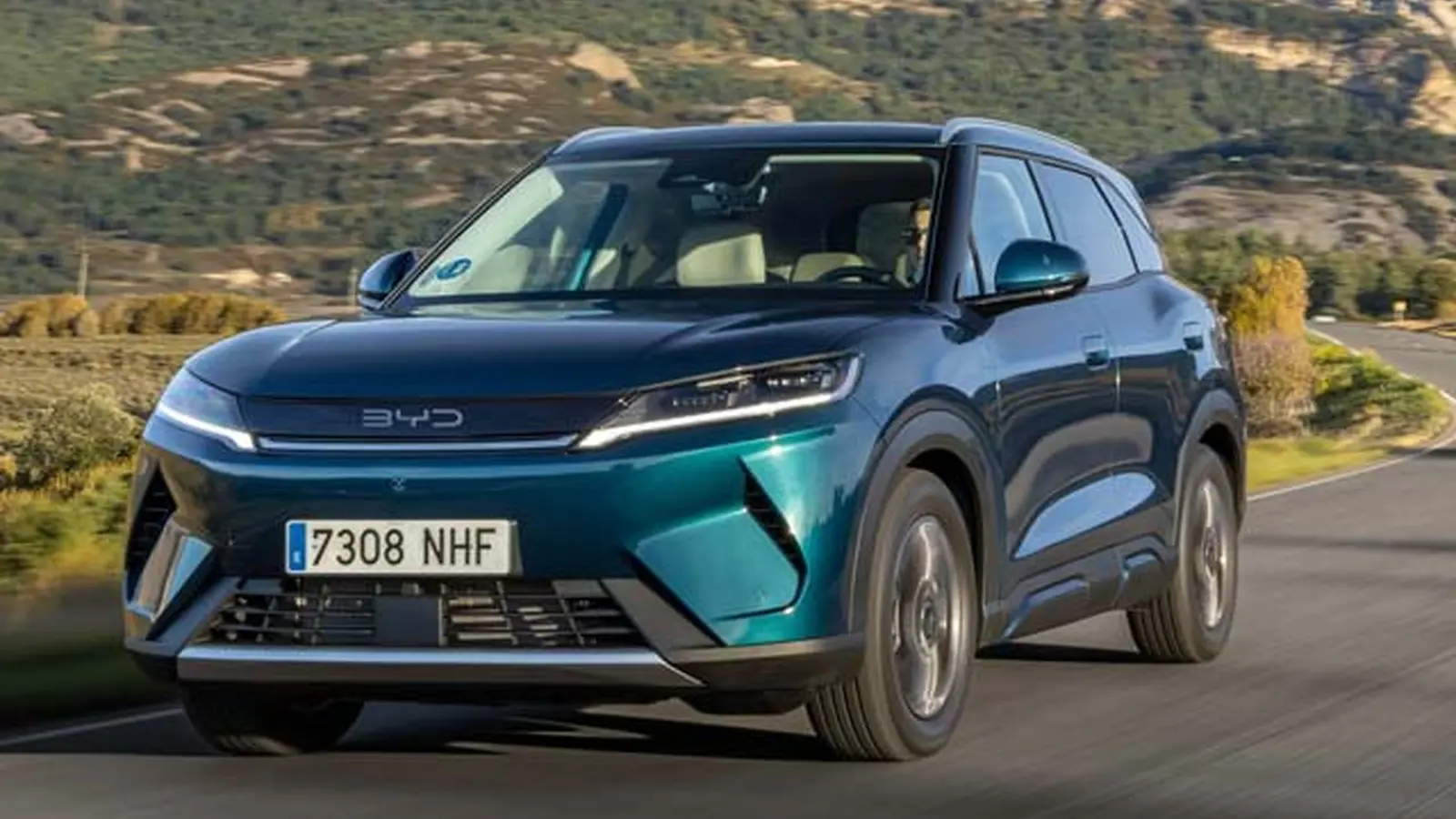
Back when most carmakers were still hedging their bets on electrification, BYD quietly did something radical—it built one of the first plug-in hybrids you could actually buy. That was 2008. Fast forward to today, and the company isn’t just participating in the electric shift—it’s shaping it.
The latest proof arrives in the UK this May: the BYD ATTO 2 DM-i, a compact SUV that seems determined to erase the usual compromises people associate with hybrid driving.
This isn’t just another plug-in hybrid chasing efficiency stats. It’s a rethink of how hybrids should behave on real roads, in real cities, with real drivers who don’t want to think about charging schedules every day.
Electric First, Petrol Second—Finally Done Right
The ATTO 2 DM-i leans heavily into electric driving, and that changes everything. For everyday commutes, it behaves much like a fully electric car, offering up to 56 miles of pure EV range—enough to cover most urban routines without touching a drop of fuel.
But the clever part kicks in when that battery runs low. Instead of the petrol engine taking over in a traditional sense, it mostly acts as a generator, feeding energy back into the system. The transition is subtle. Almost invisible.
Underneath it all sits BYD’s 1.5-litre Xiaoyun engine, pushing an impressive 43% thermal efficiency—one of the highest figures in the industry. It’s not there to dominate the drive. It’s there to support it.
The system constantly shifts between three modes:
- Pure electric driving for city conditions
- Generator mode, where the engine produces electricity
- Hybrid assistance for high-speed or demanding situations
The result feels less like a hybrid and more like an EV that refuses to leave you stranded.

Range Anxiety? Not Here
Let’s talk numbers—but only because they’re hard to ignore. The ATTO 2 DM-i delivers a combined range of up to 621 miles. That’s the kind of figure that makes long-distance travel feel almost old-fashioned again: just get in and go.
Charging doesn’t drag its feet either. With DC fast charging, the battery can jump from 30% to 80% in just 26 minutes—quick enough for a coffee stop rather than a full itinerary.
It’s a far cry from BYD’s early days, when its first plug-in hybrid needed over seven hours to charge and delivered a fraction of the electric range.
The Battery Story Behind It All
At the center of this evolution is BYD’s Blade Battery, a lithium iron phosphate (LFP) design that prioritizes safety and durability as much as performance. It’s engineered to handle extreme stress—famously passing the nail penetration test without catastrophic failure.
In practical terms, that means more confidence for drivers and longer lifespan for the vehicle itself.
There’s also a useful twist: Vehicle-to-Load capability. Plug in external devices, and the ATTO 2 DM-i turns into a mobile power source. Camping trips, emergency use, or just powering gear on the go—it’s a small feature that quietly expands what a car can do.
A Lineup That’s Expanding Fast
The ATTO 2 DM-i isn’t arriving alone. It’s part of a growing family of BYD plug-in hybrids that are spreading across different segments.
Models like the SEAL 6 DM-i push range even further, while the SEAL U DM-i and SEALION 5 DM-i target families and value-focused buyers. Together, they show a clear strategy: scale the technology, refine it, and make it accessible across the board.
It’s not about one standout model. It’s about building an ecosystem.
From Battery Maker to Industry Heavyweight
BYD’s rise still feels unusual in an industry dominated by legacy brands. Founded in 1995 with just 20 employees, it has grown into a global force with over a million staff and operations in more than 100 countries.
Its roots in battery technology still shape everything it builds today. That focus shows up in the details—in efficiency gains, in charging speed, in durability.
The ATTO 2 DM-i isn’t just another SUV launch—it’s a snapshot of how far hybrid technology has come, and how quickly it’s still moving.

“Cars are evolving faster than ever. I cover electric vehicles, smart mobility, and the future of transportation worldwide.”

Discussion
Leave a Comment