
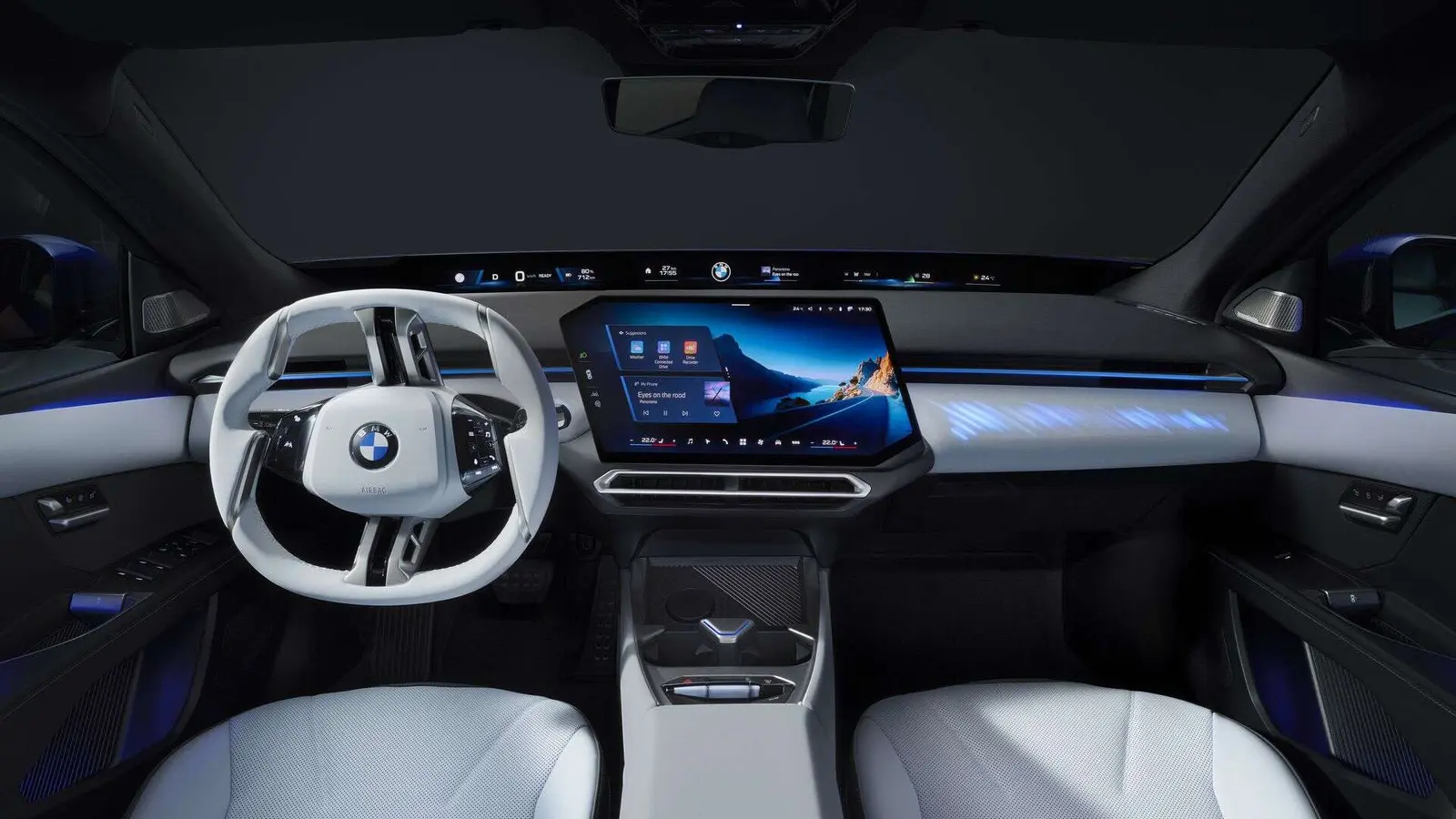
The first time you sit behind the wheel, it doesn’t feel like a screen at all. More like the car has quietly stretched its awareness across the windshield—subtle, wide, and always there. BMW calls it Panoramic Vision, and it’s already showing up in models like the new i3 sedan and the latest iX3. But this isn’t just another display in an industry obsessed with bigger rectangles.
It’s a projection. A long, low band of information running from one A-pillar to the other, sitting at the base of the windshield. Instead of demanding your attention like a tablet glued to the dash, it blends into your natural line of sight. Speed, navigation, media—everything lives there, without forcing your eyes to wander far from the road.
BMW’s design chief, Adrian van Hooydonk, frames it as a balancing act. Drivers today live in their digital ecosystems. Apps, notifications, constant connectivity—it doesn’t switch off when you get into a car. The real challenge? Letting that digital life follow you without diluting what BMW has always promised: the joy of driving.
Panoramic Vision is their answer to that tension. The left side replaces the traditional instrument cluster with fixed, essential information. The center and right sections? Fully configurable. You decide what matters. It’s personal, but not chaotic.
Less distraction, more awareness
At first glance, filling the dashboard with even more data sounds risky. Information overload is a real concern. But BMW is betting on something simple: placement matters more than quantity. By keeping everything within the driver’s forward view, the need to glance sideways—or down at a touchscreen—shrinks dramatically.
That’s also why the system works alongside a large 17.9-inch central display rather than replacing it. The touchscreen handles depth and interaction. Panoramic Vision handles immediacy. Together, they create a layered experience instead of a competing one.
And there’s more coming. A new 3D head-up display adds another dimension, literally, projecting key data into the driver’s field of vision with depth cues. It’s optional for now, but clearly part of BMW’s broader shift toward immersive interfaces.
Even passengers aren’t being left out. A front passenger display is expected to roll out on larger models soon—likely debuting with the refreshed 7 Series. Wider dashboards make room for it, and BMW seems comfortable leaning into a multi-screen future.
All of this is arriving quickly. The brand plans to introduce around 40 updated or new models by the end of 2027, most of them adopting this new interior philosophy. So what feels novel today won’t stay that way for long.
Here’s the real takeaway: BMW isn’t just adding more screens. It’s rethinking where information lives inside the car—and how it reaches you. Instead of pulling your attention away, Panoramic Vision tries to meet your eyes where they already are.
It’s not about more technology. It’s about making technology feel invisible while you drive.

“I cover automotive innovation, electric vehicles, and the future of mobility — where technology meets sustainability.”

Discussion
Leave a Comment