
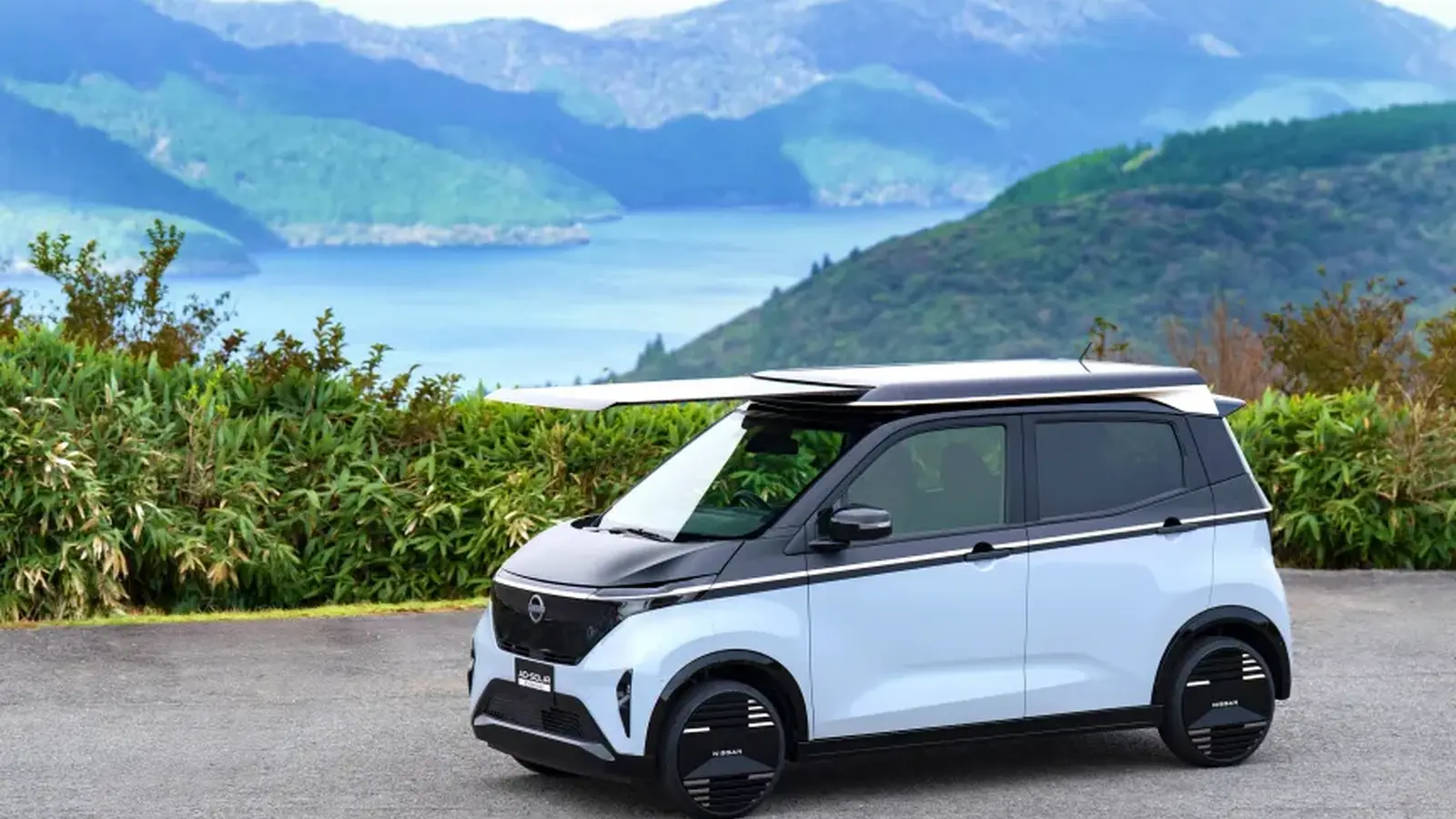
Nissan unveils solar roof solution for the Sakura kei EV
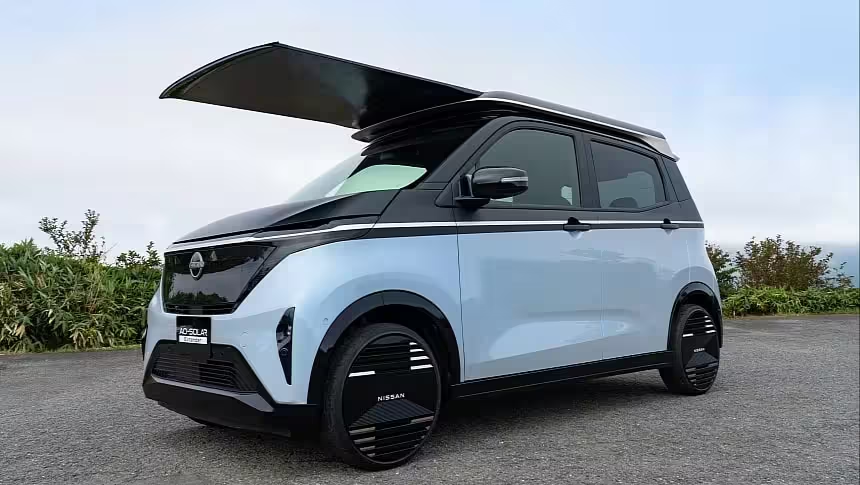
Nissan is taking a fresh stab at one of electric cars' longest-running annoyances: charging time. At the Japan Mobility Show 2025, the Japanese automaker will showcase the Ao-Solar Extender, an extendable roof-mounted solar system fitted to the best-selling Nissan Sakura kei EV. The idea is simple and pragmatic: harvest sunlight while driving and parked, supplementing grid charging and cutting the number of times owners need to plug in.
Why solar matters for city EVs
Range anxiety has largely been solved by expanding public charging networks, but charging time remains a pain point for many EV owners. Fast chargers shave minutes off charging sessions, yet even the quickest DC fills take considerably longer than petrol stops. For commuters driving short daily distances, solar power on the vehicle can meaningfully reduce dependence on public chargers and lower running costs without changing driving habits.
How the Ao-Solar Extender works
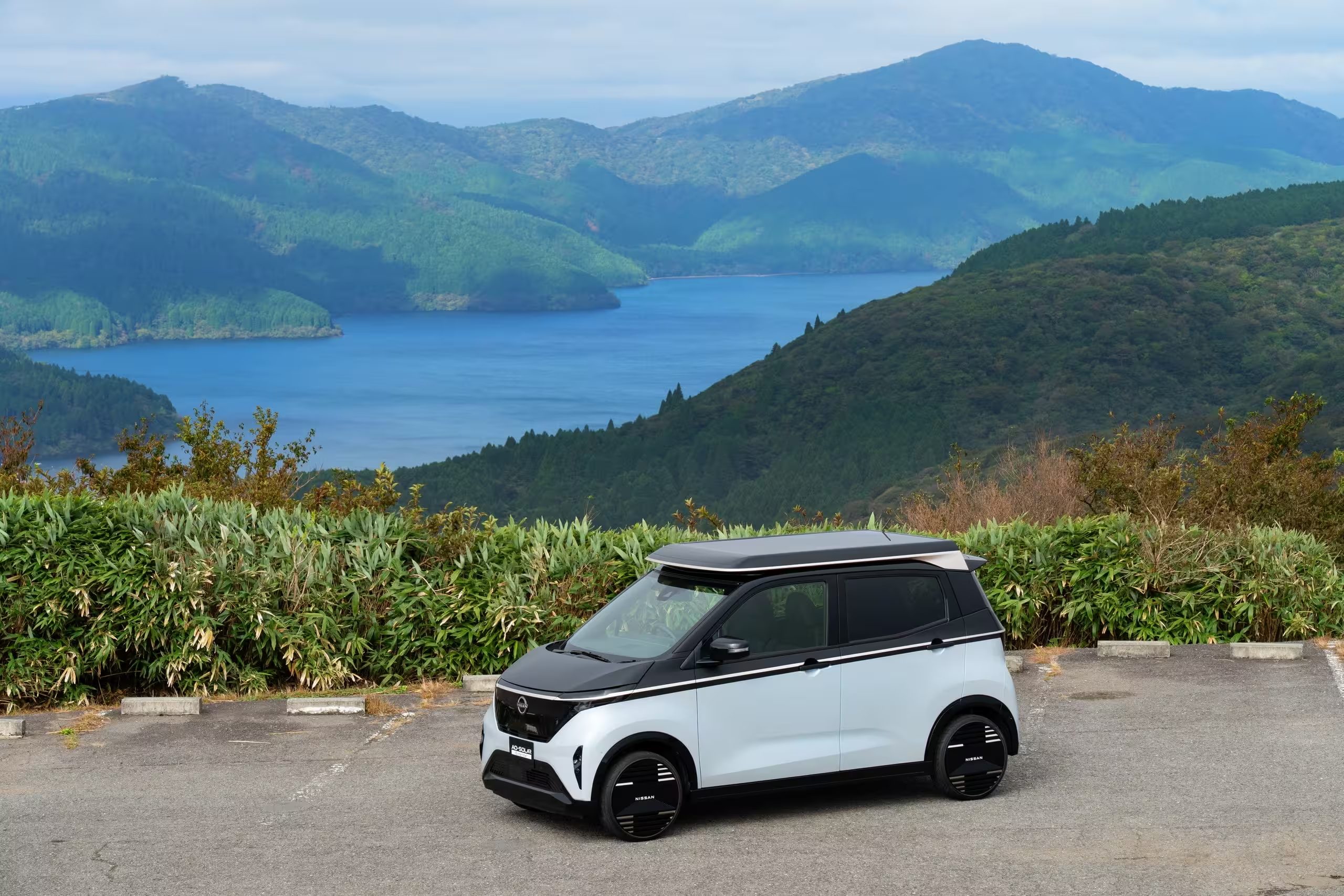
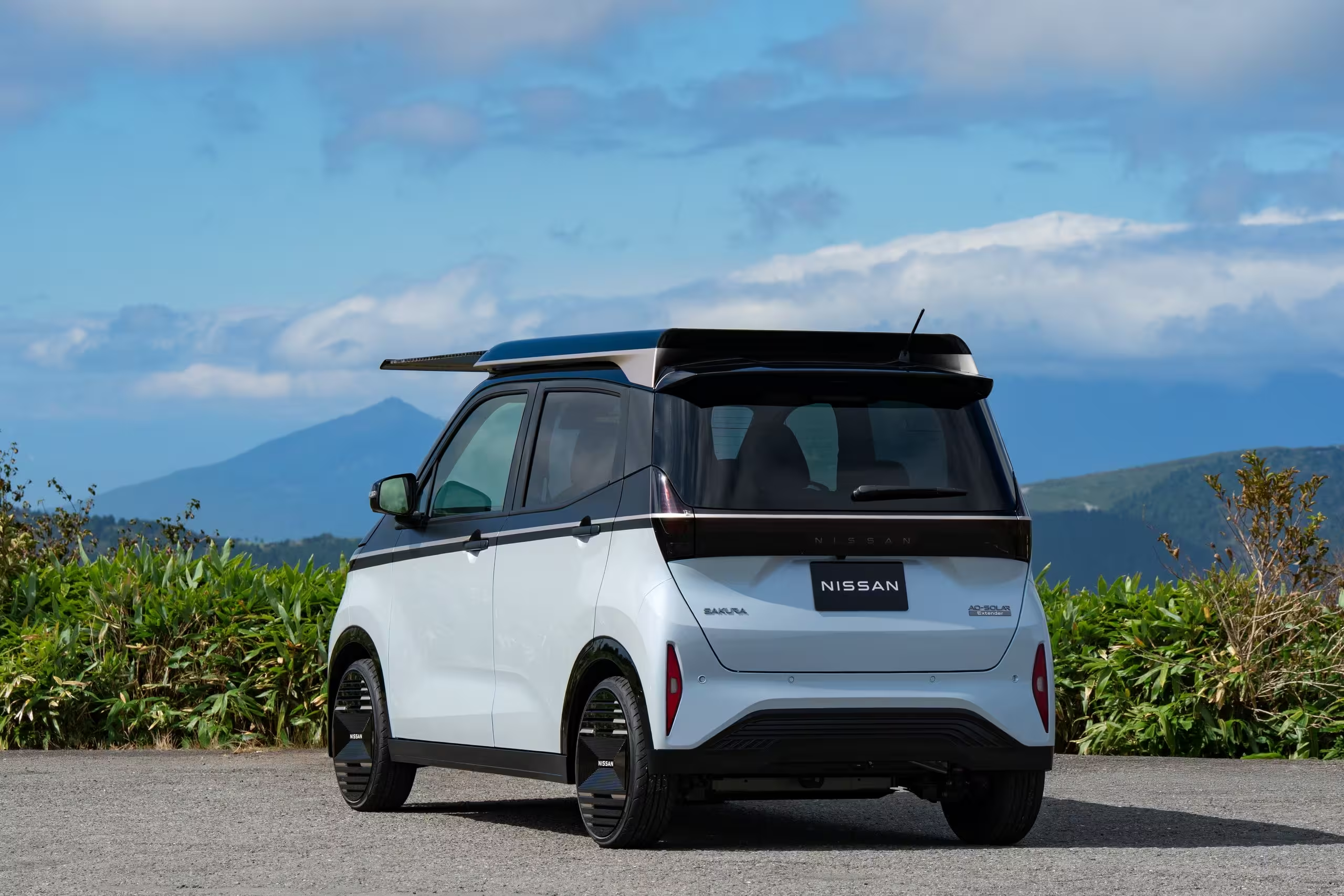
The system is intuitive. A fixed solar array runs the length of the Sakura's roof to capture sunlight on the move. When parked, an additional panel slides forward from beneath the main roof piece, increasing the collection area and boosting output. Nissan describes three operating modes tied to conditions:
- Sunny, calm conditions: the extended panel pushes total output to around 500 watts.
- Windy conditions: the additional panel retracts for safety and aerodynamics, delivering roughly 300 watts.
- Cloudy or rainy weather: generation falls to about 80 watts, but energy is still produced.
The only obvious limitation is night-time, when solar generation is zero. Still, the system is designed to be low-drag so as not to hurt the kei car's efficiency or handling.
Real-world impact: numbers that matter
Nissan engineers estimate the Ao-Solar Extender could add approximately 3,000 km (about 1,864 miles) of range per year. To put that into context, for the Sakura this equals nearly 17 full recharges or roughly three months of typical city driving in Japan. For urban owners who park in sunny spots during the day, that free, renewable energy could drastically reduce electricity bills and time spent at charging stations.
Sakura: a compact EV built for city life
The Sakura itself is a dedicated kei car EV introduced by Nissan three years ago and consistently the company's best-selling electric model in Japan. It pairs a front-mounted electric motor rated at about 63 hp with a roughly 20 kWh battery pack, and offers an EPA-equivalent range of about 180 km (112 miles) under typical conditions. Those modest specs are perfectly aligned with short commutes, errands, and tight urban parking that define the kei segment.
Performance and design implications
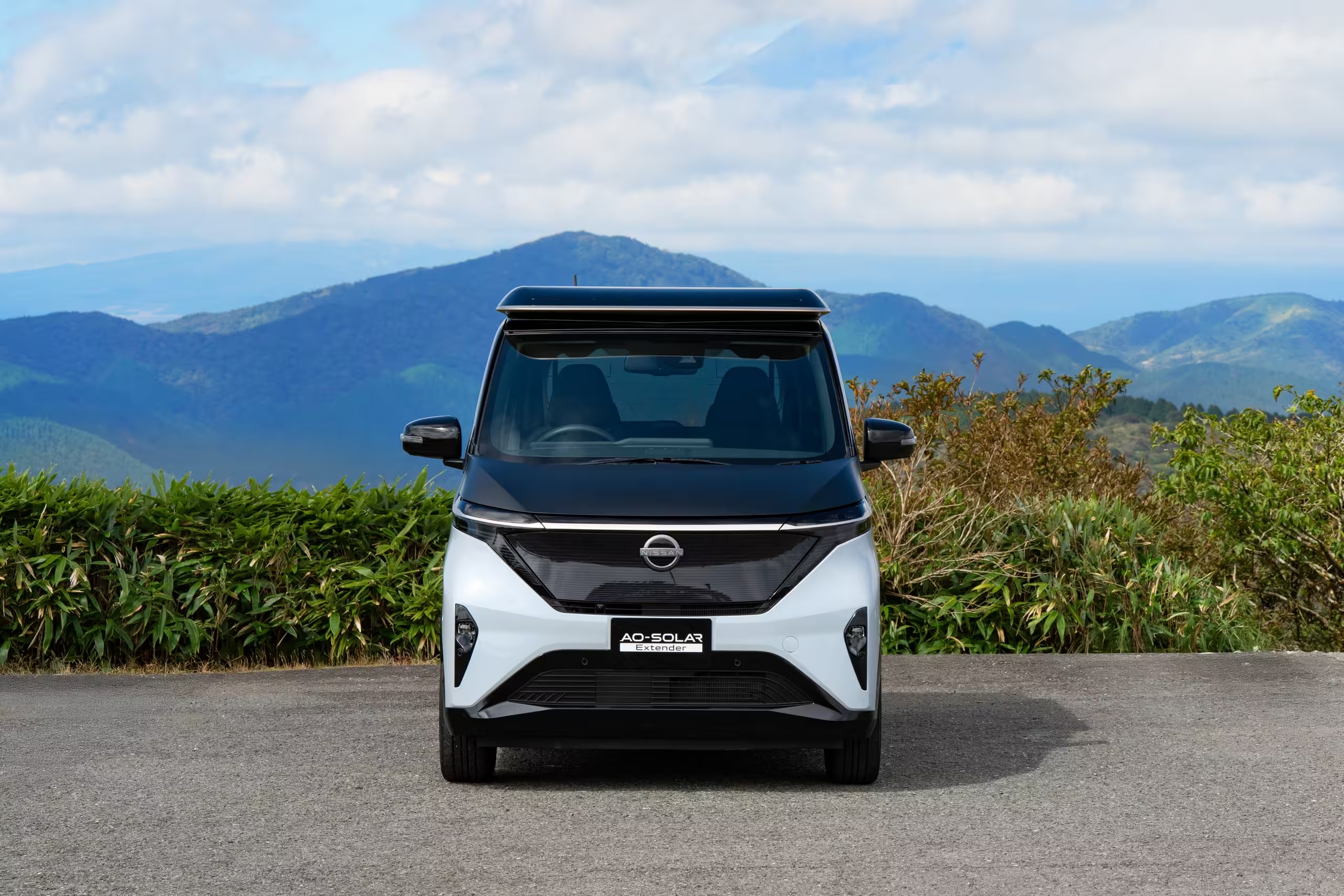
Nissan says the Ao-Solar Extender was engineered to preserve the Sakura's drivability and exterior styling. The fixed roof panel keeps a seamless look while the deployable front panel doubles as a windshield shade when extended, helping reduce cabin heat gain on sunny days. According to Nissan, the system introduces minimal aerodynamic penalty, so occupants should see no appreciable performance degradation.
How the system compares with other solar EV experiments
Solar roofs are not new; manufacturers and aftermarket firms have experimented with integrated panels for years. What makes Nissan's approach noteworthy is packaging and pragmatism. The Ao-Solar Extender favors a modest but useful power contribution rather than promising unrealistic ranges on sun alone. With peak output near 500 W, the system is intended as an auxiliary charger that supplements overnight charging and reduces daily grid draw for short-range users.
'The goal is to reduce dependence on the grid and enable effortless charging,' Nissan says, underscoring a move toward energy independence for urban EV owners.
Who benefits most?
Urban drivers with predictable, short commutes will see the greatest gains. Owners who park outdoors in sunny areas or those with limited access to home charging can benefit from daily top-ups. Fleets that run many short trips inside cities could also use solar-equipped microcars to cut operational costs and emissions.
- Key benefits: reduced charging frequency, lower running costs, supplemental range.
- Limitations: limited output in poor weather, no night-time generation, modest total power.
- Ideal users: urban commuters, fleets, drivers with daytime parking in sunlit areas.
Commercial rollout and outlook
Nissan plans to show the Sakura equipped with Ao-Solar Extender at the Tokyo event, and the company has confirmed intentions for a future commercial launch. Timing and pricing were not announced, but the concept signals automakers' willingness to pursue small, incremental gains in energy efficiency through vehicle-integrated renewables.
For the auto industry, this is part of a broader trend: pairing electrification with smarter energy capture and management. While rooftop solar on cars will never replace home or public chargers, it can make everyday EV ownership easier and greener. In crowded cities where every kWh and every minute count, systems like Ao-Solar Extender could prove a practical, popular addition to the micro-EV toolkit.
Expect Nissan to reveal more technical details and real-world test figures at the show. If the numbers hold up, we may soon see more kei cars and compact EVs sporting sliding solar roofs on public streets and in driveways worldwide.

“Cars are evolving faster than ever. I cover electric vehicles, smart mobility, and the future of transportation worldwide.”

Discussion
Leave a Comment