
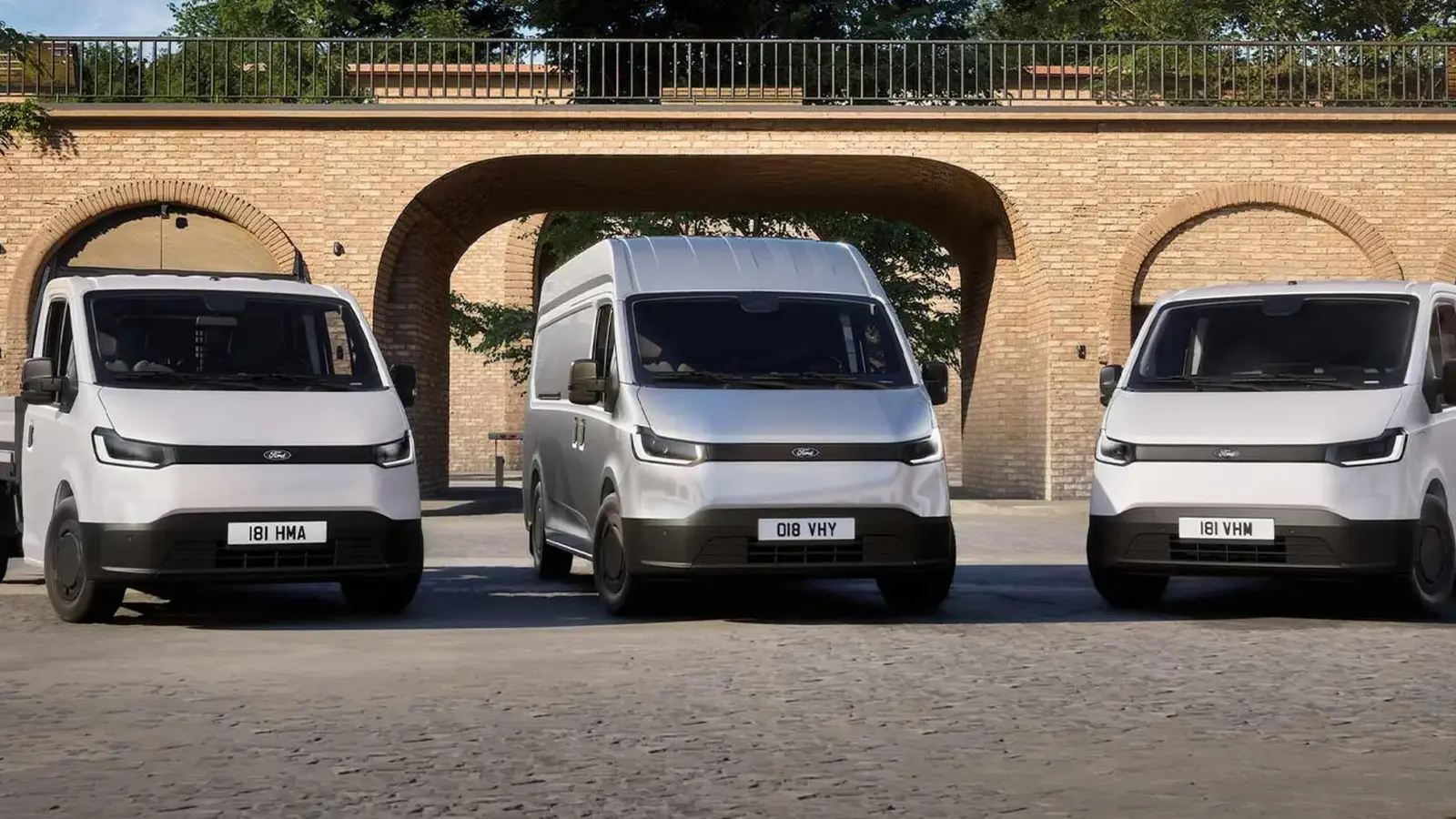
Look closely, and this new Ford van tells a different story than you might expect. The badge says Transit. The engineering roots? Not entirely American.
The freshly unveiled Transit City slips into Ford Pro’s already crowded electric van lineup with a quiet kind of confidence. It doesn’t shout about innovation or luxury. Instead, it leans hard into something far more practical: keeping costs down for businesses that count every mile, every charge, every repair bill.
Underneath its clean, almost utilitarian exterior sits a platform developed with Jiangling Motors Corporation (JMC) in China. That partnership shapes everything about this van—from how it drives to how it’s priced. Built in China and destined for Europe and the UK, the Transit City reflects a growing reality in the EV space: global collaboration is no longer optional.
Stripped Back, On Purpose
There’s no pretending here. Ford didn’t design this van to impress with customization or premium touches. There’s one trim. No options list. No endless configurator rabbit hole. What you see is what you get.
And honestly, that’s the point.
The design mirrors that philosophy. Smooth panels, a closed-off grille, LED lighting, and black wheels give it a modern edge, but unpainted bumpers and a no-nonsense stance make it clear this is a workhorse, not a showpiece.
Buyers can choose between three body styles: a standard panel van, a long-wheelbase high-roof version for bulkier loads, and a chassis cab ready for custom conversions. It’s flexible where it matters, rigid where it saves money.
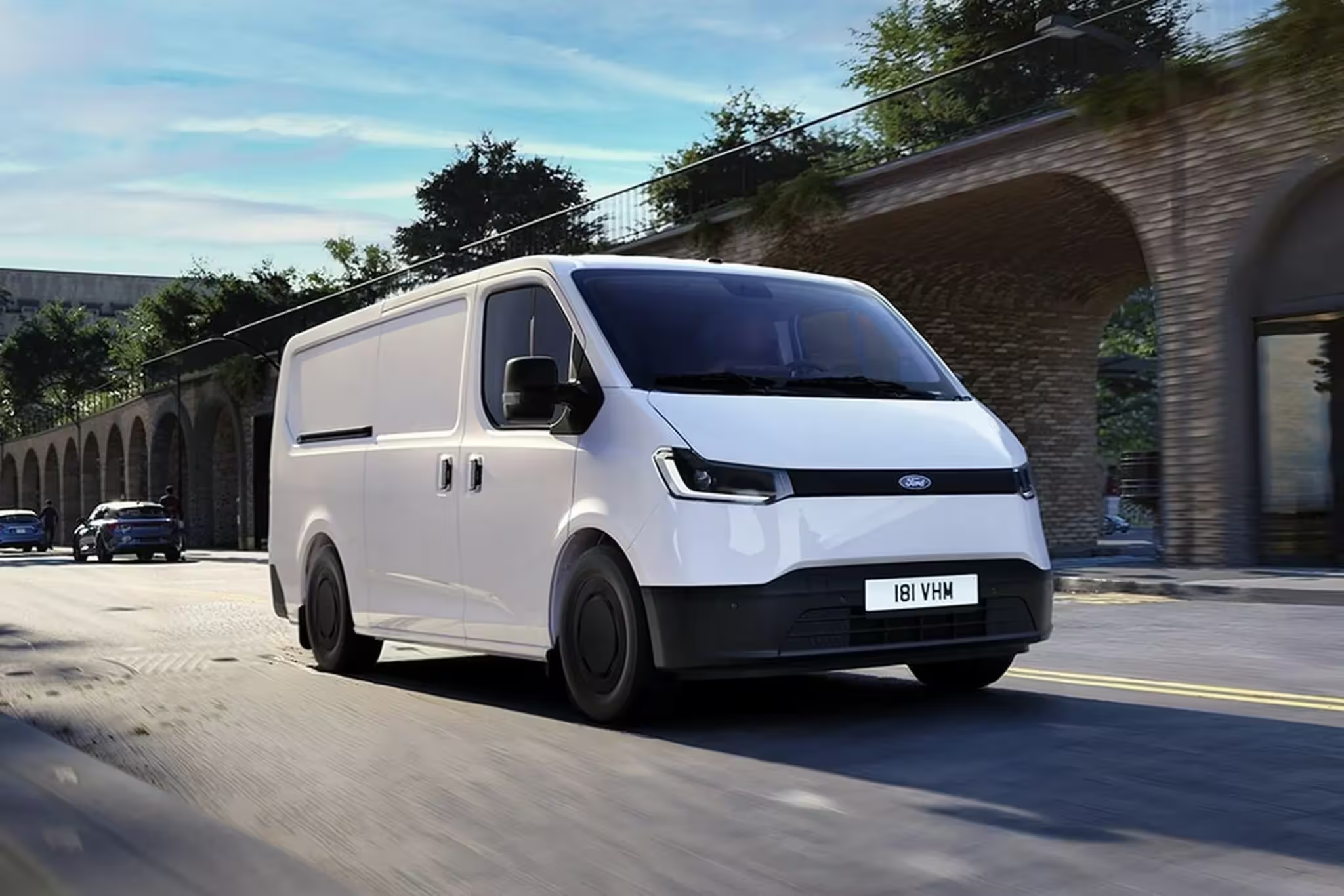
Payload capacity ranges from 1,085 kg to 1,530 kg, depending on configuration. At its most spacious, the cargo area stretches to 8.5 cubic meters, with over three meters of usable length. For urban logistics, that’s a sweet spot.
Inside, things feel more generous than you might expect from something so deliberately simplified. A 12.3-inch touchscreen running Ford’s SYNC 4 system anchors the dashboard, joined by a digital instrument cluster and plenty of practical storage. It’s functional, but not bare.
Even better, key driver aids come standard. Adaptive cruise control, lane-keeping assist, parking sensors at both ends, a rear camera, and even a heated driver’s seat are all included. No upsells. No fine print.
An Electric Setup Built for Routine, Not Range Anxiety
This isn’t a van chasing headline-grabbing range figures. It’s built around how commercial fleets actually operate.
A front-mounted electric motor delivers 148 horsepower, powered by a 56 kWh lithium iron phosphate battery. On paper, the WLTP range tops out at 254 km. That might raise eyebrows—until you consider Ford’s data showing most vans in this class rarely exceed 110 km per day.
In other words, the Transit City is engineered for real-world usage, not brochure bragging rights.
Charging is quick enough to keep things moving. With DC fast charging at up to 87 kW, you can add around 50 km of range in just 10 minutes, or go from 10 to 80 percent in roughly half an hour. A full AC charge at 11 kW takes about five hours—ideal for overnight depot charging.
And then there’s the maintenance angle. Ford claims up to 40% lower servicing costs compared to diesel equivalents. For fleet operators, that’s where the real savings stack up.
Pricing hasn’t been revealed yet, but Ford has already positioned the Transit City between the E-Transit Custom and the larger E-Transit. That puts it squarely in a competitive middle ground—likely appealing to businesses that need more space than a compact van, without stepping into full-size territory.
It may not be flashy. It may not even try to be. But the Transit City feels like a van designed with clear eyes and sharp priorities—and that, in today’s EV market, might be exactly what many operators are waiting for.

“I cover automotive innovation, electric vehicles, and the future of mobility — where technology meets sustainability.”

Discussion
Leave a Comment