
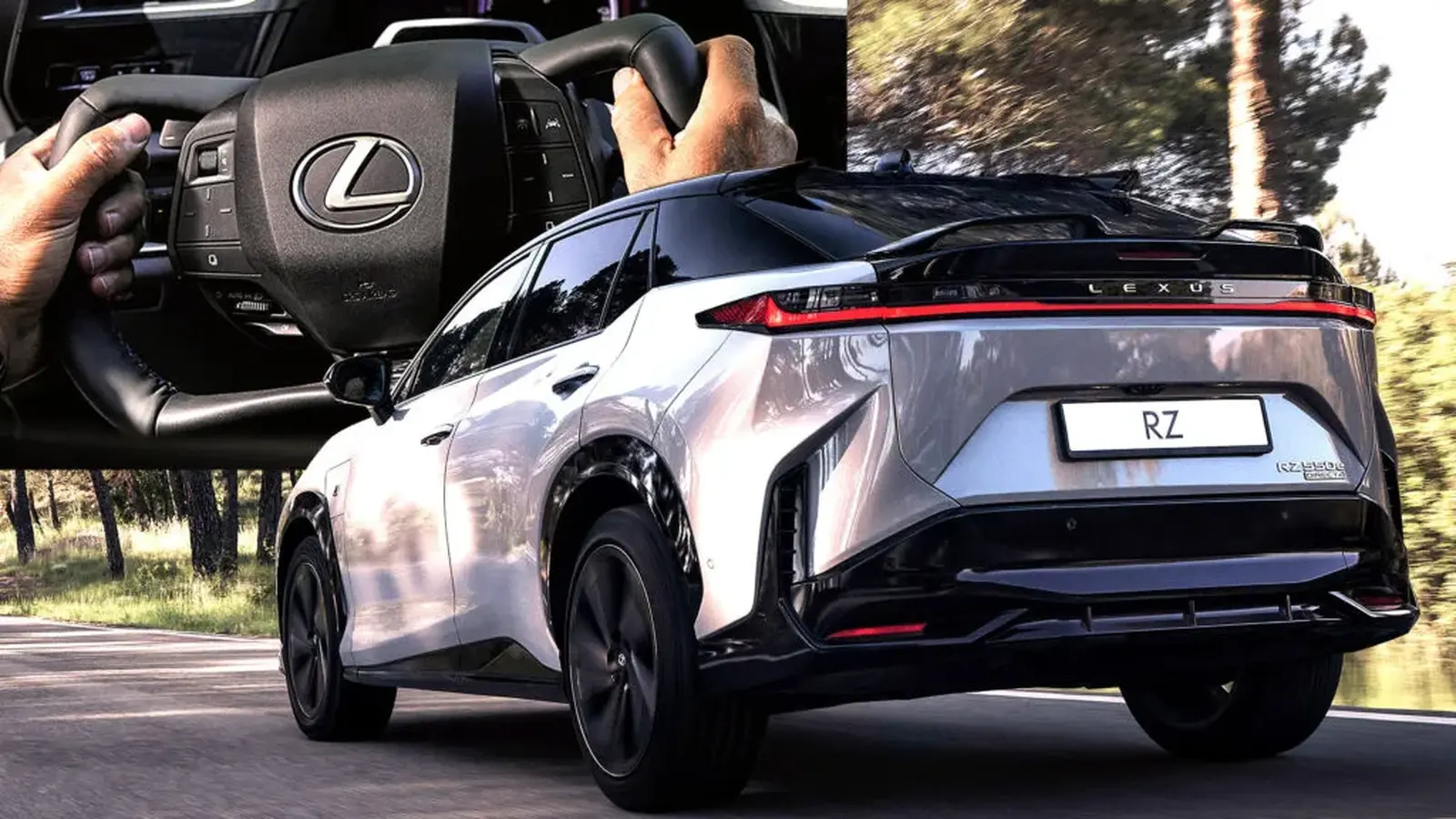
Electric cars are quick. Effortless. Almost too smooth. And that’s exactly the problem Lexus is trying to fix.
With the updated RZ F Sport landing in Europe, the brand is chasing something most EVs quietly abandoned: driver involvement. Not with more power, not with sharper styling—but with something far more unusual. Fake gears. Simulated shifts. And a steering system that feels like it came out of a concept car.
At first glance, it sounds like a gimmick. Spend a few minutes digging deeper, though, and it becomes clear Lexus is responding to a real complaint: EVs can feel… numb.
Engineering Emotion Back Into Silence
The headline feature is Lexus’ Interactive Manual Drive. It’s software doing a convincing impression of something mechanical. Pull the paddle shifters, and the system cycles through eight “gears.” A digital tachometer climbs, nudging you to shift at just the right moment. Miss it, and the illusion reacts accordingly.
But this isn’t just sound effects piped through speakers. The system calculates virtual torque based on speed and throttle input, then feeds it back into the drivetrain. You feel pauses between shifts. A hint of engine braking. Even subtle forward jolts that mimic traditional gear changes.

It’s theater—but carefully engineered theater. And Lexus isn’t alone. Hyundai’s Ioniq 5 N plays a similar trick. The difference here is tone: Lexus leans into refinement rather than aggression.
Drivers can also toggle between three synthetic sound profiles, each synced to the shifting behavior. It’s less about fooling you into thinking there’s an engine under the hood, and more about giving your right foot and hands something to do again.
The Steering Wheel That Isn’t a Wheel
Then there’s the other talking point. The yoke.
Lexus finally brings its long-delayed steer-by-wire system to Europe, ditching the mechanical link between steering wheel and front axle. Instead, inputs are translated digitally. The result is a sharp 200-degree lock-to-lock range—tight enough that you’ll never need to shuffle your hands, even in a U-turn.
It sounds radical because it is. Traditional feedback is replaced by programmed resistance, designed to feel natural but inherently artificial. Some drivers will love the precision. Others may miss the raw connection.

Interestingly, this futuristic setup won’t make it to North America—at least not yet. US buyers get the simulated shifting, but not the yoke.
Underneath all this experimentation sits familiar hardware. The range now includes a 77 kWh battery, pushing the front-wheel-drive RZ 350e to a WLTP range of up to 568 km. At the top end, the RZ 550e F Sport AWD delivers 402 hp and a 0–100 km/h sprint in 4.4 seconds—quick enough, even if it doesn’t lead the segment.
Charging and efficiency get attention too, with battery preconditioning and a 22 kW onboard AC charger now standard.
The real story, though, isn’t range or power—it’s Lexus asking a simple question: what if EVs felt less perfect, and more human?

“Cars are evolving faster than ever. I cover electric vehicles, smart mobility, and the future of transportation worldwide.”

Discussion
Leave a Comment