
3 Minutes
Smartphone cameras keep chasing one thing: control over light. Not more megapixels. Not bigger marketing numbers. Just better light. And with its latest reveal, SmartSens is clearly playing that game.
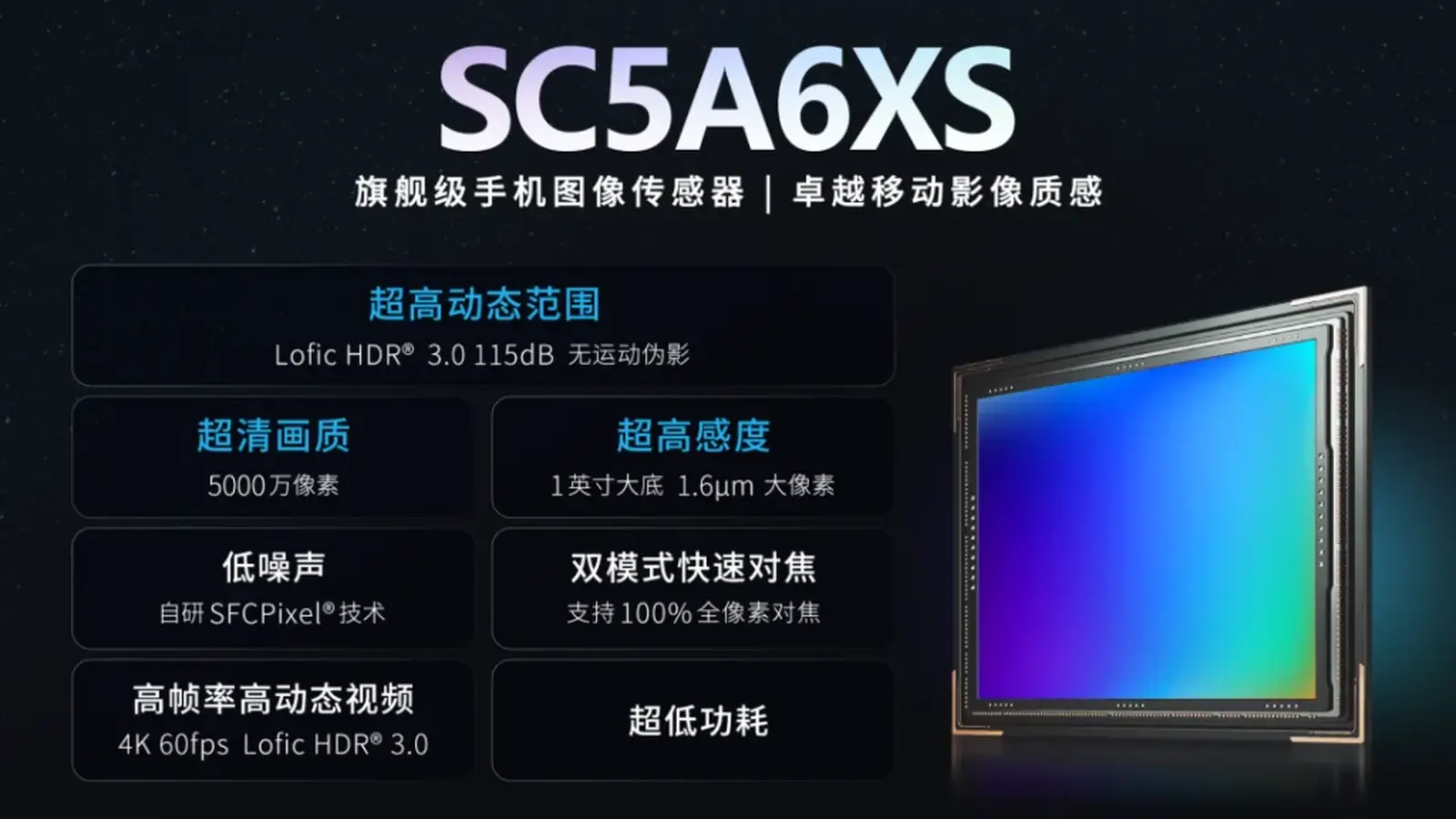
The new SC5A6XS sensor steps into the spotlight with a 1-inch format and 50 megapixels, but the real story isn’t resolution—it’s how this sensor handles extremes. Blinding highlights. Deep shadows. Fast motion. The messy, real-world stuff where mobile cameras usually stumble.
Built on a 22nm stacked architecture, the sensor introduces SmartSens’ updated Lofic HDR 3.0 system. On paper, it pushes dynamic range up to 115dB. In practice, that means fewer blown-out skies and more detail where darkness usually swallows everything whole.
When Light Gets Complicated
HDR here isn’t just a checkbox feature. The SC5A6XS uses multi-frame fusion within a single exposure—a subtle but meaningful shift. Instead of stitching together separate shots and risking ghosting, it captures layered data in one go. The result? Cleaner edges, fewer motion artifacts, and more reliable results when things—or people—won’t sit still.
Video gets a serious boost too. The sensor supports 4K at 120 frames per second, alongside 4K 60fps with HDR enabled. That combination is still rare in smartphones, and it signals a clear push toward creators who expect more than just passable footage from their phones.
Underneath, hardware choices back up the ambition. A 1.6μm pixel size paired with SFCPixel technology improves light sensitivity while keeping noise under control. Low-light scenes—traditionally a weak point—should come out sharper and less grainy, even without aggressive post-processing.
Focusing is handled by a hybrid system: full-pixel AllPix ADAF combined with partial phase detection. Translation? Faster, more consistent autofocus whether you’re shooting in bright daylight or dim interiors.
Then there’s efficiency. SmartSens claims roughly an 11% reduction in power consumption during HDR use. That may not sound dramatic, but over long video sessions, it could mean less heat and fewer performance drops—two things mobile videographers care about more than spec sheets suggest.
The SC5A6XS is already in the sampling phase, with mass production expected in the second quarter of 2026. If early expectations hold, it’s likely to land in upcoming flagship devices, with Huawei’s next-generation camera-focused lineup a strong candidate.
This isn’t about chasing numbers—it’s about making smartphone cameras behave more like real cameras.
And if SmartSens delivers on that promise, the gap between mobile and professional imaging just got a little narrower.



Leave a Comment