
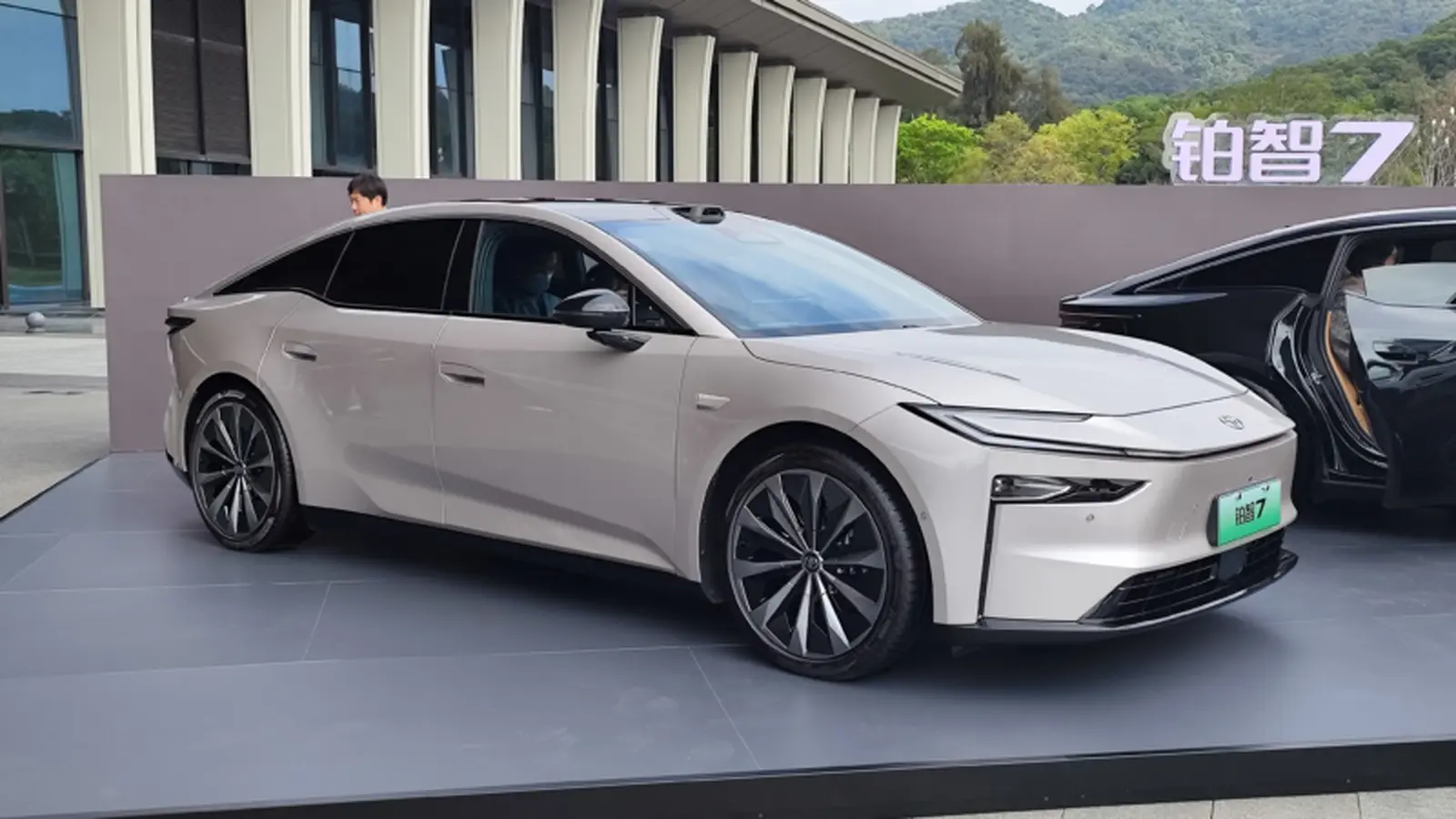
Three thousand orders. Sixty minutes. That’s how quickly Toyota’s newest electric sedan made its presence felt.
The bZ7 isn’t just another addition to Toyota’s EV lineup—it’s a statement of intent, shaped as much by Chinese tech muscle as by Japanese engineering discipline. And buyers noticed immediately.
Launched by GAC-Toyota, the full-size electric sedan arrives with a starting subsidized price of 147,800 yuan, climbing to 199,800 yuan across five variants. Within an hour of going live, more than 3,100 confirmed orders were locked in, according to company executives. Not reservations—actual commitments.
At first glance, the bZ7 leans into familiar territory. The front fascia carries a clean horizontal LED strip paired with sharp C-shaped daytime running lights. Look closer, though, and the proportions do the talking. A long 5,130 mm body, a stretched 3,020 mm wheelbase, and a coupe-like fastback roofline give it the kind of road presence typically reserved for more expensive electric sedans.
It’s big. And deliberately so.
Inside, comfort isn’t treated as a checkbox. Both rows come with heating, ventilation, and massage functions, while the front seats adopt a dual-motor “zero-gravity” design aimed at reducing fatigue on longer drives. It’s the kind of feature usually buried deep in luxury segments, now filtering into a more accessible price bracket.

Where Huawei quietly takes the spotlight
Step into the cabin and the tech narrative becomes impossible to ignore. The bZ7 runs Huawei’s HarmonyOS 5.0 cockpit, blending smartphone-like responsiveness with in-car functionality. Apple CarPlay is supported, but the real story is how deeply Huawei’s ecosystem is integrated.
The voice assistant, powered by Huawei’s MoLA model, understands commands across four zones, handles continuous conversation, and executes multiple instructions in one go. No awkward resets. No robotic pauses.
And then there’s Xiaomi—yes, Xiaomi. The car is designed to sync with the brand’s broader smart home ecosystem, with Mi Home integration and upcoming magnetic Bluetooth controls hinting at a future where your car feels less like a machine and more like an extension of your digital life.
Physical buttons haven’t disappeared either, which feels like a quiet nod to drivers who still prefer tactile control over everything being buried in a screen.
On the driver assistance front, the Momenta R6 system brings serious hardware. The LiDAR-equipped version packs 27 sensors, including cameras, radars, and ultrasonic units. It supports highway navigation on autopilot, urban-assisted driving, and automated parking—without subscription fees, a detail that may matter more than the tech itself.

Range, speed, and a focus on everyday usability
Underneath, Huawei’s Drive ONE electric system delivers 207 kW of peak power with a claimed efficiency of 97.5%. Two LFP battery options—71.35 kWh and 88.13 kWh—offer CLTC ranges of up to 710 km, depending on configuration.
Charging is where things get practical. With 3C fast charging, the bZ7 can add roughly 300 km of range in just 10 minutes under ideal conditions. There’s also a 6.6 kW vehicle-to-load function, turning the car into a mobile power source when needed.
Ride comfort hasn’t been overlooked either. A dual-chamber air suspension setup works alongside adaptive dampers and a pre-scanning system that reads the road ahead and adjusts in real time. It’s a subtle feature, but one that directly affects how the car feels every single day.
The bZ7 was first shown at the Shanghai Auto Show and only recently opened for pre-sales. Now, with immediate deliveries underway and strong early demand, it’s clear Toyota’s China strategy is evolving—less cautious, more collaborative, and far more tech-driven than before.
This isn’t just a new EV. It’s Toyota testing how far it can stretch into a software-defined future.

“I cover automotive innovation, electric vehicles, and the future of mobility — where technology meets sustainability.”

Discussion
Leave a Comment