
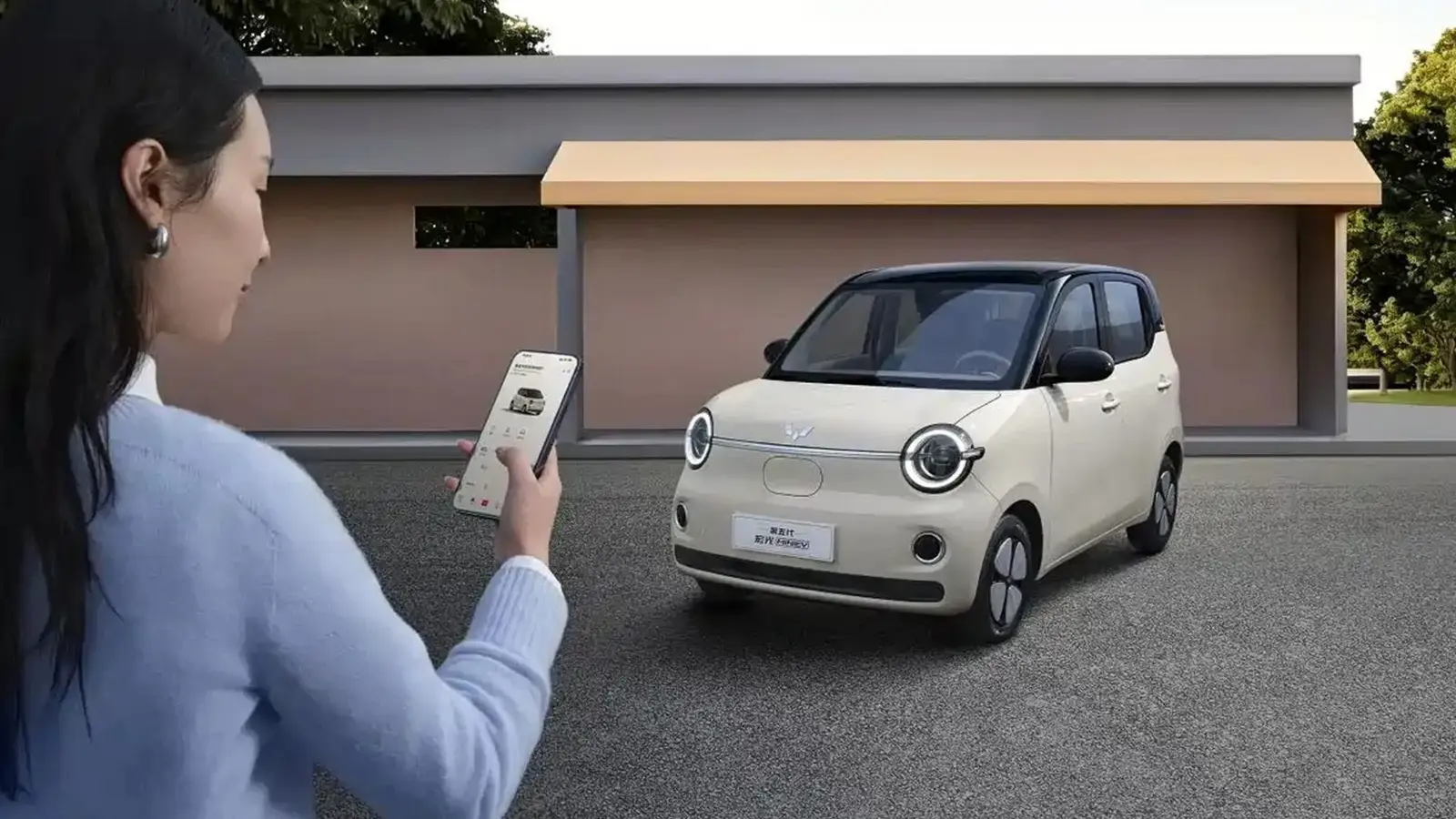
Six years. Five “generations.” That alone tells you everything about the speed China’s EV market is moving—and the Wuling Hongguang Mini EV is right at the center of it.
What’s labeled as a fifth generation isn’t a ground-up reinvention. It’s something more telling: a rapid-fire evolution. Panels reshaped, tech upgraded, details refined. Less a reset, more a relentless polish. And somehow, it keeps working.
Built under the SAIC-GM-Wuling joint venture, this tiny electric car has quietly become one of the biggest success stories in modern mobility. By the end of 2025, it had already cleared 1.9 million units sold. Not hype—volume.
The latest version leans into charm. There’s a softer, almost toy-like presence now, with a more upright front end and rounded LED lighting connected by a slim chrome strip. It’s playful without feeling cheap. Familiar shape, completely reworked skin.

Small footprint, smarter packaging
The new five-door layout—first seen late in the previous cycle—sticks around, and it changes how usable this car feels day to day. At 3,268 mm long, it’s barely larger than before, yet noticeably easier to live with. The two-door variant remains the ultra-compact choice, but this one hits a sweeter balance.
Inside, things feel less bare-bones than you’d expect at this price point. A 10.1-inch touchscreen now anchors the dashboard, while physical climate controls have been removed entirely. That might divide opinions, but the cleaner layout works visually. A column-mounted gear selector frees up space between the seats—small detail, big impact in a car this size.
Practicality hasn’t been ignored either. You get 170 liters of cargo space with the seats up, expanding to 838 liters when folded. Add in 20 storage compartments scattered around the cabin, and the Mini EV starts to feel cleverly engineered rather than simply small.

It’s not fast and that’s the point
Power comes from a rear-mounted electric motor producing 40 hp and 85 Nm of torque. Those numbers won’t impress anyone on paper, and they’re not meant to. This car lives in dense cities, not on open highways. Top speed sits at 101 km/h, perfectly adequate for its mission.
Range is where the real progress shows. Buyers can choose between a 16.2 kWh battery offering 205 km of CLTC range, or a larger 25.1 kWh pack pushing that figure to 301 km. For urban users, that’s the difference between frequent charging and near-weekly convenience.
Charging from 30% to 80% takes about 35 minutes. Not groundbreaking, but practical enough to keep things moving without much disruption.
Then there’s the price arguably the Mini EV’s strongest argument. In China, the five-door model starts at around $6,500 and climbs to just over $8,000. With incentives, it dips even lower. At that level, it doesn’t just compete with other EVs it undercuts much of the used car market.
This isn’t about performance or prestige. It’s about accessibility—and that’s exactly why it keeps winning.

“I cover automotive innovation, electric vehicles, and the future of mobility — where technology meets sustainability.”

Discussion
Leave a Comment