
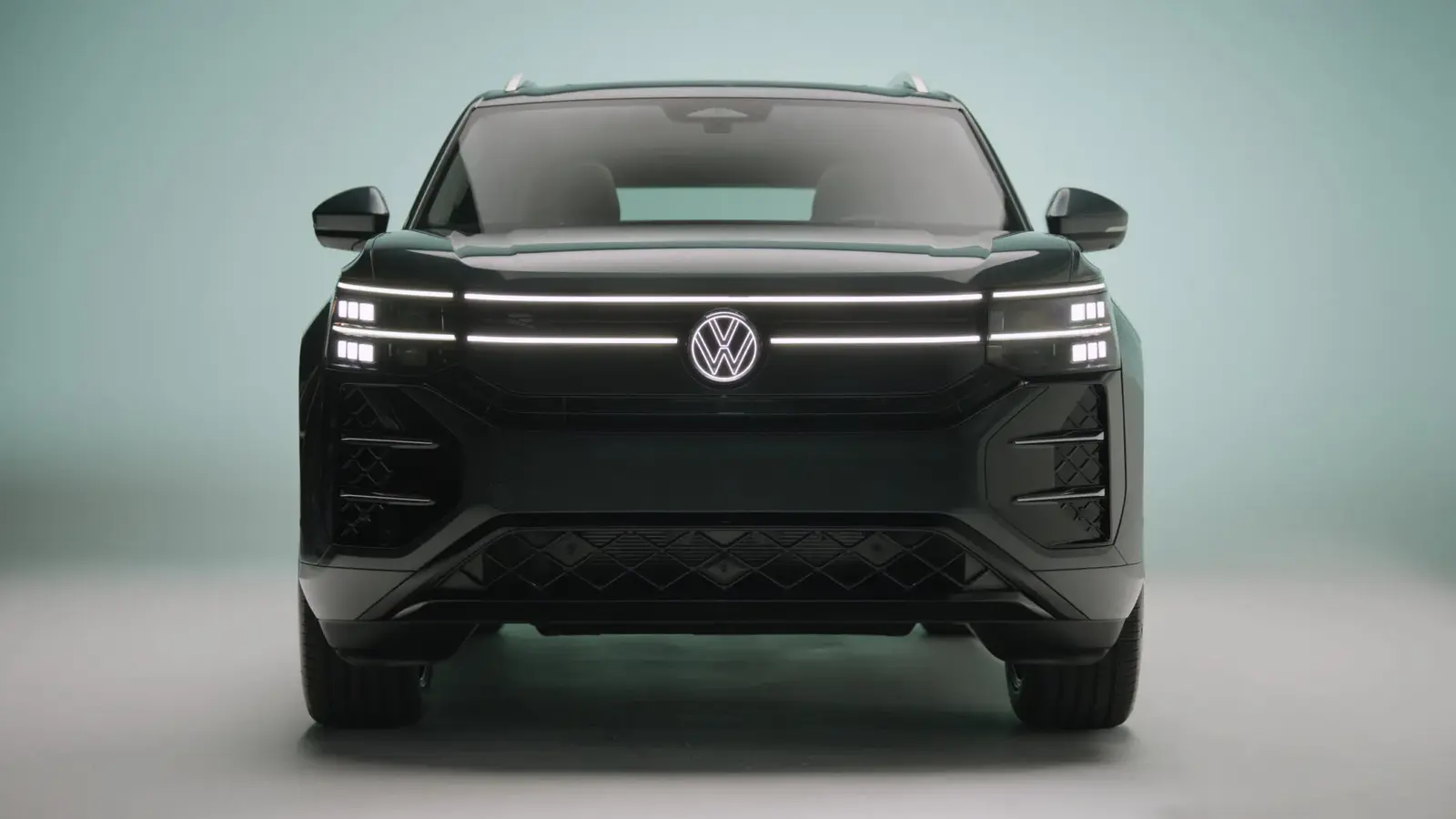
For years, the Volkswagen Atlas has been the SUV you recommended with a shrug. It did everything... fine. Space? Sure. Comfort? Decent. Personality? That was always the missing piece.
This time feels different.
Just ahead of its New York debut, Volkswagen has taken a harder swing at what a three-row family SUV should feel like. The 2027 Atlas doesn’t abandon its roots—it sharpens them. The proportions are familiar, but the details are not. New sheet metal, stacked lighting signatures, a wider grille, and more sculpted surfaces give it a presence the outgoing model never quite managed.

Even the small touches feel deliberate now. Illuminated VW badges, full-width lighting bars, and fresh paint options like Sacramento Green and Blackberry suggest a brand finally leaning into visual identity instead of playing it safe. Wheel sizes stretch from 18 to 21 inches, depending on trim, rounding out a more confident stance.
Where It Actually Matters: Inside
The real transformation happens the moment you step in.
The old Atlas interior wasn’t offensive—it was just forgettable. That changes here. Volkswagen has reworked the cabin with a clear goal: make it feel like somewhere you want to spend time, not just pass through.

Every version now gets real wood trim, not imitation. The dashboard is cleaner, more horizontal, and anchored by ambient lighting that finally adds some mood after dark. A column-mounted shifter clears out the center console, opening up usable space in a way families will actually notice.
And the equipment list? Surprisingly generous. Even base models come with a power liftgate, rear sunshades, dual wireless charging pads, a 9-speaker audio system, and seven USB-C ports scattered throughout the cabin.
Move up the range and things get properly upscale—Nappa leather, ventilated second-row seats (a rare treat), a 14-speaker Harman Kardon system, and massaging front seats. It’s the kind of upgrade that doesn’t just look better on paper—it changes how the car feels day to day.
Tech That Tries to Think Ahead
Volkswagen is clearly betting that technology will carry the Atlas further this time.
A 15-inch infotainment display dominates most trims, while even the base version gets a sizable 12.9-inch screen. Every model includes a 10.25-inch digital instrument cluster, fully configurable depending on whether you prefer maps, data, or a cleaner look.

On the safety side, the updated IQ.DRIVE system gets smarter—and a bit more reassuring. It can now handle lane changes when prompted and, more importantly, will guide the vehicle to the side of the road if the driver becomes unresponsive. That’s a meaningful step beyond systems that simply stop in-lane.
Parking tech also gets an upgrade. Park Assist Plus doesn’t just steer into spaces—it can measure whether the SUV will fit, correct a botched attempt, and even pull itself out of a tight parallel spot when it’s time to leave.
More Power… Sort Of
Under the hood sits an updated version of Volkswagen’s familiar turbocharged 2.0-liter engine, now part of the Evo5 family. On paper, it produces 282 horsepower, making it the most powerful Atlas yet.
But there’s a twist. Torque drops slightly to 258 lb-ft, down from the previous model’s 273 lb-ft.
In real-world driving, the difference likely won’t define the experience. The older engine’s extra torque probably made it feel a bit stronger off the line or when loaded with passengers. The new setup shifts its strength higher in the rev range, which may reward drivers who push it a little harder.
The bigger story is efficiency. Volkswagen expects improved fuel economy alongside the modest power bump—a trade-off most buyers in this segment will gladly accept.
That said, expectations should stay grounded. This is still a nearly 4,700-pound SUV before passengers and cargo enter the equation. It’s not built to thrill—it’s built to carry, and now, at least, it does so with more refinement.
There’s also a hint of what’s next. Volkswagen has confirmed a hybrid version is in development. No timeline yet, but if executed well, it could be the version that finally gives the Atlas both the power and efficiency it’s been chasing.
This isn’t a radical reinvention—but it might be exactly the correction the Atlas needed.

“Cars are evolving faster than ever. I cover electric vehicles, smart mobility, and the future of transportation worldwide.”

Discussion
Leave a Comment