
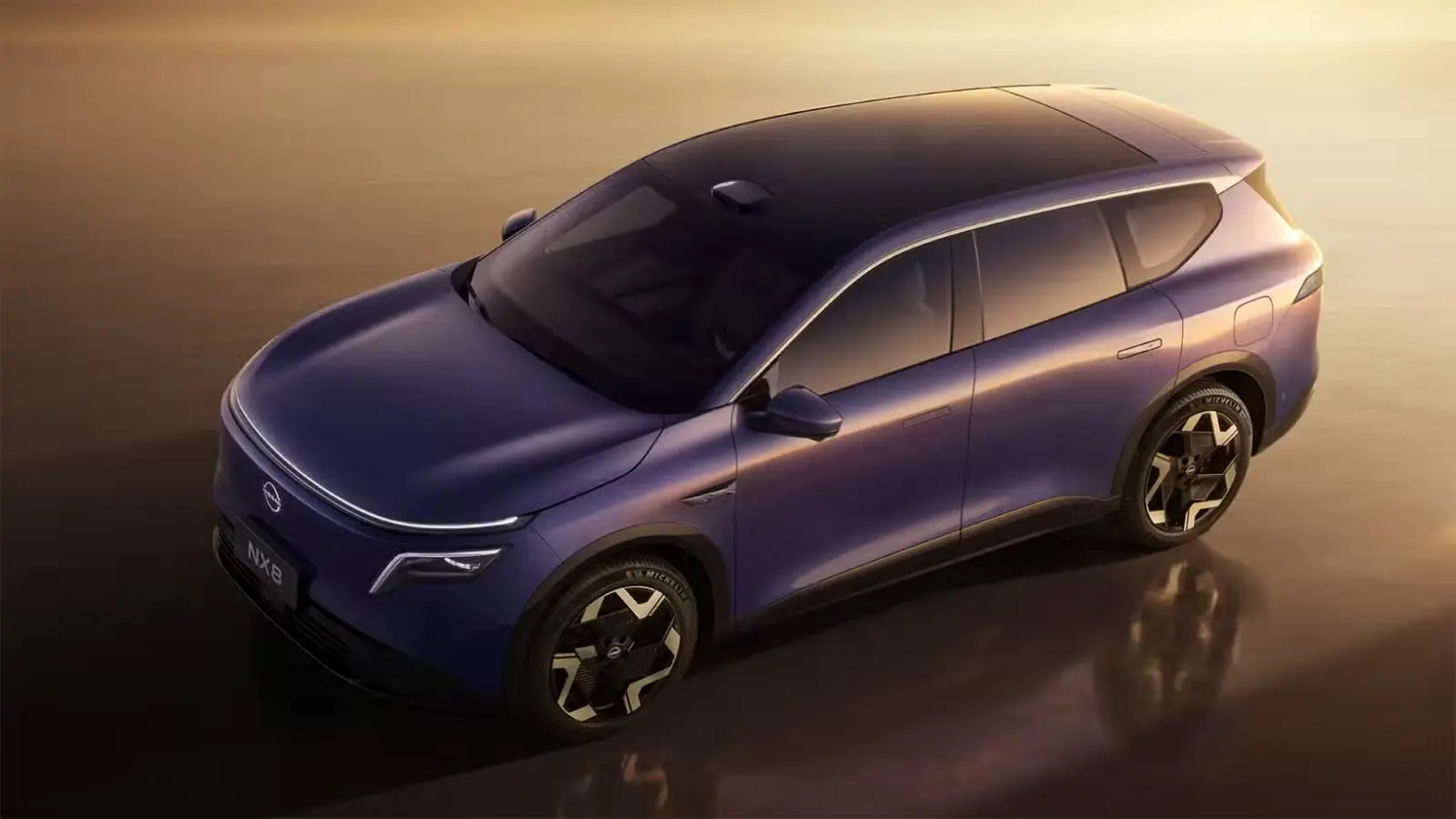
Dongfeng Nissan has thrown down a fresh marker in China’s crowded EV race. The new NX8, a mid- to large-size SUV, is the first model from the joint venture to offer an extended-range electric vehicle option, a sign that Nissan is no longer content to watch the market from the sidelines.
The SUV officially went on sale on Wednesday, arriving with both battery electric vehicle and EREV powertrains. Pricing is pitched to move fast. The official range starts at 159,900 yuan, or about $23,380, and climbs to 209,900 yuan, while a limited-time launch price cuts entry to 149,900 yuan. That kind of positioning clearly struck a nerve: Dongfeng Nissan said the NX8 collected 8,423 orders in just 30 minutes after launch.

Deliveries of the BEV versions began immediately on April 8, while the EREV variants are scheduled to reach customers in mid to late May. For buyers, the appeal is not just in the price. The NX8 measures 4,870 mm long, 1,920 mm wide and 1,680 mm high, with a wheelbase of 2,917 mm, putting it squarely in family SUV territory with a substantial footprint.
Higher-spec versions come fitted with CATL lithium iron phosphate batteries, supporting up to 5C ultra-fast charging and a CLTC range of up to 630 kilometers. That combination gives the NX8 the kind of everyday flexibility Chinese buyers increasingly expect: long legs, quick top-ups and less range anxiety. On the tech side, Nissan has equipped the SUV with Qualcomm’s 8295P chip and an ADAS system from Momenta, the Chinese autonomous driving specialist. The setup supports both urban and highway navigation assistance, a feature set that is now becoming a key battleground in China’s smart-car market.

The NX8 is the third N-series model from Dongfeng Nissan for China, following the N7 pure electric sedan and the N6 plug-in hybrid sedan. The N7 arrived last year with a starting price of 119,900 yuan, while the N6 opened at a limited-time price of 91,900 yuan. Seen together, the lineup tells a very clear story: the joint venture is leaning hard into affordability, speed and product breadth.
That strategy matters. Legacy joint venture brands have spent the past few years losing ground to fast-moving local rivals, especially in the electric segment. The NX8 shows how aggressively they are now fighting back, using rapid launches and sharper pricing to win attention in a market where momentum can disappear overnight.

“I cover automotive innovation, electric vehicles, and the future of mobility — where technology meets sustainability.”

Discussion
Leave a Comment