
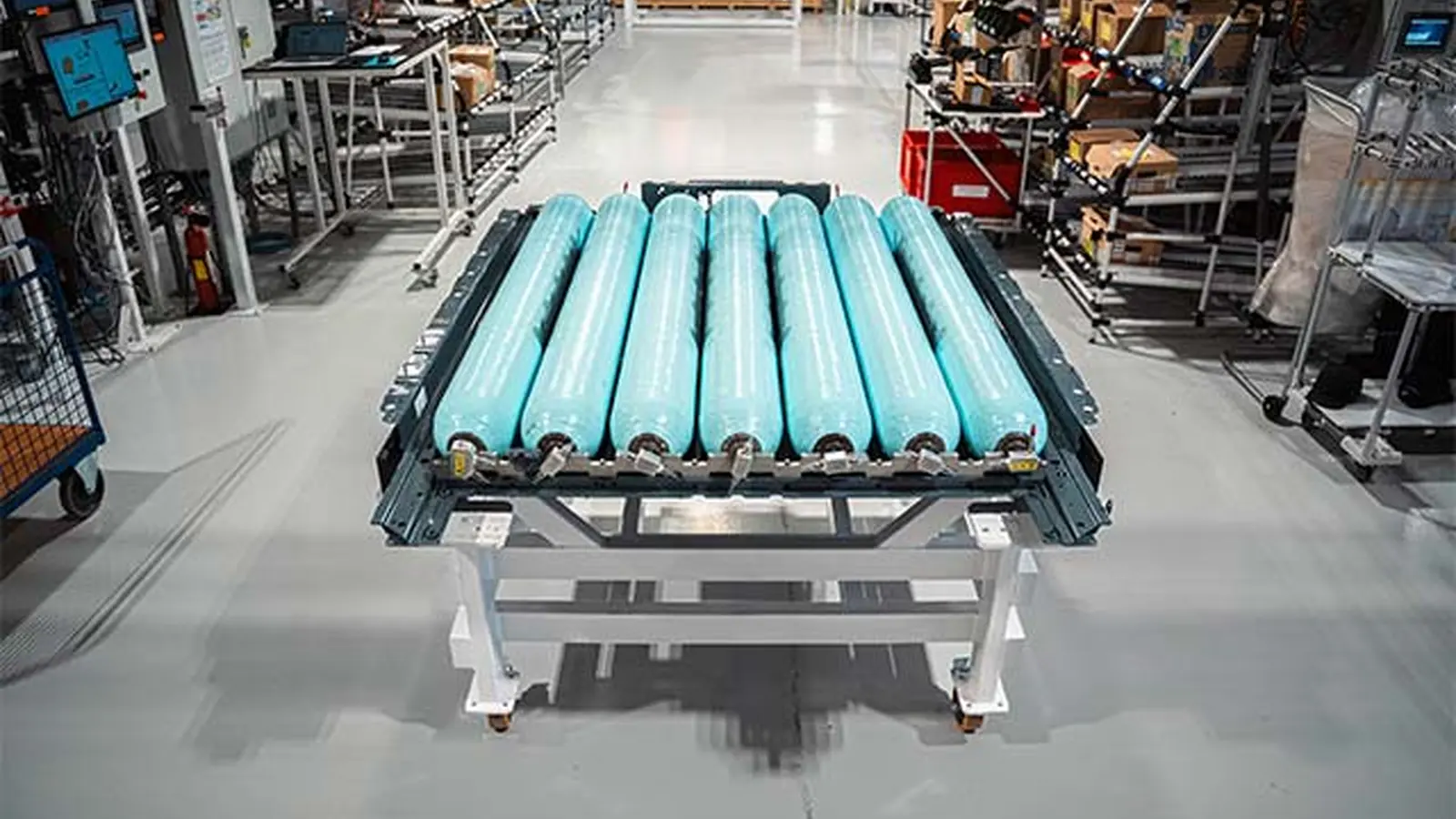
BMW’s hydrogen plans just took a sharp turn forward. The BMW iX5 Hydrogen is now testing a new flat storage system that could push its driving range up to 750 km, or about 385 miles, while making far better use of space inside the vehicle.
The idea sounds simple. The execution is anything but. Instead of relying on bulky cylindrical tanks, BMW has developed a compact layout built around seven carbon-fibre reinforced high-pressure tanks. These are arranged in a flat, modular structure and linked together in parallel, all sealed within a single metal frame and managed by a central valve.
That packaging trick matters. A lot. It allows the system to store at least seven kilograms of hydrogen without eating into cabin or cargo space, which has long been one of the biggest obstacles for alternative powertrains. For a fuel cell SUV, that is a serious advantage.
The tanks operate at 700 bar and are integrated into the vehicle structure for added protection. BMW says the design has already led to multiple patent filings, a sign that this is more than a clever prototype detail. It is a technical platform the company clearly takes seriously.
Just as important, the new flat storage setup works with BMW’s Gen6 high-voltage battery. That compatibility gives engineers more freedom to package the hydrogen powertrain without forcing compromises elsewhere in the car. In other words, the iX5 Hydrogen can stay practical as well as advanced.
And BMW still wants it to feel like a BMW. The iX5 Hydrogen is paired with the brand’s latest fuel cell technology, its high-voltage battery, and new drivetrain software such as Heart of Joy and BMW Dynamic Performance Control. The aim is not just efficiency, but the kind of crisp, composed driving feel that defines the brand.
That is the bigger story here. Hydrogen often gets framed as a fringe solution, but BMW continues to treat it as one part of a multi-energy future. The company’s production strategy reflects that thinking. The same X5 assembly lines can handle battery-electric, plug-in hybrid, combustion, and hydrogen versions, which makes scaling easier and keeps manufacturing complexity under control.
Standardized component designs also help reduce costs, and BMW sees that as a key step toward wider deployment. A broader rollout is being targeted for 2028, giving the brand time to refine the system and expand its hydrogen roadmap.
Hydrogen still has its skeptics, of course. But fast refuelling, long range, and reduced dependence on charging infrastructure keep it relevant, especially for markets and use cases where battery-electric vehicles are not the perfect answer.
With the new Hydrogen Flat Storage system, BMW has shown that fuel cell vehicles do not have to be awkwardly packaged or short on range. The iX5 Hydrogen now looks more like a serious contender in the zero-emission transition, not just an experimental side project.

“Cars are evolving faster than ever. I cover electric vehicles, smart mobility, and the future of transportation worldwide.”

Discussion
Leave a Comment