
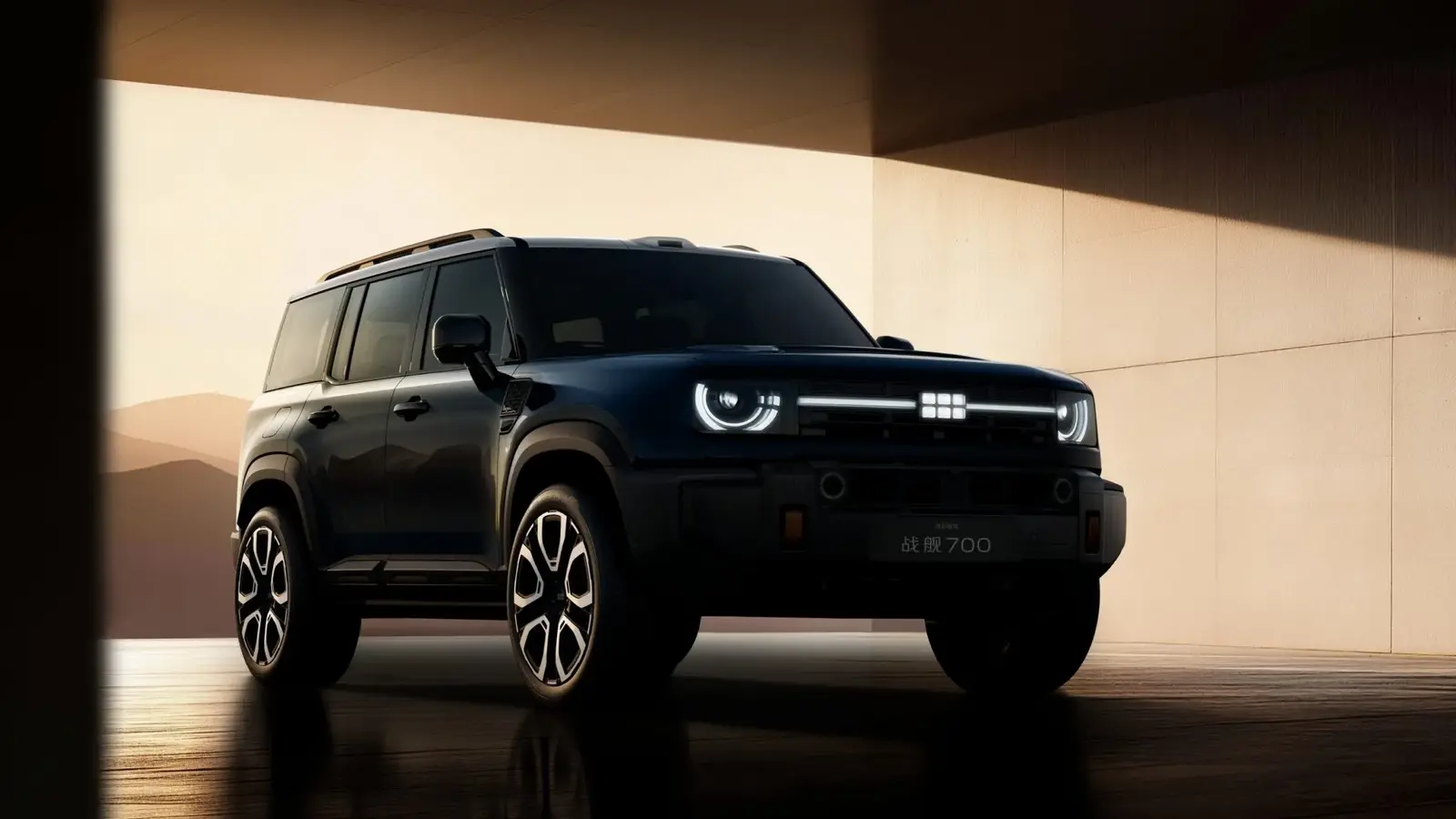
Geely is not backing away from methanol. If anything, it is leaning harder into the fuel just as the industry’s obsession with lithium battery EVs reaches a new peak.
At the 2026 China Smart Electric Vehicle Development Forum, Geely chairman Li Shufu made the company’s position plain. In his view, lithium battery-electric vehicles can end up weighing roughly twice as much as comparable methanol-powered models, a difference that matters far more than most people think when the conversation shifts from private cars to freight, logistics, and heavy-duty transport.
Why Geely says methanol still has room to grow
Li pointed to a series of recent Chinese policy moves that, in Geely’s reading, open the door wider for alternative fuels. A July 2024 guideline on accelerating a comprehensive green economic transition named charging, battery swapping, hydrogen, and methanol infrastructure as part of the broader shift. Then, in October 2024, six government departments jointly encouraged the development of integrated renewable energy bases that combine wind, solar, hydrogen, ammonia, and methanol.
For Li, that is not background noise. It is a signal. He described the policies as the beginning of large-scale domestic substitution in China’s energy system, with methanol positioned as one of the serious contenders rather than a fringe experiment.
The argument Geely keeps returning to is simple enough. Energy density. Li said methanol’s energy density is more than ten times higher than that of lithium-ion batteries, which, in his telling, allows methanol-fueled vehicles to deliver similar transport capacity without carrying the same weight penalty. That matters. A lot. Especially when the vehicle is hauling goods, not just commuters.
He also argued that heavier battery EVs consume more energy simply because they are heavier, a problem that becomes more obvious in commercial applications where payload, range, and operating cost are all under pressure. Battery electric vehicles have already won big in China, he acknowledged, but weight still leaves the door open for alternatives.
Geely’s interest in methanol is hardly new. The company has been working on methanol vehicle technology for more than two decades, long before it became fashionable to talk about fuel diversity and multi-path energy strategies.
China’s first official methanol vehicle pilot program began in 2012 under the Ministry of Industry and Information Technology, followed by a broader national evaluation and expansion phase. Later, in 2019, eight central government bodies jointly issued guidance to promote methanol-fueled vehicles in regions where the fuel makes practical sense. According to Geely’s forum presentation, the idea has since spread across 39 cities in 20 provincial-level regions, backed by more than 80 policy measures.
That kind of policy depth helps explain why Geely has kept pushing. Methanol is no longer being treated as a science project. It is being tested in the real world.
One sign of that is the Galaxy Starshine 6 sedan. A recent filing revealed a methanol plug-in hybrid version powered by a 1.5-litre engine rated at 93 kW. It is a modest figure on paper, but the bigger point is strategic: Geely is folding methanol into mainstream passenger-car platforms instead of keeping it locked in demonstration fleets.
And then there is motorsport. Because if a powertrain can survive the pressure cooker of racing, it earns a kind of credibility that brochures never deliver. Geely previously launched a methanol motorsport program after winter testing, using an engine described as fully compatible with M100 methanol fuel. The goal was not just speed, but proof under harsh conditions.
For Li, though, methanol’s strongest case may still be in the vehicles most people never see up close. Trucks. Buses. Heavy-duty fleets. The places where every kilogram counts and the total cost of ownership is watched with almost painful attention.
He framed methanol vehicles as a practical answer for those segments, particularly when the fuel is produced from renewable sources and plugged into a broader low-carbon supply chain. In that setup, the benefits are not just technical. They are economic. They are operational. They are structural.
Geely also used the forum to update its export ambitions. Yang Xueliang, senior vice president of Geely Holding Group, said the company exported more than 200,000 vehicles in the first quarter of 2026, up 126 percent year on year, with new energy vehicles taking a significant share. He added that the company has raised its full-year export target from 640,000 units to 750,000 units.
That is a big number. But the bigger story may be Geely’s refusal to treat battery EVs as the only road forward. While much of the industry races toward a single dominant solution, Geely is still arguing for a wider energy map. Methanol, in its view, deserves a seat at the table.

“I cover automotive innovation, electric vehicles, and the future of mobility — where technology meets sustainability.”

Discussion
Leave a Comment