
Porsche entered 2026 with more problems than polish. The first quarter was supposed to be a routine step forward, but instead it brought a sobering reminder that even Stuttgart’s most disciplined brand can stumble when the market turns and the product plan runs thin.
Worldwide deliveries fell to 60,991 vehicles, a 15 percent drop from the same period last year. The pain is coming from several directions at once: softer demand in China, a tougher climate in North America, and an electric vehicle strategy that no longer looks quite as certain as it once did.
One of the biggest pressure points is surprisingly basic. Porsche has allowed a gap to open at the lower end of its lineup. The Boxster and Cayman are out of production, while their electric successors have been delayed. The new platform meant to underpin those models, and even some future Audi products, has also slipped. That leaves Porsche without a gas or electric answer in a segment that still matters. For a brand built on timing and precision, that is a costly miss.

A gap that hurts more than it should
Those missing entry-level sports cars are not just a headline problem. They represent lost volume, lost showroom traffic and, perhaps most importantly, lost momentum. Porsche has spent years positioning itself as a brand that can stretch from aspirational to attainable, and that ladder now has a missing rung.
The same sense of imbalance runs through its EV push. Under former chief executive Oliver Blume, Porsche leaned hard into electrification, but the transition did not arrive with the certainty the company expected. Sales chief Matthias Becker insists overall deliveries are tracking expectations, yet the upcoming all-electric Cayenne is clearly being treated as a make-or-break product. It is due to start arriving this summer, and Porsche will be hoping it brings some lift with it.
China remains the sharpest warning sign. Deliveries there dropped 21 percent to 7,519 vehicles, a steep fall in a market where luxury buyers are increasingly selective and local brands are winning on price and technology. Porsche has resisted deep discounting, a decision that protects brand image but makes the battle even harder in a market where rivals are cutting prices aggressively.
The Taycan shows just how quickly the picture has changed. Porsche’s electric sports sedan has all but disappeared in China, with fewer than 50 registrations across January and February combined. That is not a stumble. That is a silence.
North America is holding up better, but it is hardly carefree. Porsche delivered 18,344 vehicles there in the first quarter, down 11 percent. On top of weaker demand, the company is facing margin pressure from high US tariffs, since every model sold in the market is imported from Europe. Without local production, those costs do not disappear. They simply land on the balance sheet.
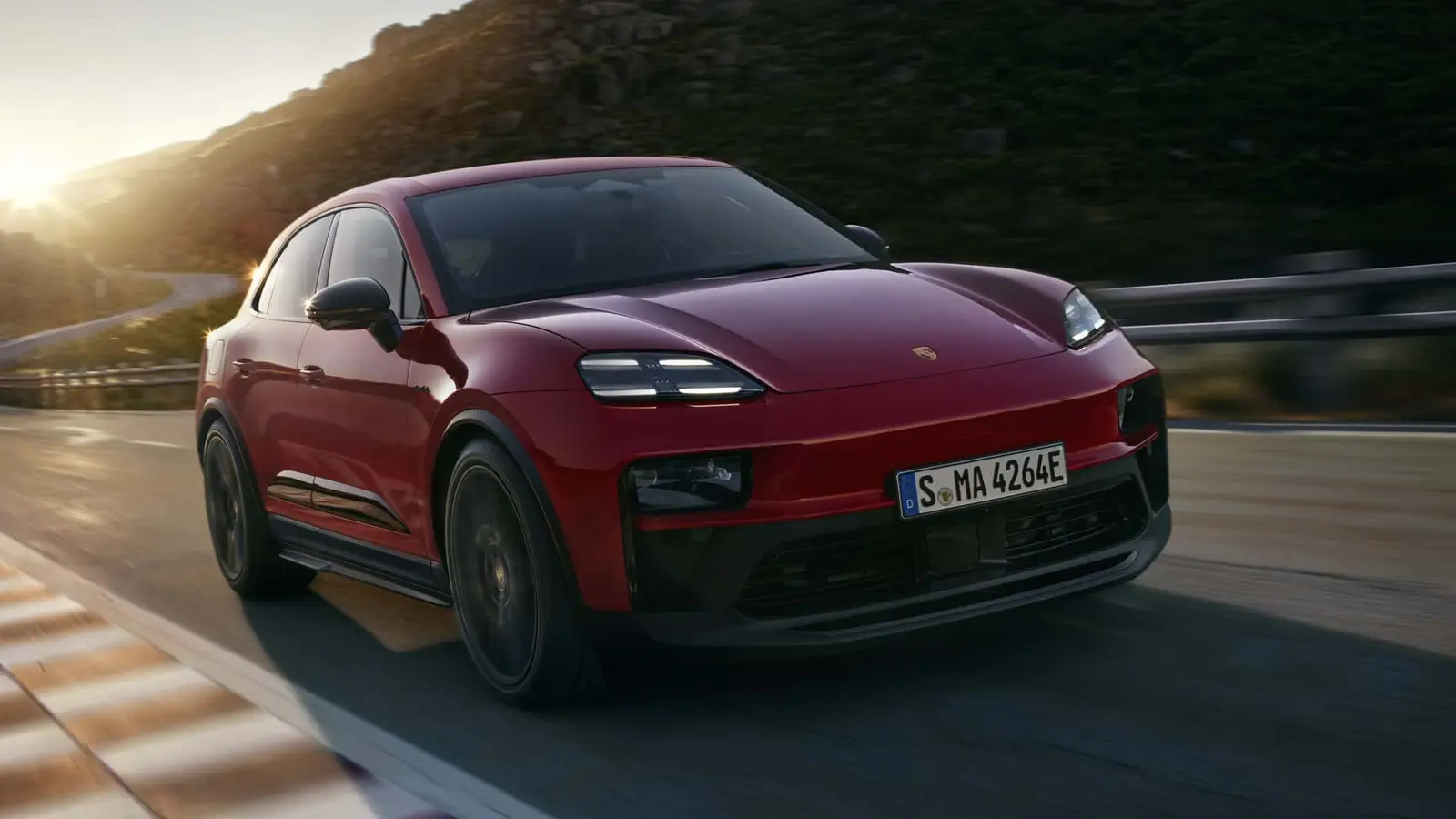
Europe adds another layer of complexity. Porsche chose not to update the gasoline Macan to meet current EU emissions rules, preferring to move customers toward the electric version instead. The result is blunt: the combustion model is no longer available in the European Union, even though demand has not vanished. Sometimes the market moves slower than the strategy.
Globally, Porsche sold 18,209 Macans in the quarter, including 10,130 gas-powered examples. That conventional version will stay on sale outside the EU until this summer, but the broader decline is hard to ignore. Macan deliveries were down 23 percent overall, hit by the transition to electric power, the end of US tax incentives for EVs and hybrids, and a softer appetite for battery-powered models in several markets.
The Cayenne remains Porsche’s strongest performer, with 19,183 deliveries, though even that figure was down 4 percent year over year. Its all-electric version is now expected to roll out gradually starting this summer, and Porsche will be hoping the SUV can do what the Taycan has struggled to do in some markets: bring credibility, volume and profit in one package.
Then there is the 911. As ever, it is the steady hand in the room. Sales rose 22 percent to 13,889 units, a reminder that the car most closely associated with the Porsche name still carries enormous weight when everything else feels unsettled.
The financial results tell the harsher story. Profit after tax collapsed to €310 million last year, down 91.4 percent from nearly €3.6 billion in 2024. Revenue also fell by about 10 percent to €36.3 billion. Those are not small adjustments. They are the numbers of a company forced to rethink its assumptions.
Porsche now says it is reassessing its electrification roadmap after concluding that its original EV targets were too ambitious. That is the kind of correction no automaker likes to make in public, but the market has a way of demanding honesty. The next phase for Porsche will not be about ambition alone. It will be about rebuilding the product cadence, restoring confidence and proving that the brand can adapt without losing the edge that made it famous in the first place.

“I cover automotive innovation, electric vehicles, and the future of mobility — where technology meets sustainability.”

Discussion
Leave a Comment