
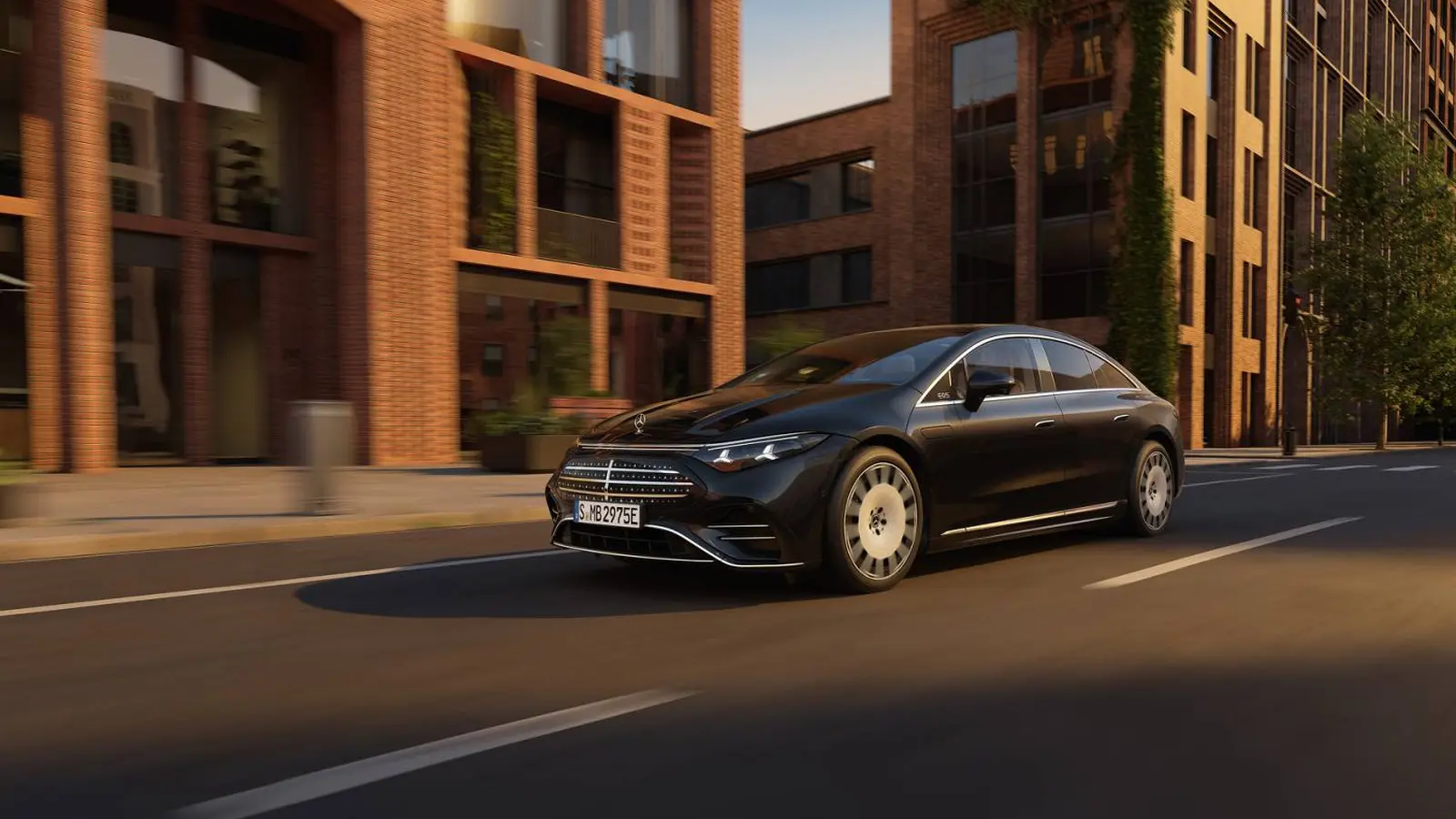
Mercedes-Benz has taken the wraps off a dramatically revised EQS, and this is no ordinary mid-cycle polish. The flagship electric sedan now claims up to 926 km of WLTP range, gains an 800V electrical architecture, and introduces steer-by-wire, a first for any German automaker in a production car. In other words, the EQS has been reworked from the ground up while still keeping the familiar silhouette.
That range figure belongs to the EQS 450+, and it is the sort of number that grabs attention immediately. Official WLTP results always look generous compared with EPA estimates, but even with a sharp haircut for the U.S. cycle, Mercedes is suddenly back in the conversation for long-distance luxury EVs. This is the kind of car that makes charging stops feel a little less like a plan and a little more like a suggestion.
A deeper upgrade than the badge suggests
Mercedes says more than a quarter of the EQS has been newly developed, refined, or re-engineered for this update. That is a big statement, and it sounds accurate. The latest car is not just a facelift with a bigger battery. It is, for all practical purposes, a fresh machine wearing the same bodywork.
The switch to 800-volt technology is the real headline under the skin. It allows DC fast charging at up to 350 kW, with Mercedes claiming as much as 320 km of WLTP range can be added in just 10 minutes. At older 400V chargers, the battery can split into two virtual sections and charge at up to 175 kW each, a smart piece of engineering that helps the EQS stay competitive even when the infrastructure is not ideal.
The usable battery capacity also climbs from 118 kWh to 122 kWh, while the physical size of the pack stays the same. Mercedes achieved that by moving to silicon oxide-graphite composite anodes and further reducing cobalt content, a move that boosts energy density without forcing the car to grow in any meaningful way.
There are new electric drive units too, and Mercedes calls them a generational leap. On all-wheel-drive versions, the front motor acts as a boost unit with an integrated disconnect system, engaging only when extra traction or performance is needed. At the rear, a two-speed gearbox pairs a short first ratio for stronger launches with a taller second gear that favors efficiency on the motorway. It is clever, technical, and very Mercedes.
Regenerative braking has been turned up to 385 kW, a 33 percent increase. In daily driving, that should be enough to cover most slowing-down moments without needing the friction brakes at all. It is one of those details that quietly improves the ownership experience every single day.
Mercedes is also adding a new entry-level EQS 400, which delivers 270 kW and a 112 kWh battery. In Germany, it starts at €79,330 net, or about €94,403 including VAT. That makes the range broader and gives the EQS lineup a more accessible entry point against rivals such as the BMW i7.
The steering wheel disappears, in a sense
Steer-by-wire is the feature people will talk about first, and for good reason. Instead of a direct mechanical link between the steering wheel and the front wheels, the system uses electronic signals to relay input. Mercedes says that opens up the cabin, improves forward visibility, and even makes getting in and out of the car easier thanks to a flatter steering wheel design.
It will not be available immediately at launch. Mercedes says the technology will arrive a few months after the market introduction. When it does, it will work alongside 10-degree rear-axle steering and several layers of redundancy for safety. Even in the highly unlikely event of a full system fault, the rear steering and individual wheel braking through ESP are designed to keep the car pointed where it should go.
For a German luxury brand, this is a meaningful step. Mercedes is not just experimenting with novelty here. It is making a statement about where the next generation of steering feel, packaging, and cabin design may be headed.
The new EQS also runs MB.OS, the same operating system debuting in the CLA. The software platform controls the vehicle’s major functions and connects to the Mercedes-Benz Intelligent Cloud for over-the-air updates. That means the car is built to evolve after purchase, not just at the dealership.
The MBUX Virtual Assistant now includes AI from Microsoft and can handle more natural, multi-turn conversations. Mercedes is offering three avatar styles, including the classic star, a humanoid character, and one called LittleBenz. The 141 cm MBUX Hyperscreen remains standard, while the revised MBUX Zero Layer interface adds a more smartphone-like home screen with app folders and faster access to key functions.
There is also a new MBUX Surround Navigation function that blends camera and sensor data into a real-time 3D view of the surroundings on the driver display. It shows nearby cars, cyclists, and pedestrians, giving the driver a live digital readout of what the car is sensing.
Mercedes has not forgotten the comfort and convenience details that matter in a flagship sedan. Bidirectional charging is confirmed, with V2G and V2H support, although it will arrive later through an over-the-air update rather than at launch. The standard DIGITAL LIGHT setup now uses micro-LED technology, creating a larger and brighter light field while using less energy than before. The ULTRA RANGE high beam can stretch out to 600 meters.
The AIRMATIC suspension also gets smarter. Mercedes says cloud-based damper control can use Car-to-X data from other vehicles to adjust damping before the car reaches a speed bump or rough patch of road. That may sound futuristic, but it is exactly the sort of detail that makes a luxury EV feel calm, polished, and expensive.
Other upgrades include a heated seatbelt that warms to 44 degrees Celsius, a HEPA filter that captures 99.65 percent of particles, a doubled towing capacity of up to 1,600 kg for rear-wheel-drive versions, and a leather-free interior option for buyers who want a more sustainable cabin. The MANUFAKTUR Made to Measure program now offers roughly 125 exterior colors, and the parking assist system is said to be 60 percent faster with new angle-parking capability.
The new EQS is not just better on paper. It is Mercedes’ answer to the criticism that the original car looked advanced but was too conservative where it mattered most: charging, software, and electrical architecture.
That shift to 800V is crucial. It brings the EQS into much sharper focus against the Porsche Taycan, Hyundai’s E-GMP-based models, and increasingly sophisticated Chinese EVs that have set a punishing pace for charging performance. The claimed 926 km WLTP range is the kind of figure that makes headlines, but the faster charging and smarter hardware may end up mattering more in everyday use.
And then there is steer-by-wire, the feature that will define this update in the public mind. Mercedes has moved ahead of BMW and Audi in bringing the technology to a production car, which is no small thing. Whether drivers embrace it will depend on how natural it feels once the wheels hit real roads. That is always the test. Software can promise a lot. The steering wheel has to deliver.
As for the EQS itself, Mercedes has improved the bones of the car in a serious way. Whether the styling finally wins more hearts is another question entirely. The engineering? Hard to fault. The shape? That debate is still very much alive.

“I cover automotive innovation, electric vehicles, and the future of mobility — where technology meets sustainability.”

Discussion
Leave a Comment