
3 Minutes
What began as a routine consumer safety warning has turned into something far more serious. Casely has reissued its recall for the MagSafe-compatible Power Pods 5,000mAh portable charger after new incidents, including a fatal case in New Jersey and another alarming fire on a plane.
A recall that keeps growing
The first recall came in April 2025, when Casely and the U.S. Consumer Product Safety Commission warned consumers about more than 429,000 Power Pods wireless chargers sold across the U.S. At the time, regulators had already logged 51 reports of the devices overheating, swelling, or catching fire, with several users suffering burns.
Now the warning is back, and the picture looks even worse. The USCPSC says 28 more incidents have been reported since then, pushing the case from serious to potentially deadly. The agency is blunt about the risk: these recalled power banks can cause severe injury or death through fire and burn hazards.
The concern is not theoretical. A woman in New Jersey died after suffering severe burns linked to one of the defective chargers. In another case, in February 2026, a Casely power bank reportedly caught fire and exploded aboard an aircraft, leaving a passenger with first-degree burns. That is the kind of story that changes a product recall from a warning into a headline.
How to check if your charger is affected
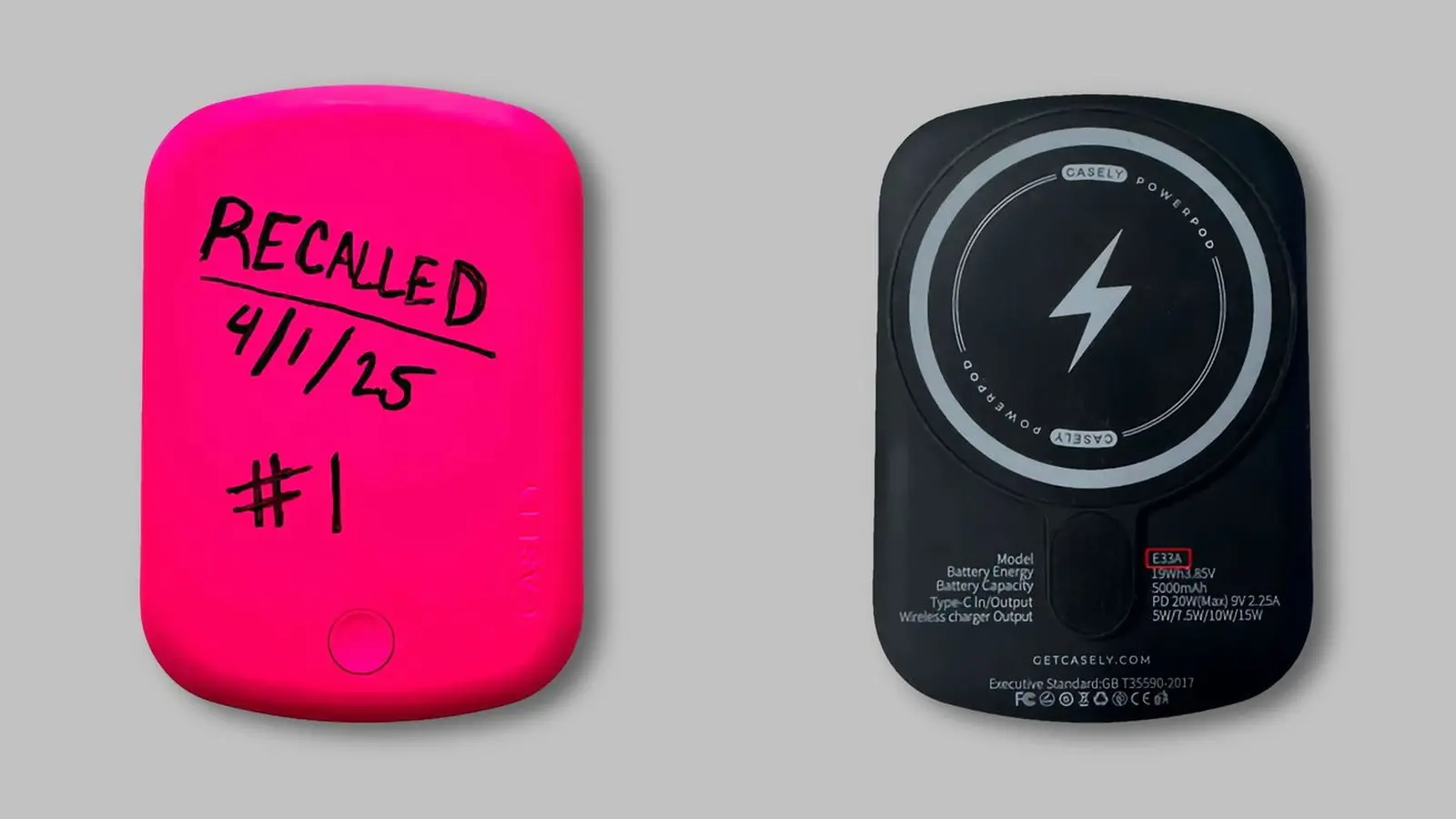
The recalled device is the Casely Power Pods 5000mAh portable MagSafe charger. Owners can identify it by the model number E33A printed on the back and the Casely name engraved on the front. Units sold through Casely’s website between 2022 and 2024 are included in the recall.
Casely says it is offering replacement units, but customers must first complete a form on the company’s website. As part of the process, users are asked to write the word “Recalled” on the battery pack with permanent marker and submit a photo showing the label clearly. A second photo must also show the E33A model number.
For anyone still holding one of these chargers, the advice is simple: stop using it now. Do not toss it into the household trash. Lithium-ion batteries can ignite or explode if handled improperly, so the device should be taken to a facility that accepts battery recycling or hazardous electronic waste.
When a portable charger turns into a fire risk, convenience is no longer the selling point. Safety is. And in this case, regulators are treating the danger with the urgency it deserves.



Leave a Comment