
The Chevrolet Corvette has always had a split personality. On one side, it is pure American excess, all thunder, torque, and long-bonnet swagger. On the other, it has spent decades quietly morphing into something far more worldly, so much so that a few of the most fascinating cars wearing Corvette hardware barely look American at all.
That is the strange charm of Corvette-based GTs and supercars. Some were built to chase Ferrari. Others were born from coachbuilt fantasy, luxury experiments, or outright madness. A few became legends. A few faded fast. All of them prove the same thing: there has never really been just one Corvette story.
When a Corvette stopped looking like a Corvette
Long before the C8 turned the world upside down with its mid-engine layout, independent builders and niche coachbuilders were already reimagining Chevrolet's sports car in ways that Detroit never would. They took Corvette mechanicals, wrapped them in carbon fiber, aluminum, or hand-shaped fiberglass, and sent them out into the world with fresh identities.
Some of these machines are almost impossible to spot in traffic unless you know exactly what you are looking at. That is what makes them so compelling. Under the skin, they are unmistakably Corvette. In profile, they are something else entirely.

Scaglietti Corvette Italia: the Modena-built rebel
Few Corvette stories are as deliciously audacious as the Scaglietti Corvette Italia. Built in Modena, right in Ferrari country, it was the sort of project that practically begged for a reaction. And according to the old story, it got one. Enzo Ferrari was said to be furious when he discovered a half-finished Corvette-style special taking shape near his own workshop.
The idea came from oil contractor Gary Laughlin, with help from racing heavyweights Jim Hall and Carroll Shelby. Three Corvette C1 chassis were sent to Scaglietti, which clothed them in lightweight aluminum bodies said to be around 400 pounds lighter than a regular Corvette of the era. Only three were built, one for each backer, though Shelby eventually stepped away from his car.
It was a Corvette, yes. But it looked like something that had slipped through a side door in Maranello.
Callaway C12: American muscle with German precision
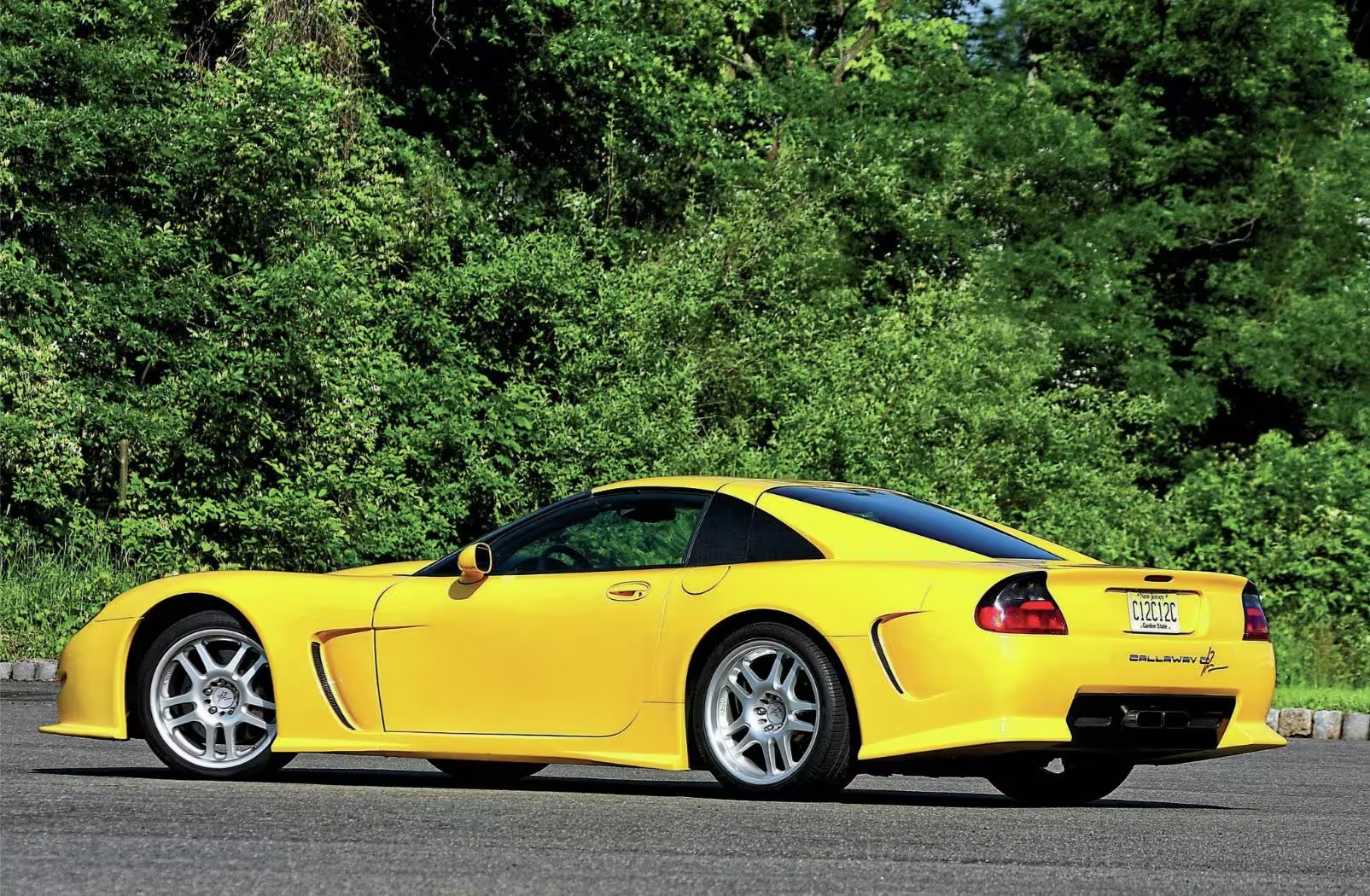
If the Scaglietti car was a stylistic provocation, the Callaway C12 was a technical one. Reeves Callaway, already famous for the outrageous twin-turbo Sledgehammer Corvette, wanted a machine that could take on the best of Porsche and Ferrari in endurance racing. So he started with the C5 Corvette and then pushed it far beyond the ordinary.
Working with German development firm IVM Automotive, Callaway created a car that shared only a handful of parts with the donor Corvette. The engine and portions of the chassis remained, along with the doors, windshield, and some interior elements, but nearly everything else was reworked. The result was wider, lower, and much more focused, with huge 14-inch brake rotors and a top speed approaching 200 mph.
The body was an all-new mix of GRP and Kevlar, and the styling was so dramatic it looked almost comic-book sinister. Even the Opel Tigra taillights felt like an inside joke. Under the hood sat a 5.7-liter Supernatural V8 with 440 horsepower, later joined by a 6.2-liter version with 482 horsepower. The C12 was built in the U.S. and Germany, and its racing C12.R even grabbed pole in class at Le Mans in 2001.
Cadillac XLR: luxury riding on Corvette bones
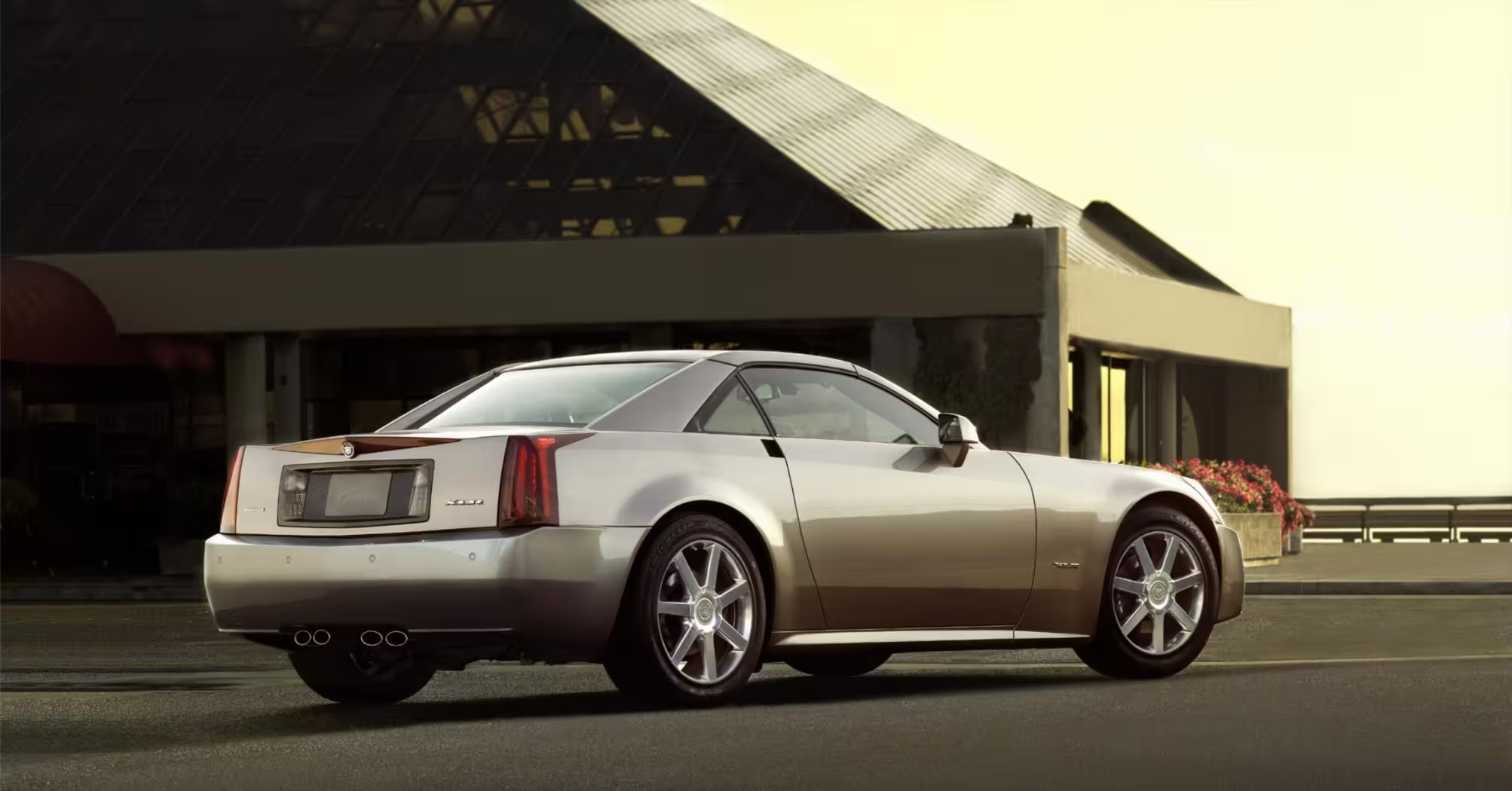
The Cadillac XLR took the Corvette formula and dressed it in a tuxedo. Previewed by the Evoq concept and launched in 2003, it arrived as a hard-top luxury roadster intended to stand toe-to-toe with the Mercedes-Benz SL and Lexus SC. Development costs were shared with the sixth-generation Corvette, but the XLR was never meant to be the same kind of car.
This one was about leather, craftsmanship, and polish. The cabin featured premium materials, a Bulgari-designed instrument panel, and all the trappings expected of a Cadillac flagship roadster. Yet underneath, it still relied on V8 power, starting with Cadillac's 4.6-liter Northstar and later the supercharged 4.4-liter unit in the hotter XLR-V.
The problem was price. The XLR cost roughly twice as much as the Corvette it borrowed from, and buyers never really showed up in the numbers GM had hoped for. Just over 15,000 were built before production ended in 2009, leaving the XLR as one of the more elegant what-ifs in recent GM history.

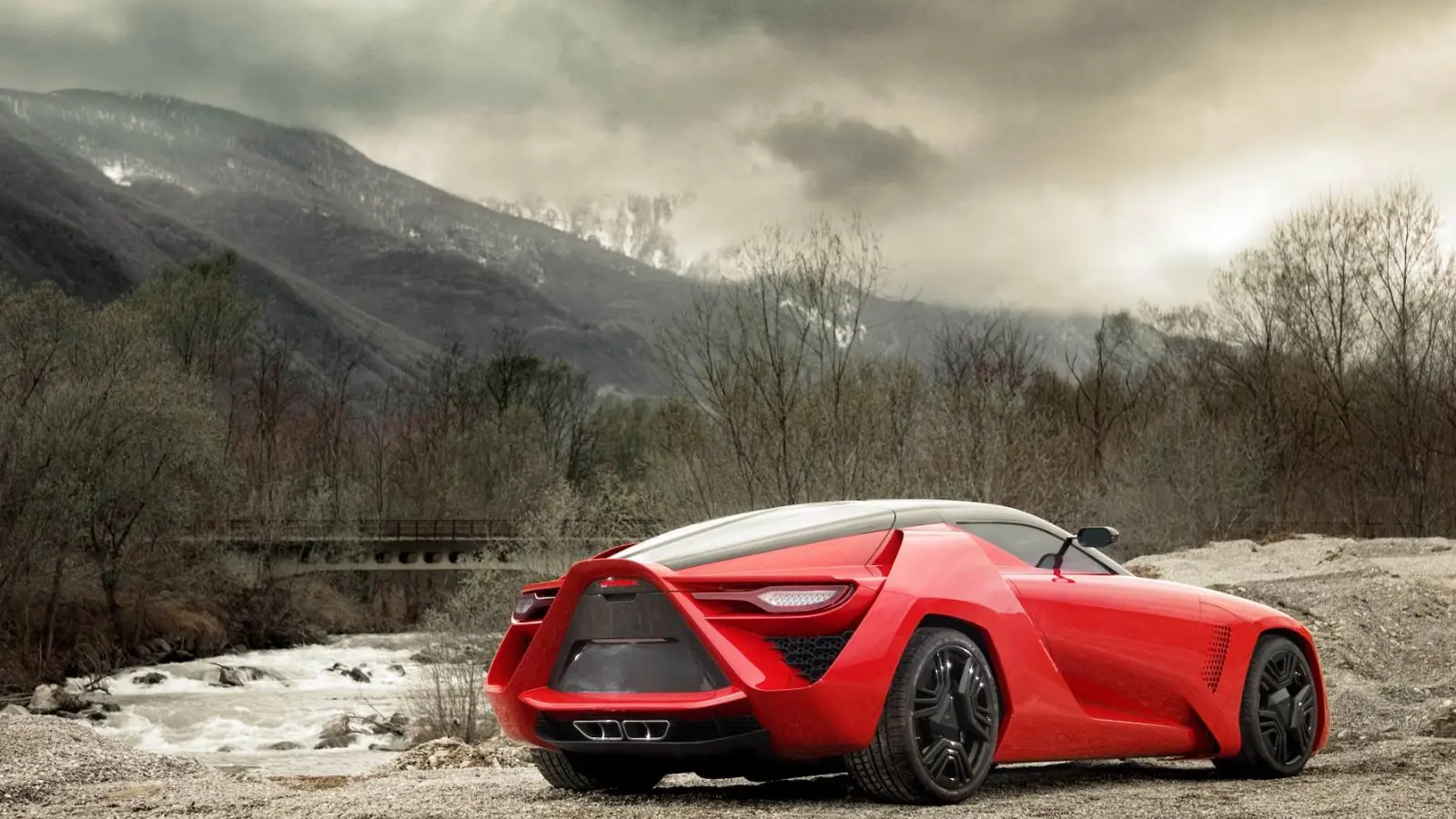
Bertone Mantide: a Corvette from the future
When Bertone unveiled the Mantide in 2009, it looked less like a car and more like a design manifesto. Jason Castriota, then working for Bertone, shaped one of the most dramatic Corvette-based creations ever built, using the C6 Corvette ZR1 as its foundation.
The Mantide's body was a full-on carbon fiber sculpture, including the wheels, and it was claimed to be 25 percent more aerodynamic than the ZR1 while producing 30 percent more downforce. It was also around 220 pounds lighter. The supercharged 6.2-liter LS9 remained untouched, meaning 638 horsepower and 604 lb-ft of torque were still very much on tap.
At Nardò, the one-off reportedly reached 218 mph, and that was enough to give it real supercar credibility. Only one was sold, to collector Dan Watkins, which feels about right for a car that looked like it had arrived from a more interesting future.

Iso Rivolta GTZ: old bloodline, new fire
Some cars borrow a platform. The Iso Rivolta GTZ revives a whole family name.
Iso's history goes back to the early 1960s, when Renzo Rivolta moved from scooters and appliances into elegant grand tourers powered by Chevrolet V8s. That American-Italian formula defined the brand before Iso disappeared in 1974. Decades later, the GTZ brought the name back through a family connection linking Rivolta's granddaughter and Andrea Zagato, grandson of the famous coachbuilder's founder.
The production GTZ, revealed in 2021, draws inspiration from the Iso A3/C, a Le Mans class winner from 1964 that also used a Chevrolet V8. Beneath the Zagato-designed body sits the hardware of the C7 Corvette Z06, including a supercharged 6.2-liter V8 with 650 horsepower and 650 lb-ft of torque. The numbers are sharp: 0 to 62 mph in 3.7 seconds and a top speed of 196 mph.
It is not just a Corvette in fancy clothes. It is a proper reboot of a lost Italian dynasty.

N2A Anteros: coachbuilt cool with a Corvette heart
The N2A Anteros might be the most quietly underrated car on this list. Its name comes from Greek mythology, but the machine itself was a very modern attempt to resurrect American coachbuilding with an unmistakably European flavor. The company behind it, N2A, stood for No 2 Alike.
Based on the Chevrolet Corvette C6, the Anteros wore a body inspired by classic Italian GT cars, completely transforming the sharp-edged donor into something smoother and more romantic. Building each carbon-composite shell reportedly took around 800 hours, and very little of the original Corvette sheet metal survived. The coupe used the Z06 as its base and could be fitted with a Lingenfelter package pushing the LS7 to 630 horsepower, while the roadster used the standard LS3.
One of its cleverest tricks was the 100,000-mile Chevrolet powertrain warranty, which meant owners could visit a GM dealer for service. Less than 100 were made, starting at nearly $150,000 before the cost of the donor car. Rare, stylish, and a little bit old-school. That was the whole point.

Rezvani Beast: the Corvette gone tactical
Then there is the Rezvani Beast, which seems to have been designed by someone who wondered what would happen if a hypercar and an armored escape vehicle had a child. The answer is a C8 Corvette-based missile with 1,000 horsepower, 878 lb-ft of torque, and enough optional equipment to make a Bond villain nod in approval.
Unveiled in 2024, this latest Beast ditches the old Ariel Atom roots and instead uses a heavily reworked C8 platform. The twin-turbocharged 6.2-liter V8 launches the car from 0 to 60 mph in just 2.5 seconds, while the carbon fiber body keeps weight down to 2,980 pounds.
But speed is only part of the story. Rezvani offers a $45,000 007 package with a smoke screen, pepper spray dispenser, electrified door handles, EMP protection, and thermal night vision. There is also a $55,000 bulletproof package with armored panels and ballistic glass. The starting price is $585,000, which sounds outrageous until you remember what the Beast is trying to be. Ordinary was never the brief.
And that is the real Corvette story. Not one badge, not one shape, not even one country. Just a platform that has kept reinventing itself, again and again, in the hands of the people brave enough to do something strange with it.

“Cars are evolving faster than ever. I cover electric vehicles, smart mobility, and the future of transportation worldwide.”

Discussion
Leave a Comment