
3 Minutes
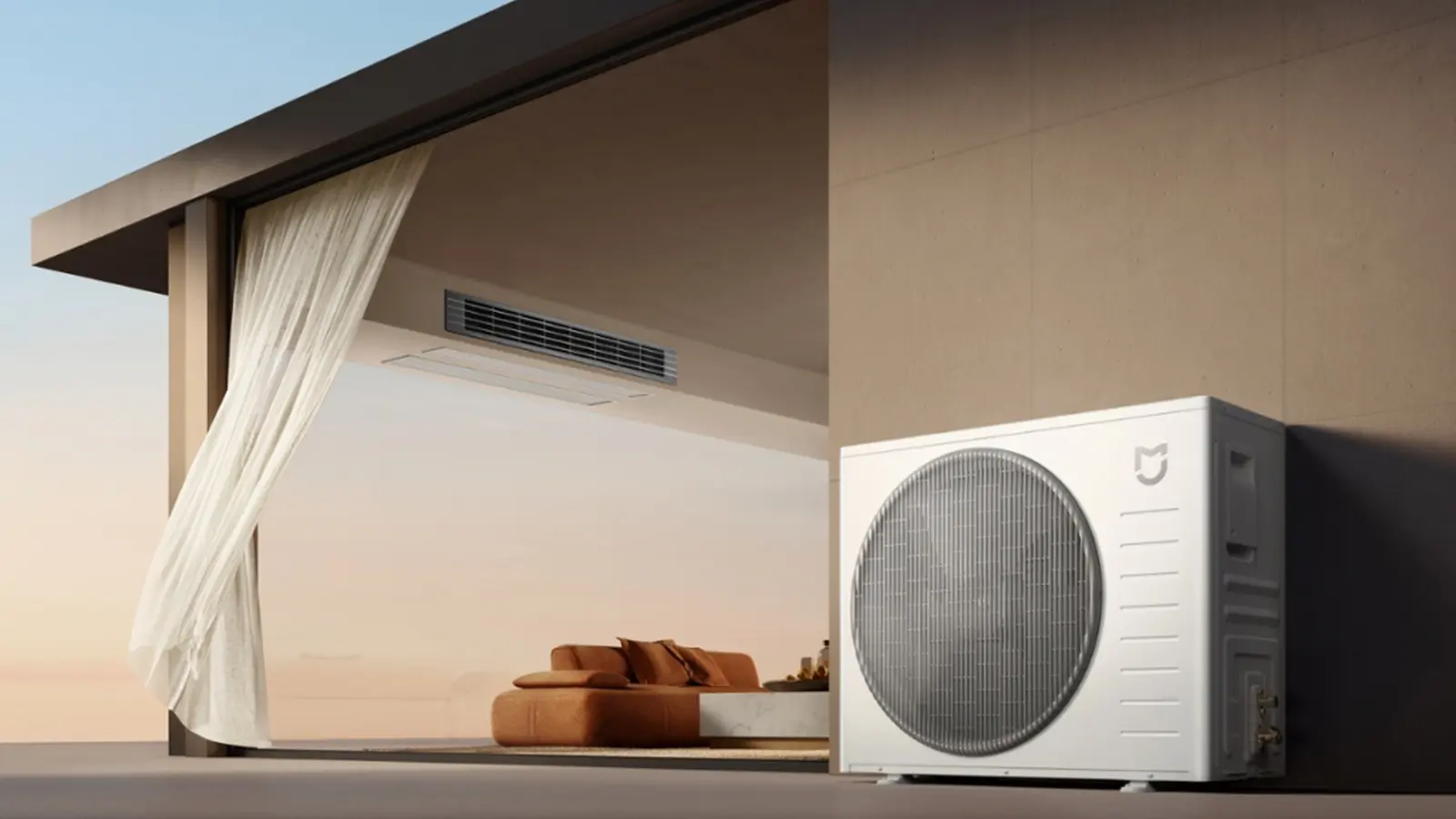
Xiaomi has taken another swing at the home comfort market, and this time the target is the kind of cooling system people usually never think about until it stops working properly. The new Mijia central air conditioner has arrived in China with a clear pitch: smarter airflow, better efficiency, and a more attentive way of cooling a room.
At the center of the design is a dual air outlet layout that separates heating and cooling paths. That may sound technical, but the idea is simple enough. Air is moved more intelligently, temperature changes feel more balanced, and the system is better suited to keeping larger interiors comfortable without the usual hot-and-cold drama. Xiaomi says the unit carries an APF rating of 4.62, which puts it in strong territory for energy-saving performance.
The hardware under the hood has also been upgraded. Xiaomi says the indoor unit uses a triple-row heat exchange structure, while the outdoor unit relies on a dual-row copper setup. Together, these changes improve heat exchange efficiency by around 15 percent. In practice, that should mean quicker cooling, stronger overall performance, and less wasted energy when the system is working hard.
Then there is the part that gives the product its smart-home flavor. Xiaomi’s human-sensing airflow technology can detect when someone is in the room and adjust the direction of the air accordingly. It can push airflow toward people, avoid blowing directly at them, or ease back into a power-saving state when the room is empty. That is the sort of feature that sounds small on paper but makes a big difference in daily use.
The Mijia air conditioner also plugs neatly into Xiaomi’s broader connected ecosystem. Users can control it through voice commands, a mobile app, or even remote activation from a car. OTA updates are supported too, which means the system should be able to pick up new features or refinements over time instead of staying frozen in its launch-day form.
Xiaomi is also offering optional accessories, including a smart air management panel and health-focused modules designed to improve indoor air quality and comfort. That points to a broader strategy: this is not just an appliance, but part of a more layered home environment.
For buyers in China, the price is set at 8,999 yuan, or roughly $1,320. That places it in a competitive range for a central air conditioning solution with this level of smart functionality and efficiency. Whether Xiaomi plans to bring the system to global markets is still unclear. For now, it remains a China-only launch, but one that could easily draw attention beyond it.



Leave a Comment