
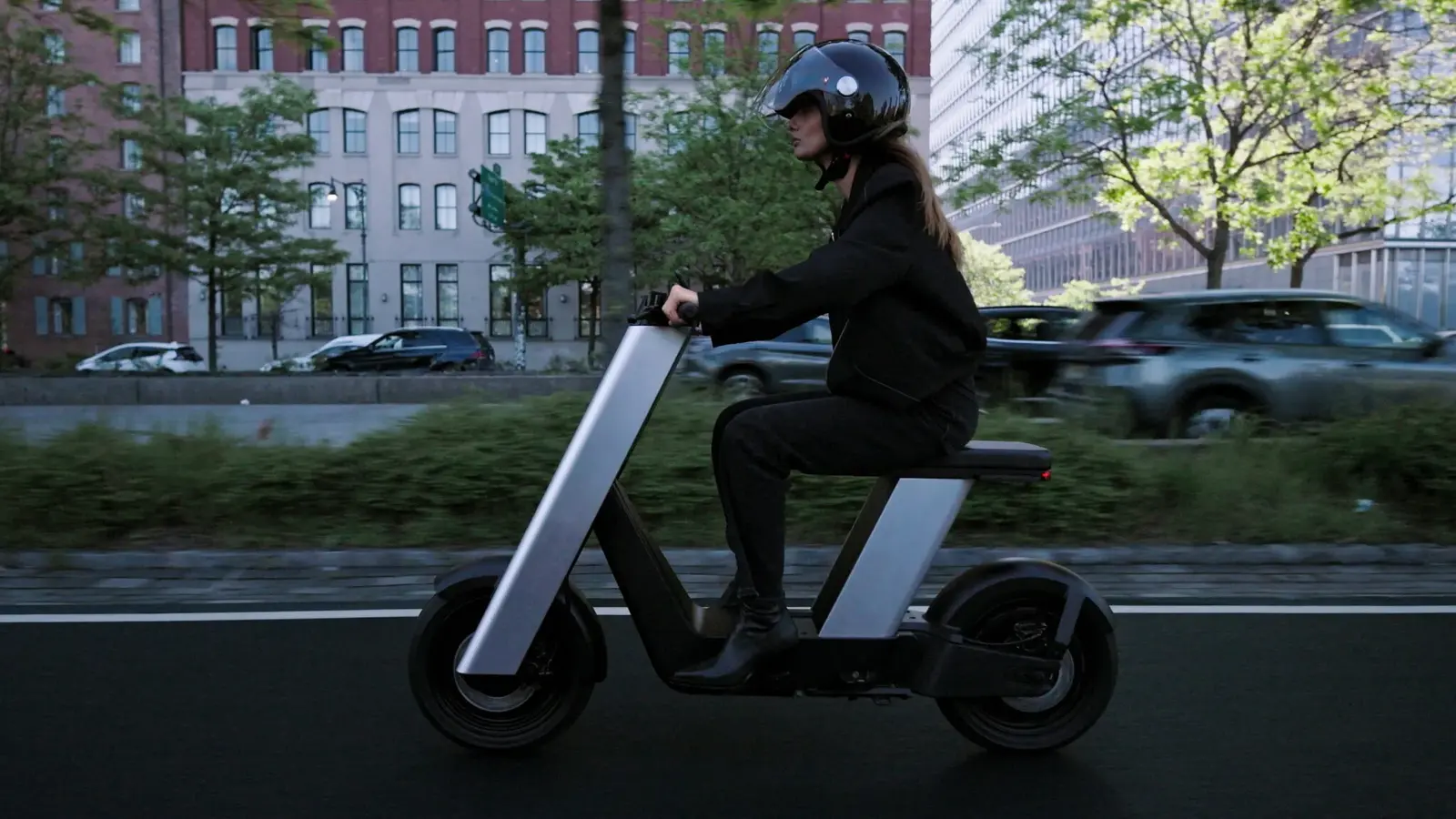
At first glance, the Infinite Machine Olto looks like one of those machines that should not exist in the same legal universe as a normal e-bike. It weighs 175 pounds, can carry two people, and depending on how it is set up, can run all the way to 33 mph. That is not exactly the image most riders have in mind when they think about a pedal-assist commuter.
Yet that is precisely why the Olto is getting attention. It sits in a strange, clever gray zone, one that lets it pass as a Class 2 e-bike in many places while offering far more performance, hardware, and tech than most electric bikes ever will. In spirit, it feels much closer to a compact electric moped, or even a tiny urban runabout, than anything built for a casual bike lane cruise.

A legal e-bike on paper, something else in reality
The classification is where things get interesting. On paper, the Olto is sold as a Class 2 e-bike in most markets. That label helps it reach customers without the heavier regulatory burden that comes with a moped or motorcycle. But once you look at the spec sheet, the disguise starts to slip.
For $3,495, buyers get a 48-volt setup, a removable 25-Ah battery, a 2-kW rear hub motor, weatherproof aluminum bodywork, NFC unlocking, GPS tracking, anti-theft alerts, an automatic steering lock, USB-C charging, and over-the-air software updates. That is a serious feature list. In fact, some entry-level cars would struggle to match it.
The Olto also changes character depending on how you ride it. In Class 2 mode, it behaves like a conventional legal e-bike with throttle support and a 20 mph top speed. Switch to Class 3, and it can reach 28 mph, though pedal assist is required. Then there is Off-Road mode, which unlocks the full 33 mph capability. Infinite Machine even says its app can adjust settings to match local regulations, which is a smart move in a market where the rules can change from one city to the next.

According to The Verge, the Olto reportedly reached 36 mph during testing. That number only reinforces the point: this is not a timid little city bike pretending to be more than it is. It is a bold, heavily engineered commuter tool with a very specific mission.
And the mission makes sense. With up to 40 miles of range, the Olto is aimed squarely at short urban trips, daily commutes, errands, and quick cross-town runs. For that job, it could genuinely replace a car for many riders. The removable battery is another smart touch, letting owners charge it indoors while leaving the machine parked outside, protected by its weatherproof construction and built-in security features.
Of course, there is one reality check. If the battery dies, pedaling it home would be a miserable experience. Even on a standard mountain bike, a 175-pound machine would feel punishing. On the Olto, those small pedals seem more like a legal requirement than a practical backup plan.

That said, the appeal is obvious. The Olto offers the kind of modularity and everyday usefulness that most e-bikes simply do not. Buyers can add accessories such as a kid carrier, storage bins, baskets, and racks, turning it into something that is part commuter, part cargo hauler, part small electric scooter replacement.
It is an inventive idea, and maybe even a glimpse of where urban mobility is headed. The only question is whether regulation can catch up without punishing ordinary e-bike riders who just want to pedal on a greenway without wearing motorcycle gear or shopping for insurance.

“Cars are evolving faster than ever. I cover electric vehicles, smart mobility, and the future of transportation worldwide.”

Discussion
Leave a Comment